helen@hbxinnuorollforming.com
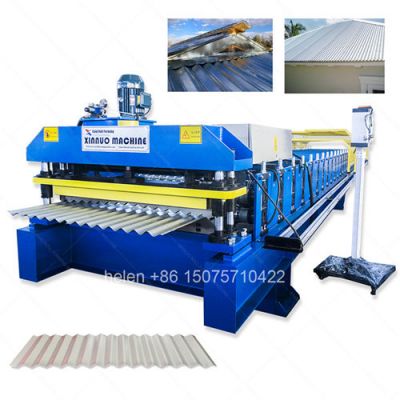
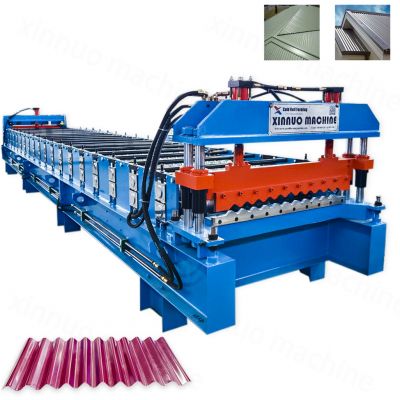
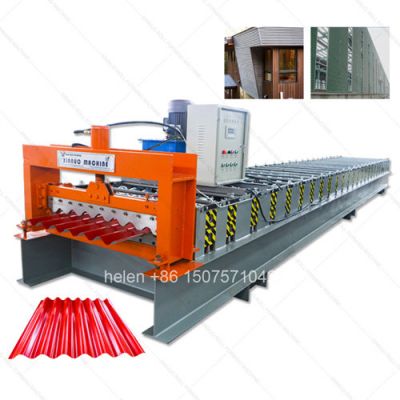
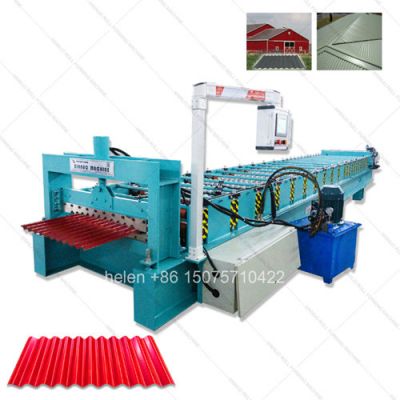
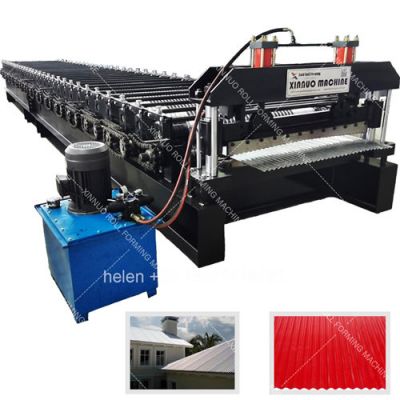
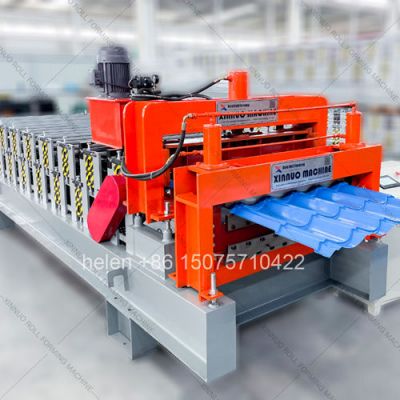
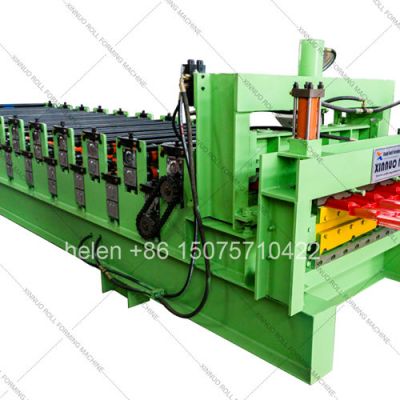
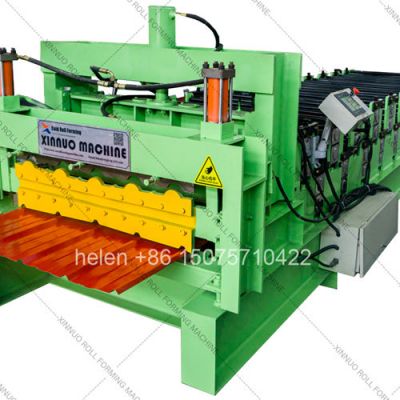
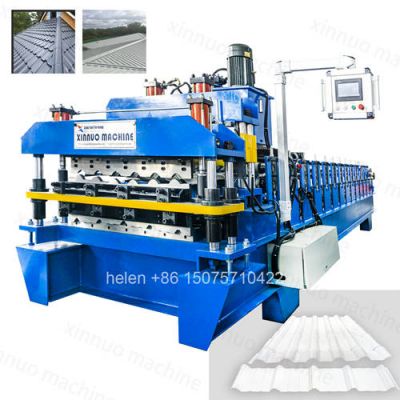
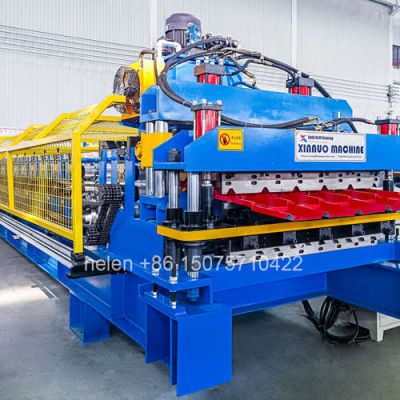
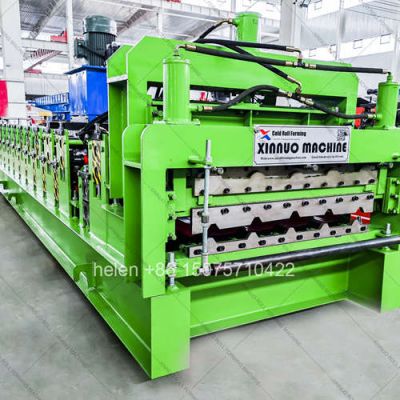
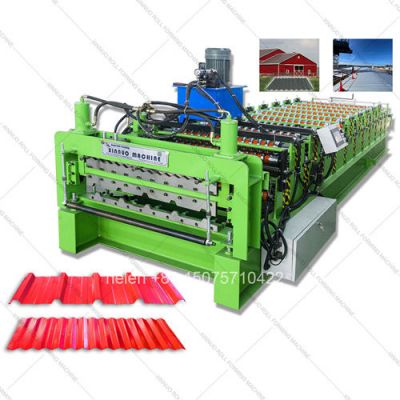
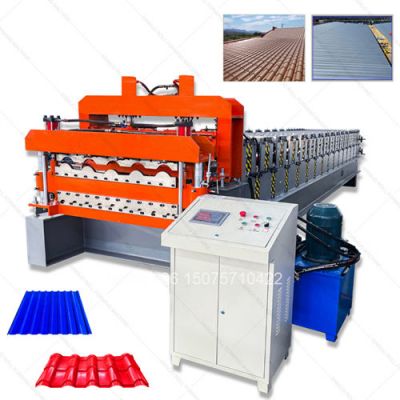
This IBR + glazed tile double layer roll forming machine combines a standard IBR trapezoidal roofing profile on the upper forming tier with a decorative glazed tile (antique/roman tile) profile on the lower tier — all within a single vertically stacked machine frame. This powerful combination enables manufacturers to serve both the high-volume industrial roofing market and the premium decorative residential roofing market from one equipment investment.
The IBR layer produces classic trapezoidal sheets used for warehouses, factories, commercial steel structures, and large-scale residential roofing projects. The glazed tile layer produces aesthetically rich antique-tile-style panels with distinctive stepped pitch patterns, widely demanded across Southeast Asia, the Middle East, South Asia, and Africa for upscale residential villas, heritage-style hotels, religious buildings, and architectural renovation projects where visual appeal is as important as structural performance.
The glazed tile forming process on the lower tier incorporates a precision pitch-stamping device that creates the characteristic stepped or overlapping tile appearance at regular intervals. This stamping mechanism requires servo motor control or mechanical cam synchronization with the main roller drive to ensure consistent pitch accuracy, making the IBR + glazed tile configuration more technically sophisticated than IBR + corrugated or IBR + IBR combinations — and producing a higher-value finished product that commands premium market pricing.
| Feature | IBR Layer (Upper) | Glazed Tile Layer (Lower) |
|---|---|---|
| Profile Type | Standard IBR trapezoidal with raised ribs | Decorative antique tile with stepped pitch pattern |
| Forming Principle | Continuous roller bending — 14-18 progressive stations | Roll forming + precision pitch stamping at programmed intervals |
| Effective Width Range | 686 mm, 762 mm, 840 mm, 925 mm, 1050 mm | 828 mm, 900 mm, 1000 mm, 1080 mm (varies by tile pattern) |
| Material Thickness | 0.3–0.8 mm | 0.3–0.6 mm (thinner gauge preferred for stamping precision) |
| Aesthetic Appeal | Industrial, functional | Premium decorative — mimics traditional clay/ceramic roof tiles |
| Typical End Users | Factories, warehouses, commercial buildings, budget housing | Luxury villas, resorts, heritage restoration, religious buildings, upscale residential |
| Market Price Position | Economy to mid-range | Premium — glazed tile sheets sell at 20-40% higher price per square meter |
The glazed tile pitch-stamping device is the defining technical feature that distinguishes this machine from simpler double layer configurations. Each tile pattern step is formed by a synchronized stamping press that activates at precise intervals as the material advances through the roller stations. Two control approaches are available:
| Parameter | Standard Configuration |
|---|---|
| Main Frame | 350H or 400H welded H-section structural steel with reinforced cross-ribbed plates for dual-load and stamping vibration absorption |
| IBR Layer Roller Stations | 14–18 rows, 45# forged steel, CNC machined, hard chrome plated (HRC 58–62) |
| Glazed Tile Layer Roller Stations | 16–18 rows with integrated pitch-stamping station; 45# forged steel rollers, hard chrome plated |
| Stamping Mechanism | Mechanical cam-driven or servo motor-controlled pitch press; Cr12MoV stamping die set, quenched HRC 60–62 |
| Roller Shaft Diameter | Φ75–80 mm solid steel, precision ground, dual-row self-aligning bearings for consistent alignment under stamping loads |
| Drive System | Duplex roller chain with hardened sprockets and selector clutch; sized to handle peak torque during stamping cycles |
| Main Motor Power | 7.5–11 kW AC motor with VFD speed control |
| Hydraulic Station | 4.0 kW independent power unit for shear operation; oil cooling radiator included |
| Forming Speed | 8–15 m/min (glazed tile speed limited by stamping cycle frequency; IBR speed up to 18 m/min) |
| Cutting System | Hydraulic post-cut guillotine shear, Cr12MoV blades, HRC 60–62, ±1.5 mm accuracy |
| Control System | PLC with 7-inch color touchscreen HMI; multi-language; 50-recipe storage; separate pitch distance and batch count settings per profile |
| Material Range | PPGI, PPGL, galvanized steel, aluminum-zinc alloy coil; thickness 0.3–0.8 mm (IBR), 0.3–0.6 mm (glazed tile) |
| Profile Switchover | 5–15 minutes via manual diverter plate; IBR to glazed tile requires no tooling changes |
| Commissioning Duration | 3–5 days (glazed tile pitch calibration adds 1-2 days versus simpler double layer combinations) |
| Electrical Standard | 380V/50Hz/3-Phase (customizable to regional voltage and frequency standards) |
| Certifications | CE and ISO 9001 compliant manufacturing and quality assurance |
| Glazed Tile Type | Effective Width | Tile Pattern Pitch | Rib/Peak Count | Key Markets |
|---|---|---|---|---|
| Glazed-828 | 828 mm | Customizable | 5-6 peaks | Southeast Asia — Thailand, Vietnam, Philippines residential |
| Glazed-900 | 900 mm | Customizable | 6-7 peaks | South Asia — India, Bangladesh upscale housing |
| Glazed-1000 | 1000 mm | Customizable | 5-6 peaks | Middle East — Saudi Arabia, UAE villa and mosque roofing |
| Glazed-1080 | 1080 mm | Customizable | 6 peaks | Africa — Nigeria, Kenya premium residential and hotel projects |
| # | Stage | Process Description |
|---|---|---|
| 1 | Coil Loading | Steel coil mounted and secured on hydraulic decoiler; expanding mandrel centers coil for straight feed |
| 2 | Profile Selection | Manual diverter guide set to route material to IBR (upper) or glazed tile (lower) forming tier |
| 3 | Edge Trimming | Manual pre-cutter removes coil head imperfection before first roller station entry |
| 4 | Roll Forming | Coil strip progressively shaped through 14-18 roller stations into IBR or glazed tile base profile |
| 5 | Pitch Stamping (Glazed Tile Only) | Synchronized stamping press activates at programmed intervals to create stepped antique tile effect; servo or cam controlled |
| 6 | Length Measurement | Rotary encoder tracks material travel distance; PLC triggers cut at preset sheet length |
| 7 | Hydraulic Post-Cut | Flying shear executes clean, burr-free cut synchronized with line speed |
| 8 | Panel Collection | Finished sheets discharged onto powered run-out conveyor; manual stacking or automatic stacking arm |
Hebei Xinnuo is a professional cold roll forming machinery manufacturer with 20+ years of experience. We specialize in C/Z purlin machines, roof panel roll formers, floor deck machines, and custom profile solutions — exported to 50+ countries worldwide.