helen@hbxinnuorollforming.com
- Glazed tile deck serves premium residential and heritage roofing demand
- Metal roof deck covers warehouses, institutions, and commercial buildings
- Regional tile pattern preferences differ and must guide tooling selection
- Buyers range from roofing traders and distributors to contractors and exporters
- Colour and tile pattern mix decide pricing power in most markets
- Climate and building tradition shape which profile sells best locally
- Confirm the local product standards before finalising the tooling specification
A glazed tile and metal roof forming machine is not sold into a universal market. The tile pattern that sells strongly in one country may attract no interest in another, and the metal roof profile that is standard in one region may be considered unfamiliar in the next. For a buyer, the most consequential decision is therefore not which machine to purchase, but whether the tooling, profile dimensions, and colour capability of that machine match the market it will actually serve. This page sets out the regional demand patterns, the buyer profiles active in each segment, and the local market questions that should be answered before a tooling specification is finalised.
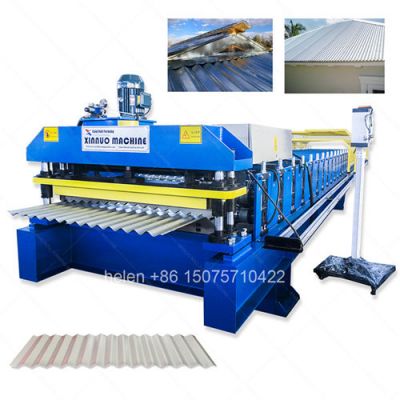
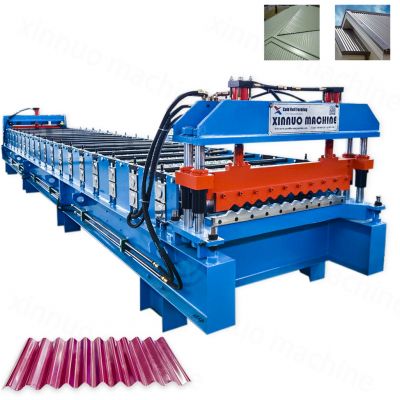
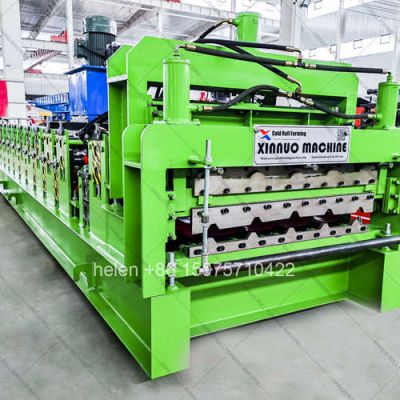
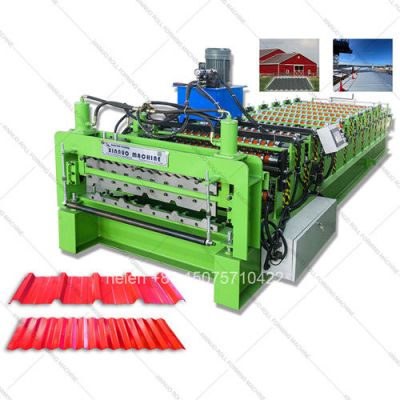
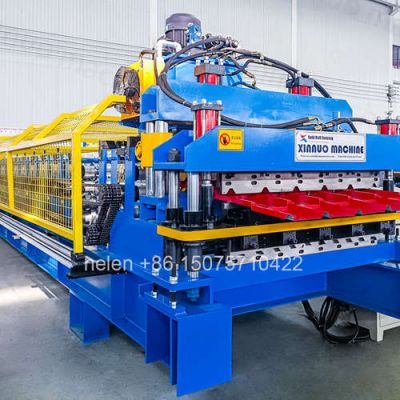
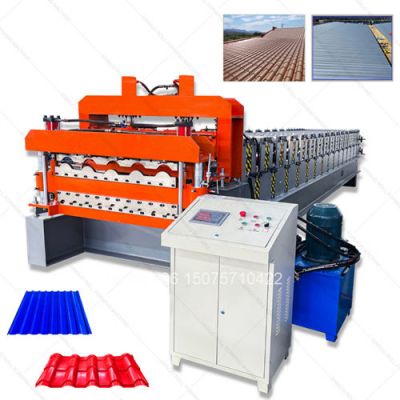
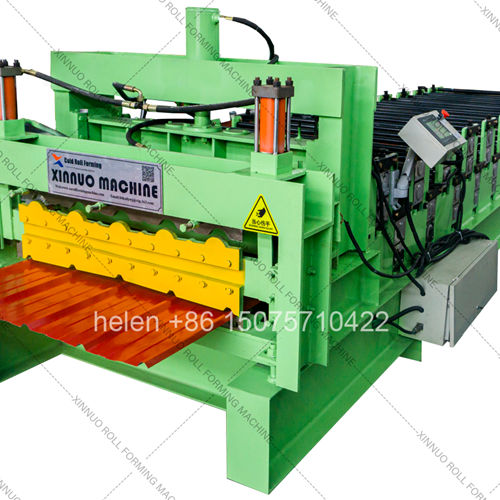
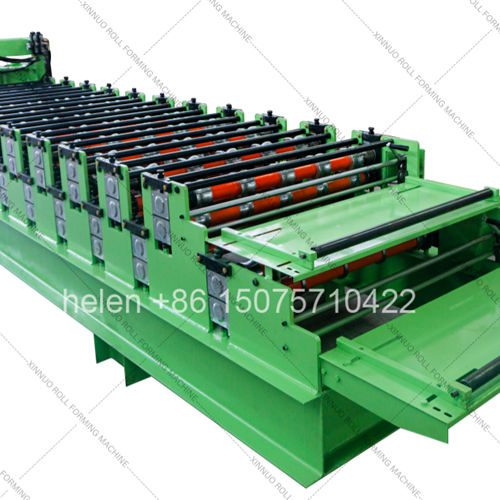
The machine itself is a single-frame, two-deck cold roll forming line: a glazed tile deck that combines roller forming with an intermittent pitch-stamping operation to produce decorative antique-style tile sheets, and a metal roof deck that produces trapezoidal, corrugated, or arc-wave roofing and cladding profiles. Both decks share one drive motor, one hydraulic shear, and one control system, and material is routed into either deck at the entry guide. That architecture gives a single machine the ability to address two distinct construction market segments — premium decorative residential roofing and functional industrial or commercial roofing — which is the commercial reason this configuration is so widely purchased.
The table below summarises general market tendencies. They describe broad regional patterns rather than fixed standards, and any buyer should confirm the current local requirement directly with their own customers and contractors before ordering tooling.
| Region | Glazed Tile Preference | Metal Roof Preference | Market Driver | Typical Buyer Type |
|---|---|---|---|---|
| Southeast Asia | Strong decorative tile demand, patterns emulating traditional clay tile | Trapezoidal profiles with pre-painted colour | Strong cultural preference for clay tile appearance combined with rapid industrial park construction | Roofing manufacturers serving both residential and industrial contractors |
| South Asia | Decorative tile demand concentrated in upscale residential and institutional work | Trapezoidal and corrugated, mixed gauge range | Large housing programs alongside growing private premium housing | Building materials distributors and roofing traders |
| Middle East and Gulf | Tiles used in villas, hospitality, and heritage-sensitive projects | Wide trapezoidal profiles for large-span structures, light colours for heat reflectance | Mega-project construction plus hospitality and residential development | Manufacturers serving developers and large contractors |
| North Africa | Tile demand linked to traditional architectural identity | Corrugated and trapezoidal for industrial and agricultural buildings | Government housing programs and industrial investment | Contractors moving into manufacturing and local distributors |
| Sub-Saharan Africa | Tile demand emerging in premium urban residential segments | Strong IBR and corrugated demand across all building classes | Rapid urbanisation, housing backlogs, and replacement of older roofing materials | Roofing sheet factories and hardware distributors adding manufacturing |
| Latin America | Tiles favoured in residential markets with colonial architectural influence | Corrugated and trapezoidal for mining, industrial, and logistics buildings | Industrial infrastructure and residential construction | Industrial suppliers and regional roofing manufacturers |
| Central Asia and CIS | Tile demand tied to residential development and renovation | Trapezoidal profiles, mixed gauge | Construction growth and infrastructure renewal | Manufacturers and importers establishing local production |
| Oceania and Pacific | Limited tile demand; aesthetic preference leans to clean contemporary profiles | Wide trapezoidal profiles under demanding wind-load standards | Cyclone and wind-load requirements, remote construction logistics | Manufacturers serving specification-driven projects |
| Buyer Type | Typical Scale | Product Focus | Why the Double Layer Configuration Fits |
|---|---|---|---|
| Roofing sheet manufacturer | Established producer adding capacity | Both decorative tile and functional roof sheet lines | Adds a premium decorative product line alongside existing functional roofing without acquiring a second building or a second operator team |
| Building materials distributor | Regional distribution business moving into production | Both lines, weighted to what its existing customers already buy | Captures manufacturing margin on products already being resold, using an existing customer base rather than building one from scratch |
| Contractor or developer | Construction business with recurring self-consumption | Whichever profile the current project portfolio requires | Removes dependence on third-party sheet supply for projects that mix premium residential and functional commercial roofing |
| Export trader | Trading business selling into neighbouring countries | Profiles matched to two or more destination markets | One machine can be tooled to serve two different national profile requirements, avoiding separate equipment for each destination |
| Start-up investor | New entrant with limited capital and space | Broadest possible catalogue from the smallest possible investment | Two product categories from one machine at a lower capital and space requirement than two single-deck machines |
| Showroom operator | Building materials display and supply business | Demonstration capability across both decorative and functional lines | Visual demonstration of two product families from one machine strengthens the sales proposition to visiting customers |
| Product Line | Specification Range | Buying Customer | Application Where It Is Installed |
|---|---|---|---|
| Glazed tile sheet | Pattern-dependent effective width, produced in multiple colour finishes | Villa owners, developers, hospitality operators, religious and heritage projects | Sloped residential roofs, hotels and resorts, places of worship, buildings where decorative appearance is a stated requirement |
| Trapezoidal roof sheet | Multiple effective widths and rib heights within the standard range | Contractors, industrial developers, institutional builders | Warehouses, factories, commercial complexes, schools, large residential developments |
| Corrugated sheet | Various wave pitches and effective widths | Agricultural buyers, budget housing providers, fencing contractors | Farm buildings, livestock shelters, perimeter fencing, temporary and low-cost structures |
| Arc wave sheet | Continuous wave geometry within the standard width range | Industrial and workshop builders | Industrial roofing, storage structures, workshop buildings |
| Colour-matched accessories | Produced from matching coil on secondary forming | The same customer buying the main roofing order | Ridge caps, barge boards, and flashing supplied as a complete roof package |
Tooling is cut to a specific profile. Confirming these points before the order is placed is far cheaper than discovering an error after the machine has been manufactured.
| # | Question | Why the Answer Changes the Specification |
|---|---|---|
| 1 | Which tile pattern do local buyers already recognise? | The glazed tile die is pattern-specific. A machine tooled for a pattern the market does not use will produce sheets nobody orders. |
| 2 | Is more than one tile pattern likely to be sold? | Determines whether servo-driven programmable stamping and additional die sets are worth including at order stage. |
| 3 | Which effective roof sheet width is standard locally? | Roof sheet width standards vary by country; tooling must be cut to the width that local contractors and tender documents specify. |
| 4 | What gauge range do local buyers actually purchase? | Sets the motor rating, row count, and frame grade required. Specifying to the upper end of the real range avoids under-specification. |
| 5 | Which colours dominate local demand? | Drives coil inventory planning rather than machine specification, but it determines whether pre-painted capability must be prioritised. |
| 6 | Is the machine for one market or several? | Multi-market operation justifies programmable stamping and additional die sets; single-market operation rarely does. |
| 7 | What coil widths are available locally? | Feed width capability constrains which effective profile widths can be produced. Local coil availability must support the chosen profile. |
| 8 | What is the largest sheet length customers order? | Determines run-out table length and confirms that length control and handling arrangements suit the longest sheet expected. |
| 9 | Do tender or local standards require specific profile dimensions? | Where formal standards apply, tooling must be cut to them from the outset rather than adjusted afterwards. |
| 10 | What wind, rain, and corrosion conditions apply locally? | Affects the gauge, coating system, and fixing recommendations the buyer will make to their own customers. |
| Local Condition | Effect on Product Demand | Implication for the Machine Specification |
|---|---|---|
| High solar exposure | Light colours preferred to reduce heat gain; tile appearance valued for thermal mass perception | Pre-painted capability essential; colour range should favour light finishes |
| High rainfall | Steeper roof pitches; minimum pitch requirements affect which profiles are acceptable | Tile profiles with defined step geometry and roof sheet profiles that drain effectively are both in demand |
| Coastal or high humidity | Corrosion resistance becomes the primary purchase criterion | Galvalume or aluminium substrates with appropriate coating systems matter more than profile choice |
| High wind or cyclone zones | Wider sheets with fewer fixings and greater structural capacity are preferred | Wider effective profile widths and heavier gauge capability become relevant to the specification |
| Strong traditional architecture | Decorative tile demand remains resilient even as construction modernises | Glazed tile deck justifies fuller specification, potentially with multiple patterns |
| Agricultural economy | Volume demand for low-cost functional sheeting rather than decorative products | Roof sheet deck carries the commercial weight; tile deck serves a smaller premium segment |
| Rapid urbanisation | Mixed demand across budget housing, commercial, and premium residential simultaneously | Both decks used across different customer segments, which is where the double layer configuration is most productive |
| Model | How It Works | Suitability of the Double Layer Configuration |
|---|---|---|
| Make to stock | Produce standard profiles and lengths in the colours customers order most, holding finished sheet inventory | Highly suitable. Deck changeover allows mixed stock replenishment across both product families in one working day. |
| Make to order | Produce only against confirmed customer orders, in the specified colour and length | Highly suitable. Length is programmed at no extra machine cost, and deck selection handles mixed order books. |
| Project supply | Supply complete roof packages to individual construction projects | Suitable. Accessories produced from matching coil complete the package, and both decorative and functional profiles can be supplied to the same project. |
| Distribution supply | Supply merchants and hardware outlets with stock profiles in standard lengths | Suitable. Predictable volumes across a fixed profile range, with changeover frequency low. |
| Export supply | Produce for shipment to one or more overseas markets | Highly suitable where the tooling is configured for more than one destination standard, or where programmable tile stamping allows pattern variation. |
| Continuous single-profile production | Run one profile continuously at maximum output for stock or contract supply | Less suitable. This is the case where two dedicated machines would outperform one double layer machine. |
| Parameter | Standard Range |
|---|---|
| Machine configuration | Two forming decks stacked vertically in one frame; glazed tile deck with pitch stamping plus metal roof deck |
| Metal roof deck profiles | Trapezoidal, corrugated wave, or arc wave, selected against the target market standard |
| Glazed tile deck | Pitch-stamping deck, cam-driven or servo-driven, with pattern-specific stamping die |
| Main frame grade | 300H, 350H, 400H, or 450H welded H-section steel selected against combined deck weight |
| Forming rows per deck | 11 – 18 rows depending on profile family and rib depth |
| Roller material | 45# forged carbon steel, CNC turned, ground, hard chrome plated to HRC 58 – 62 |
| Shaft | Φ75 mm or Φ80 mm solid steel, centerless ground, dual-row self-aligning bearings |
| Transmission | Duplex roller chain with hardened sprockets and selector clutch for deck engagement |
| Main motor | 5.5 kW, 7.5 kW, or 11 kW with variable frequency drive |
| Hydraulic station | 4.0 kW independent power pack with air-cooled oil radiator |
| Forming speed | 8 – 20 m/min; the pitch-stamping deck sets the effective ceiling |
| Material capability | PPGI, PPGL, galvanized, aluminium-zinc coated, pre-painted aluminium; 0.30 – 0.80 mm standard |
| Cutting system | Hydraulic post-cut shear, Cr12MoV blades at HRC 60 – 62 |
| Cut length tolerance | ±1.5 mm |
| Control system | PLC with colour touchscreen HMI and independent recipe banks per deck |
| Occupied floor area | Approximately 20 – 40 m² including decoiler, forming machine, shear, and run-out table |
| Electrical supply | 380 V / 50 Hz / 3-phase standard; alternative voltages and frequencies by destination |
| Certification | CE marking and ISO 9001:2015 compliant manufacturing |
Coil loading, deck selection at the entry guide, roll forming on the selected deck, glazed tile pitch stamping where that deck is active, length measurement, hydraulic cutting, and discharge to the run-out table follow the established sequence, with deck changeover completed in minutes and no disturbance to either roller set.
Hebei Xinnuo is a professional cold roll forming machinery manufacturer with 20+ years of experience. We specialize in C/Z purlin machines, roof panel roll formers, floor deck machines, and custom profile solutions — exported to 50+ countries worldwide.