helen@hbxinnuorollforming.com
- Quoted price is built from frame, roller tooling, drive, shear, control
- Glazed tile deck adds pitch stamping cost, mechanical or servo driven
- Roller row count is the largest single driver of tooling cost
- Frame grade escalates with the combined weight of both decks
- Decoiler, run-out conveyor, and stacking are often quoted separately
- Packing, inland freight, and ocean freight sit outside machine price
- Comparing quotations without matching inclusions is a common buying error
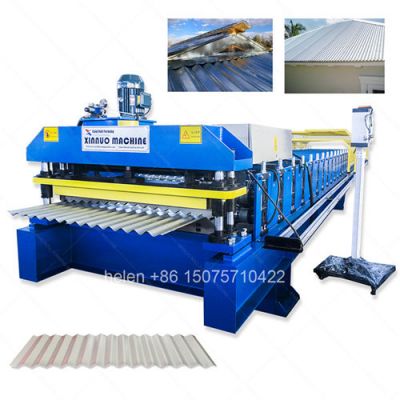
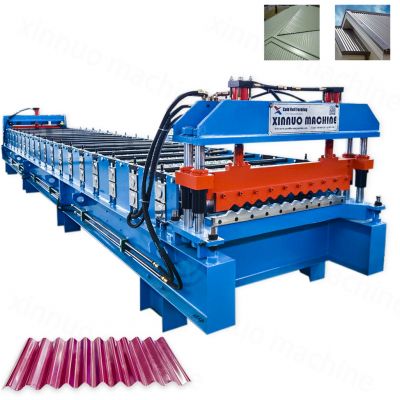
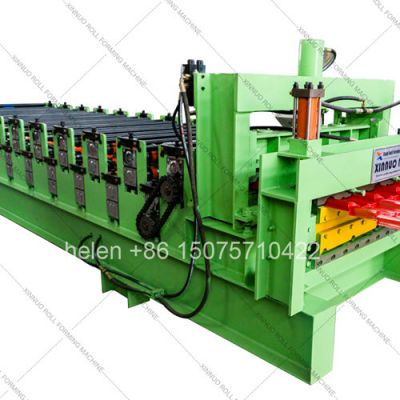
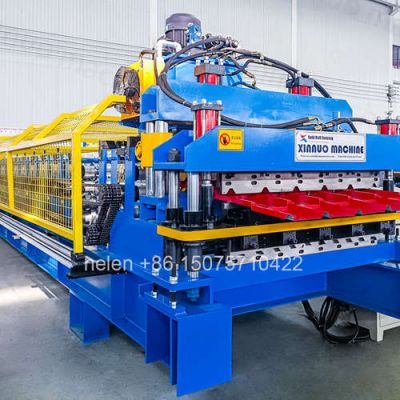
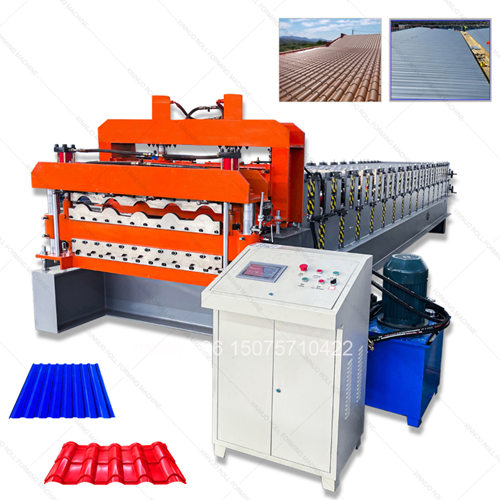
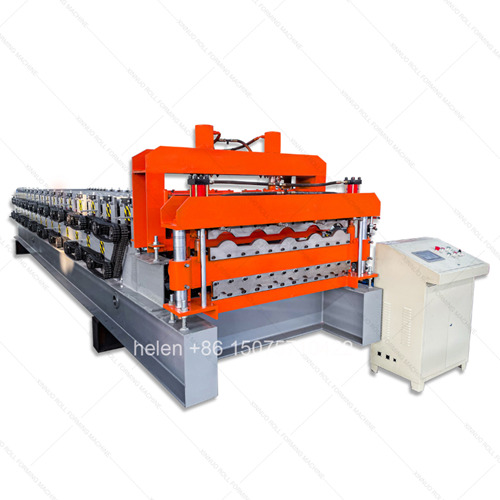
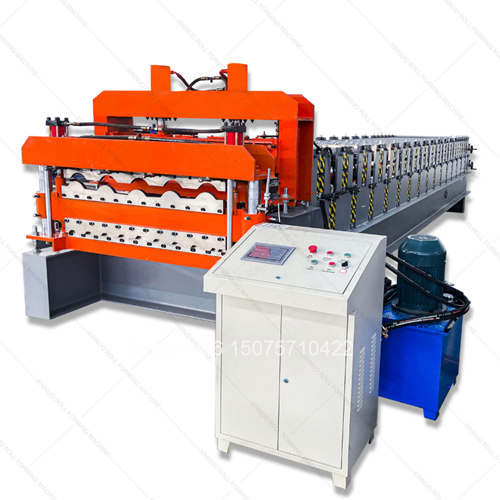
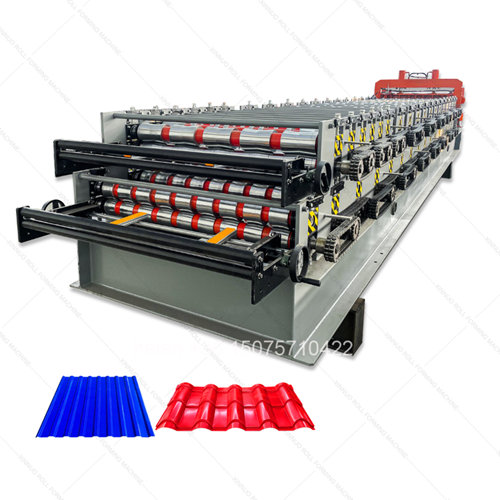
When two suppliers quote for what appears to be the same double layer glazed tile and roof sheet manufacturing machine, the quoted figures can differ by a wide margin even though both descriptions sound identical. The reason is almost never that one supplier is simply cheaper. It is that the two figures are built from different inclusions — different roller row counts, different frame grades, different stamping mechanisms on the glazed tile deck, and different lists of what sits inside the price and what sits outside it. Understanding how the price is composed is the only reliable way to compare quotations on equal terms.
This page breaks the machine price into its component parts, identifies which components move the figure most, separates what is normally included from what is normally excluded, and sets out a comparison checklist that can be applied to any quotation. Because final pricing depends on configuration, freight destination, and commercial terms, the figures below are presented as proportions and relative indices rather than fixed amounts — a structure that remains valid whatever the absolute number happens to be.
A double layer machine quotation is the sum of eight principal cost blocks. The proportions below are indicative across the normal configuration range and will shift as the specification changes, but the ordering is consistent: roller tooling is the single largest block, followed by the structural frame.
| Cost Block | Typical Share | Main Cost Driver Within the Block | What Changes the Figure |
|---|---|---|---|
| Roller tooling, both decks | 30% – 38% | Total forming rows across both decks | Each additional row adds a matched pair of rollers, shafts, sprockets, and bearings. Deep-rib or complex profiles require more rows than shallow profiles. |
| Main frame and structure | 18% – 24% | H-section grade and side panel thickness | Escalating from 300H to 350H to 400H increases steel mass and machining time. Higher grades are required as combined deck weight rises. |
| Drive system | 10% – 14% | Motor rating, gearbox, chain specification | Motor rating follows the heaviest deck. Duplex chain sizing, hardened sprockets, and the selector clutch are included here. |
| Control system and electrical | 8% – 12% | PLC brand, HMI size, cabinet build | Named-brand controllers and larger displays cost more than generic equivalents. Wiring, cabinet fabrication, and commissioning logic sit in this block. |
| Hydraulic shear and power pack | 6% – 9% | Blade material, cutting force, pump and reservoir size | Cr12MoV blades and an independent 4 kW power pack are the normal baseline. Heavier cutting requirements raise cylinder and pump sizing. |
| Decoiler | 5% – 8% | Load capacity and expansion method | A 5-ton manually expanded mandrel differs materially in cost from an 8-ton hydraulically expanded unit with a coil car. |
| Run-out conveyor | 3% – 5% | Length and drive configuration | A 3-metre powered table is the normal baseline; 4-metre and automatic stacking variants increase this block. |
| Testing, packing, documentation | 3% – 5% | Test protocol depth and export packing | Machine-level acceptance testing with real material, fumigated crating, and a complete documentation package are real cost items, not overhead. |
The glazed tile forming deck is the element that most often explains a price gap between two otherwise similar quotations, because the pitch-stamping mechanism that produces the tile appearance can be built two fundamentally different ways. The trapezoidal or roof sheet deck on the other side of the machine is a continuous roller forming deck in both cases; it is the tile deck where specifications diverge.
| Stamping Mechanism | Relative Cost | How It Works | Commercial Consequence |
|---|---|---|---|
| Mechanical cam drive | Baseline | A cam linked to the main drive shaft triggers the stamping press once per revolution, producing a fixed pitch distance | Lower cost and proven reliability. Pitch distance is fixed by the cam, so changing the tile pattern requires changing the cam. |
| Servo independent drive | Approximately 8% – 14% higher | A dedicated servo motor drives the stamping mechanism, synchronised to the line through the controller | Programmable pitch distance and higher stamping precision. Suited to producers serving multiple markets with different tile pattern expectations. |
| Stamping die set | Included in the deck tooling block | Cr12MoV stamping die, quenched and tempered, profiling the tile step geometry | Die geometry is pattern-specific. Where more than one tile pattern is required, an additional die set is an additional tooling cost. |
| Pattern change capability | Additional tooling | Changing from one tile pattern to another requires different stamping geometry | A machine configured for one glazed tile pattern cannot produce a different pattern without additional tooling — this should be clarified in writing at order stage. |
Quoted prices across the market are best understood by comparing configuration tiers rather than brand names. The relative index below uses a standard mid-range configuration as the baseline of 100. Any quotation can be placed against this scale by checking the four specification points listed.
| Tier | Relative Index | Frame Grade | Rows per Deck | Main Motor | Typical Profile and Market Fit |
|---|---|---|---|---|---|
| Economy | 82 – 90 | 300H | 12 – 14 | 5.5 kW | Shallow trapezoidal deck plus single-pattern glazed tile deck. Suited to domestic-market producers running one tile pattern and moderate output. |
| Standard | 100 (baseline) | 350H | 14 – 16 | 7.5 kW | Most common configuration. Handles standard trapezoidal and glazed tile profiles across the normal gauge range. |
| Heavy duty | 122 – 138 | 400H | 16 – 18 | 11 kW | Deep-rib trapezoidal deck with servo-driven tile stamping. Suited to producers running thicker gauge and higher sustained output. |
| Wide and custom | 145 – 172 | 450H | 18 plus stamping | 11 kW or above | Wide-format profiles, multi-pattern tile capability, and automatic handling. Quoted individually against specification. |
| Factors That Increase the Price | Factors That Reduce the Price |
|---|---|
| Additional forming rows on either deck | Fewer forming rows where profile depth allows |
| Deeper ribs or more intricate profile geometry | Shallow, simple profile cross-sections |
| Higher frame grade to carry combined deck weight | Lighter frame grade matched to a lighter deck combination |
| Higher motor rating for deep-rib or thick-gauge forming | Standard motor rating for normal forming loads |
| Servo-driven tile pitch stamping instead of mechanical cam | Mechanical cam stamping for a single fixed tile pattern |
| Larger decoiler capacity and hydraulic expansion with coil car | Smaller decoiler with manual expansion |
| Optional automation such as automatic stacking | Manual sheet collection without stacking automation |
| Additional roller or die sets for further profile patterns | Single tooling set for each deck, no spare patterns |
| Named-brand controllers and larger HMI displays | Standard controller specification and baseline display |
| Wider effective profile widths requiring more material per roller | Narrower effective profile widths within the standard range |
The most frequent cause of a misleading price comparison is a difference in inclusion lists rather than a difference in manufacturing cost. Buyers should require every quotation to state its inclusions and exclusions explicitly in writing.
| Normally Included in the Machine Price | Normally Excluded and Priced Separately |
|---|---|
| Forming machine with both roller decks fully tooled | Ocean freight and marine insurance |
| Main drive motor, gearbox, chain, sprockets, selector clutch | Destination port charges and terminal handling |
| Hydraulic shear with power pack and blade set | Inland transport to the buyer's factory |
| Control cabinet, PLC, HMI, and wiring | Import duty, taxes, and customs clearance costs |
| Decoiler of the specified capacity | Foundation excavation, concrete pad, and anchor grouting |
| Run-out conveyor of the specified length | Incoming electrical supply connection and isolator installation |
| One spare shear blade set and standard toolkit | Crane or forklift capacity for unloading and positioning |
| Factory testing with material, and acceptance documentation | Coil material required for commissioning and trial production |
| Installation manual, wiring and hydraulic schematics, commissioning video | On-site technician travel, accommodation, and daily service rate where requested |
| Export packing in fumigated crates | Additional spare parts beyond the standard set |
| Option | Relative Impact on Machine Price | When It Is Worth Adding |
|---|---|---|
| Servo pitch stamping upgrade | 8% – 14% higher | Where more than one tile pattern will be sold, or where customers inspect pitch precision closely |
| Automatic sheet stacking system | 6% – 10% higher | Where sheet volume is high enough that manual collection limits output or drives labour cost |
| Coil car with hydraulic loading | 4% – 7% higher | Where coil weights exceed what manual handling can manage safely, or loading time is a bottleneck |
| Extended run-out conveyor | 1% – 3% higher | Where finished sheet is long and requires more travel distance before collection |
| Remote diagnostics module | 2% – 4% higher | Where the factory is remote and rapid technical assistance reduces production interruption |
| Additional roller or die set | 25% – 35% higher per set | Where a second profile pattern or a second tile pattern is expected in the product plan |
| Larger HMI display | 1% – 2% higher | Where operators work at distance from the panel or training of new staff is frequent |
| Certification documentation package | 2% – 4% higher | Where the machine must be imported into a market that requires formal conformity documentation |
| # | Comparison Point | What to Require From Each Supplier |
|---|---|---|
| 1 | Forming rows per deck | A stated row count for the roof sheet deck and for the glazed tile deck. A lower row count is the most common explanation for a lower price. |
| 2 | Frame grade | The H-section grade quoted, and the basis on which it was selected against the combined deck weight. |
| 3 | Stamping mechanism | Whether the glazed tile deck uses mechanical cam or servo drive, and which tile pattern the tooling is cut for. |
| 4 | Roller specification | Base material, contouring method, profile tolerance, and chrome thickness quoted as figures rather than descriptions. |
| 5 | Motor and drive rating | Motor power, chain specification, and whether a selector clutch is fitted or a simpler coupling arrangement is used. |
| 6 | Controller specification | Controller brand and model, display size, and whether recipe storage is provided per deck. |
| 7 | Inclusion list | Written confirmation of whether decoiler, run-out conveyor, spare blades, toolkit, and documentation are inside the quoted figure. |
| 8 | Testing scope | Whether testing uses real material, at which speeds, and whether results are documented for the buyer. |
| 9 | Trade term and destination | The Incoterm quoted and the named port or destination — a CIF figure for one port is not comparable with an EXW figure for another. |
| 10 | Warranty and support scope | Warranty duration, what is covered, and whether remote technical support and spare parts availability are included. |
| Commercial Item | Typical Position and What to Confirm |
|---|---|
| Payment structure | Commonly a deposit on order confirmation with the balance due before shipment. Confirm the exact split, the accepted payment methods, and the treatment of any configuration changes requested after deposit. |
| Manufacturing lead time | Typically several weeks from deposit confirmation, varying with configuration complexity and current production load. Confirm the lead time in writing against the agreed specification, not against a verbal estimate. |
| Trade terms | Machine price may be quoted on an ex-works, free-on-board, or delivered basis. Confirm the Incoterm and the named location, since freight and insurance can represent a material share of the delivered cost. |
| Testing and acceptance | Confirm whether the buyer may witness testing at the factory or receive documented test results and video evidence before shipment release. |
| Warranty | Typically a defined period from shipment covering manufacturing defects. Confirm what is excluded — normal wear items such as blades, chains, and seals are commonly outside the warranty. |
| Spare parts availability | Confirm that identified spare parts carry part numbers in the documentation package, so that reordering does not depend on description alone. |
| Technical support scope | Confirm whether remote technical support is included and for how long, and the terms under which an on-site technician can be dispatched if required. |
| Parameter | Standard Range |
|---|---|
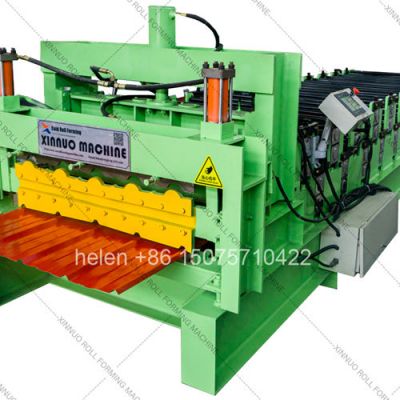
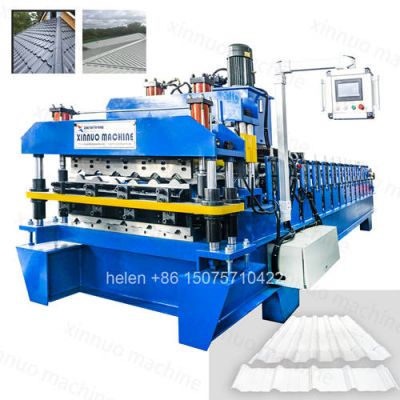
| Machine configuration | Two forming decks stacked vertically in one frame; roof sheet deck plus glazed tile deck with pitch stamping |
| Roof sheet deck profiles | Trapezoidal, corrugated wave, or arc wave, selected against the target market standard |
| Glazed tile deck | Pitch-stamping deck, mechanical cam drive or servo independent drive, with pattern-specific stamping die |
| Main frame grade | 300H, 350H, 400H, or 450H welded H-section steel selected against combined deck weight |
| Forming rows per deck | 11 – 18 rows depending on profile family and rib depth |
| Roller material | 45# forged carbon steel, CNC turned, ground, hard chrome plated to HRC 58 – 62 |
| Roller profile tolerance | ±0.03 mm to ±0.05 mm |
| Shaft | Φ75 mm or Φ80 mm solid steel, centerless ground, dual-row self-aligning bearings |
| Transmission | Duplex roller chain with hardened sprockets and selector clutch for deck engagement |
| Main motor | 5.5 kW, 7.5 kW, or 11 kW with variable frequency drive |
| Hydraulic station | 4.0 kW independent power pack with air-cooled oil radiator |
| Forming speed | 8 – 20 m/min; the pitch-stamping deck reduces the effective ceiling |
| Material capability | PPGI, PPGL, galvanized, aluminium-zinc coated, pre-painted aluminium; 0.30 – 0.80 mm standard |
| Cutting system | Hydraulic post-cut shear, Cr12MoV blades at HRC 60 – 62 |
| Cut length tolerance | ±1.5 mm |
| Control system | PLC with colour touchscreen HMI and independent recipe banks per deck |
| Electrical supply | 380 V / 50 Hz / 3-phase standard; alternative voltages and frequencies by destination |
| Certification | CE marking and ISO 9001:2015 compliant manufacturing |
Coil loading, deck selection at the entry guide, roll forming on the selected deck, glazed tile pitch stamping where that deck is active, length measurement, hydraulic cutting, and discharge to the run-out table follow the established sequence, with deck changeover completed in minutes and no disturbance to the roller tooling on either deck.
Hebei Xinnuo is a professional cold roll forming machinery manufacturer with 20+ years of experience. We specialize in C/Z purlin machines, roof panel roll formers, floor deck machines, and custom profile solutions — exported to 50+ countries worldwide.