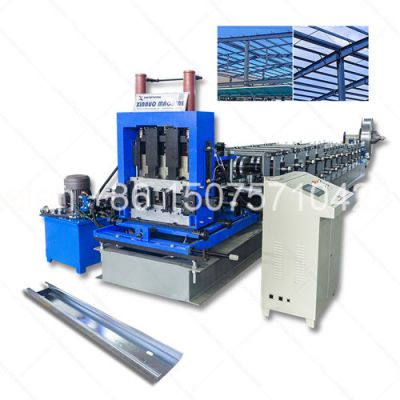
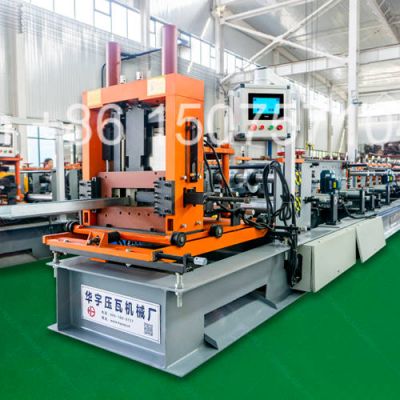
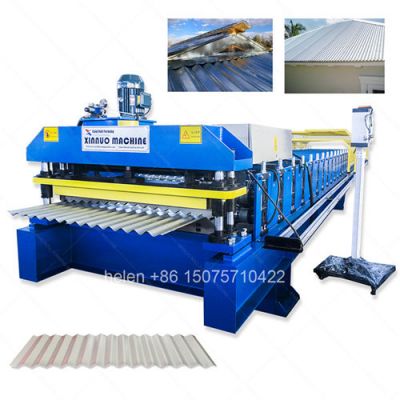
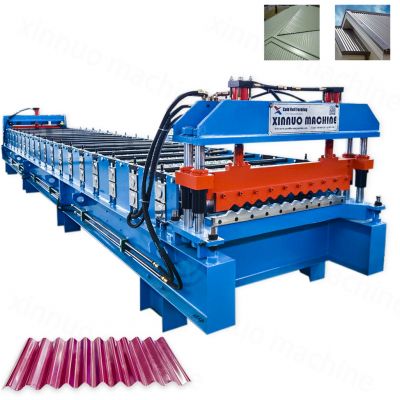
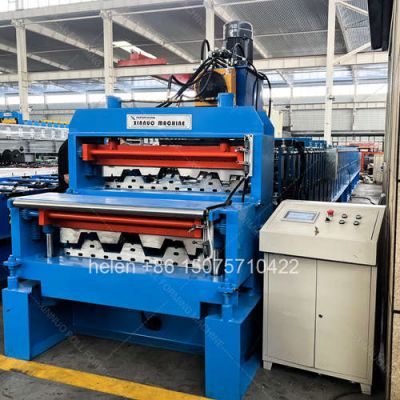
Double Layer Floor Decking Machine
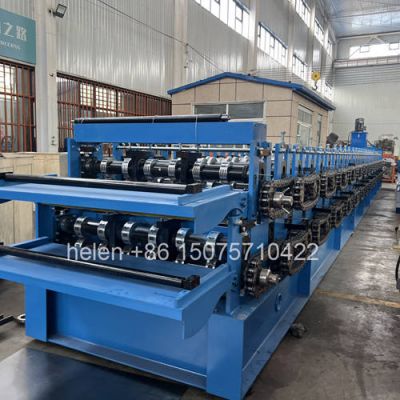
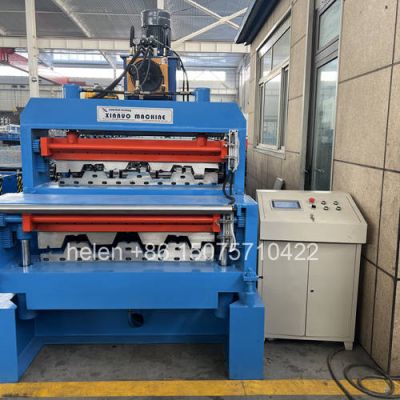
This double layer floor decking machine carries two complete deck roller sets inside one frame, stacked one above the other. The material path is switched by hand at the entry guide, so the same line rolls one deck profile or the other without moving a second machine onto the floor. Only one profile runs at a time; the value is in the space and the investment, not in running both together.
How a Double Layer Machine Works
| Element |
Arrangement |
| Roller sets |
Two independent forming trains, mounted top and bottom in the same frame |
| Drive |
One drive system, shared between the two layers |
| Profile selection |
The entry guide and baffle are reset so the strip enters the upper or lower train |
| Changeover time |
Roughly 5-15 minutes |
| Simultaneous production |
Not possible; the machine produces one panel type at a time |
| Shared equipment |
Decoiler, control cabinet, shear and output table serve both layers |
Combining Two Deck Profiles: The Rules That Matter
Floor deck profiles are deeper and heavier than roof or wall sheets, so a double layer deck machine is engineered around the heavier layer rather than being a simple two-for-one.
| Rule |
Why it matters on a deck machine |
| Keep the row counts close |
A difference of about six rows or fewer keeps both layers forming correctly. A large gap means the shorter layer forms too abruptly, which shows up as rib distortion and surface marking. |
| Match the feed width |
Identical feed widths let both layers share one decoiler and one entry guide. Different widths need a second guide set and a manual changeover. |
| Frame one class heavier |
A 750 mm deck machine normally runs on a 450H frame. Stacking a second deck train on the same body takes the frame, mid plate and base into the heavy class. |
| Size the chain for the harder layer |
Both layers share one transmission, so the chain and sprockets are chosen for the higher torque of the two, not the average. |
| Check the machine height |
Two deep-rib roller stacks make the body noticeably taller than a single deck machine. Confirm the available headroom and crane access before ordering. |
| Plan for two anti-pooling arrangements |
Deep ribs need the bearing wheel and reinforcement bar layout on each layer, so the design is prepared per profile rather than copied. |
Recommended Deck Combinations
| Combination |
Layer rows |
Feed width |
Note |
| 750 mm deck and 1000 mm deck |
20 and 24 |
1000 mm and 1220 mm |
Both ribs are about 50-51 mm, the closest match available. Two feed widths, so a second entry guide is needed. |
| 688 mm deck and 810/830 profile |
688 layer plus 18 rows |
1000 mm shared |
Proven in production: an 18-row 810/830 layer paired with a 688 deck layer on a 450H frame, 20 mm mid plate, 95 mm shaft, 18.5 kW drive and 2-inch chain. |
| Same profile, two widths |
Matched |
Shared |
The easiest and cheapest pairing, and the smoothest to commission. |
| Deep deck plus shallow deck |
Reviewed per project |
Shared where possible |
A 50 mm rib stacked with a 150 mm rib is a large gap in both rib depth and row count, so it is engineered case by case and is rarely the economical choice. |
Frame and Drive Requirements
| Item |
Typical requirement |
| Main frame |
Heavy class H-beam, one step above the single layer equivalent for the harder profile |
| Mid plate |
20 mm and above, set by the heavier layer |
| Shafts |
95 mm and above, ground and chrome plated |
| Motors |
Dual drive sized for the heavier layer |
| Transmission |
2-inch chain class, chosen for the higher torque layer |
| Shear |
Hydraulic, cut to length, shared by both layers |
| Control |
PLC with length and quantity setting, with a stored setting for each profile |
Double Layer Compared with Two Single Machines
| Item |
Double layer machine |
Two single machines |
| Machines on the floor |
One |
Two |
| Floor space |
Roughly 40-60 percent less |
Full footprint for both lines |
| Purchase cost |
About 65-75 percent of the two-machine total |
Full price for both |
| Simultaneous output |
One profile at a time |
Both profiles can run at once |
| Commissioning |
Longer, because both trains are aligned in one body |
Independent and quicker per machine |
| Best fit |
Two deck widths, moderate volumes, limited floor space |
High volume on both profiles at the same time |
Commissioning and Changeover
- Both forming trains are aligned and gauge checked before dispatch, with a sample panel from each layer
- Commissioning on site typically runs longer than a single layer machine, because two trains are set up in one body
- Changeover between profiles is a guide and baffle reset, not a roller change
- A written changeover sheet and a video walkthrough are supplied for each profile
- Each profile has stored length and quantity settings in the control cabinet
Questions Buyers Ask
| Question |
Answer |
| Can both decks be produced at the same time? |
No. One layer is active at a time. If you need both profiles running continuously, two single machines are the correct answer and we will say so. |
| What if my two deck profiles have very different row counts? |
We review the gap before quoting. Around six rows is comfortable; a much larger gap needs engineering assessment and may push you towards two single machines. |
| Will the frame be the same as a single deck machine? |
No. Stacking a second deck train takes the frame, mid plate and drive up one class to keep rigidity and surface quality. |
| How long does switching take? |
About 5-15 minutes for the guide and baffle reset. Rollers stay in place. |
| Is it harder to commission than a roof double layer? |
Yes. Deep deck ribs are less forgiving than shallow roof ribs, so commissioning takes longer and we send an experienced engineer. |
Information Needed for a Quotation
- Both deck profile drawings: effective width, rib height, rib count
- The material thickness range for each profile
- Feed strip width available for each profile, and whether they match
- Expected annual volume for each profile
- Whether you must run both profiles at the same time
- Available floor space, ceiling height and crane capacity
- Site voltage and phase, and control language