helen@hbxinnuorollforming.com
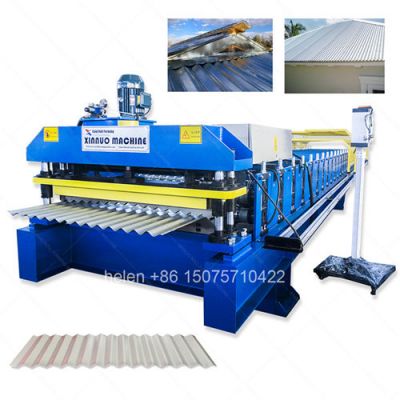
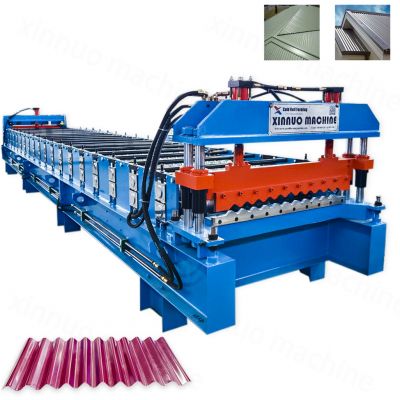
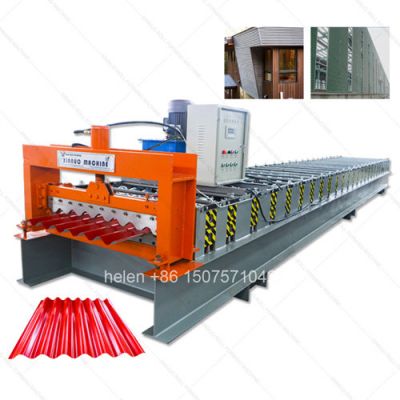
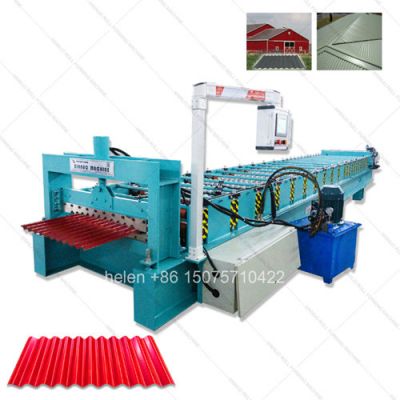
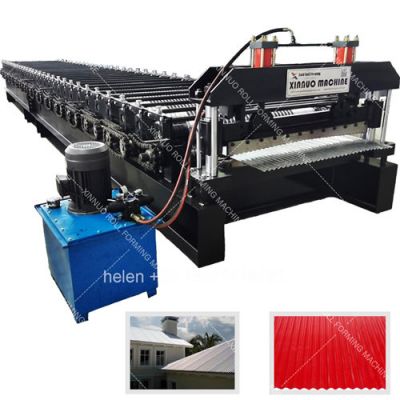
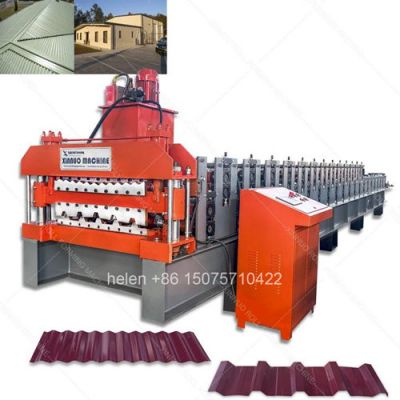
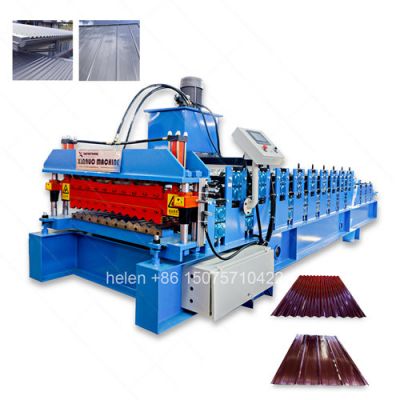
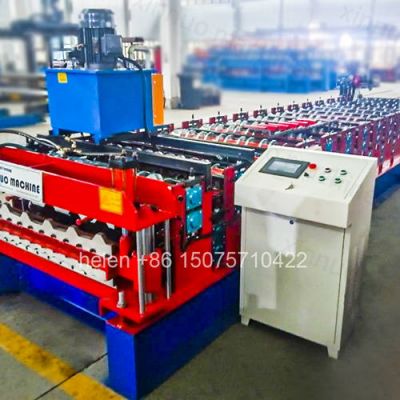
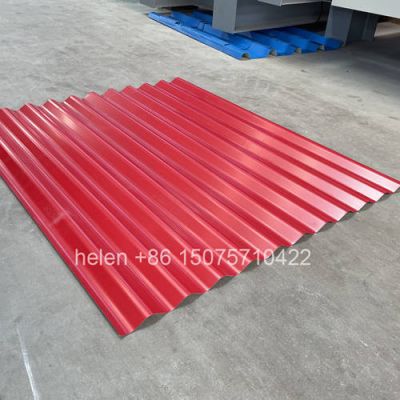
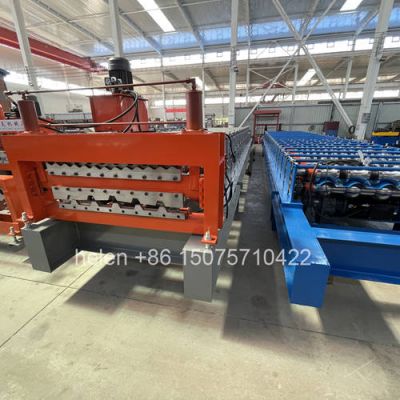
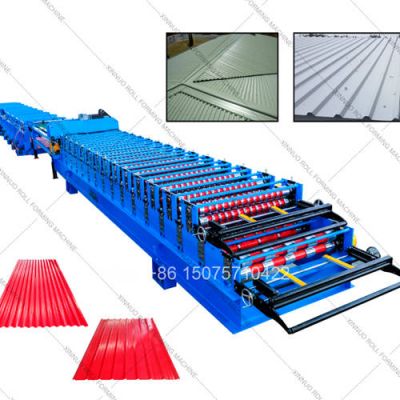
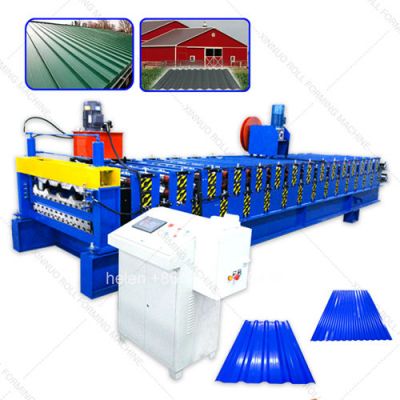
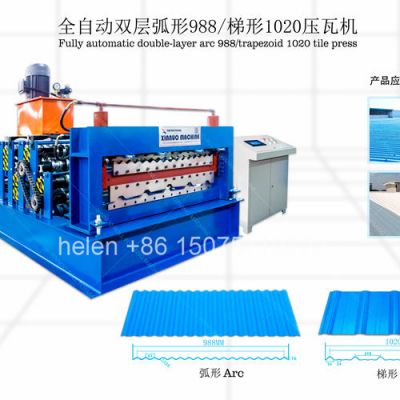
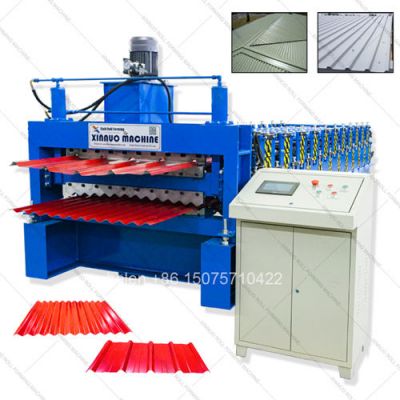
This IBR + corrugated double layer roll forming machine combines the two most widely demanded metal roofing profiles worldwide into a single vertically stacked production system. The upper roller tier forms IBR (Inverted Box Rib) trapezoidal sheets — the dominant roofing profile across Africa, the Middle East, and Southeast Asia for industrial warehouses, commercial buildings, and large-scale residential projects. The lower tier produces classic sinusoidal corrugated sheets — the go-to choice for agricultural buildings, fencing, temporary shelters, and economy construction across Central America, South America, and West Africa.
With a simple 5-15 minute material path switch, manufacturers can alternate between these two high-demand profiles without any tooling changes, roller swaps, or machine reconfiguration. This machine is the single most popular double layer configuration globally, delivering maximum market coverage at the lowest equipment investment.
| IBR Type | Effective Width | Rib Height | Coil Width | Primary Markets |
|---|---|---|---|---|
| IBR-686 | 686 mm | 43 mm | ~910 mm | South Africa, Botswana, Namibia |
| IBR-762 | 762 mm | 43 mm | ~1000 mm | East Africa, Yemen, Middle East |
| IBR-840 | 840 mm | 35 mm | ~1000 mm | Nigeria, Ghana, Southeast Asia |
| IBR-925 | 925 mm | 38 mm | ~1100 mm | Middle East large-span factory roofs |
| IBR-1050 | 1050 mm | 28 mm | ~1200 mm | Australia, New Zealand wall and roof |
| Corrugated Type | Effective Width | Wave Height | Wave Count | Primary Markets |
|---|---|---|---|---|
| Corrugated-665 | 665 mm | 17 mm | 11 waves | El Salvador, Central America |
| Corrugated-715 | 715 mm | 17 mm | 11 waves | Ghana, West Africa |
| Corrugated-762 | 762 mm | 17 mm | 12 waves | Chile, South America |
| Corrugated-836 | 836 mm | 17 mm | 11 waves | Kenya, Tanzania, East Africa |
| Corrugated-990 | 990 mm | 17 mm | 13 waves | Mauritius, island nations |
| Parameter | Standard Configuration |
|---|---|
| Main Frame | 350H or 400H welded H-section structural steel |
| IBR Layer Roller Stations | 14–18 rows, 45# forged steel, hard chrome plated |
| Corrugated Layer Roller Stations | 12–16 rows, same material and hardening spec |
| Roller Shaft Diameter | Φ75–80 mm solid steel, precision ground |
| Drive System | Heavy-duty duplex roller chain with selector clutch |
| Main Motor | 7.5–11 kW AC motor with VFD speed control |
| Forming Speed | 12–18 m/min (variable frequency adjustable) |
| Cutting System | Hydraulic post-cut guillotine shear, Cr12MoV blades |
| Cutting Accuracy | ±1.5 mm length tolerance |
| Control System | PLC with 7-inch color touchscreen HMI, multi-language |
| Material Thickness | 0.3–0.8 mm (PPGI / galvanized / aluminum) |
| Profile Switchover Time | 5–15 minutes (manual diverter plate, no tool changes) |
| Power Supply | 380V/50Hz/3-Phase (customizable to regional voltage) |
| # | Station | Function |
|---|---|---|
| 1 | Hydraulic Uncoiler | Loads and feeds raw steel coil (5T or 8T capacity); expanding mandrel with pneumatic/hydraulic expansion |
| 2 | Feed Guide & Diverter | Manual lever redirects coil strip into IBR (upper) or corrugated (lower) forming path; side guides center material |
| 3 | IBR Forming Unit (Top) | 14-18 progressive roller stations shape trapezoidal IBR profile with consistent rib geometry |
| 4 | Corrugated Forming Unit (Bottom) | 12-16 progressive roller stations form sinusoidal wave profile with uniform pitch |
| 5 | Hydraulic Post-Cut Shear | Flying guillotine cuts finished panel to programmed length while line continues running |
| 6 | PLC Control Station | Touchscreen HMI for length setting, batch counting, auto-stop, fault alarm, and recipe storage |
| 7 | Run-Out Conveyor | Powered roller table delivers finished sheets; optional automatic stacking arm for hands-free collection |
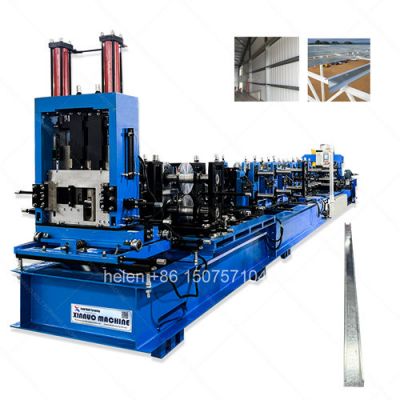
Hebei Xinnuo is a professional cold roll forming machinery manufacturer with 20+ years of experience. We specialize in C/Z purlin machines, roof panel roll formers, floor deck machines, and custom profile solutions — exported to 50+ countries worldwide.