helen@hbxinnuorollforming.com
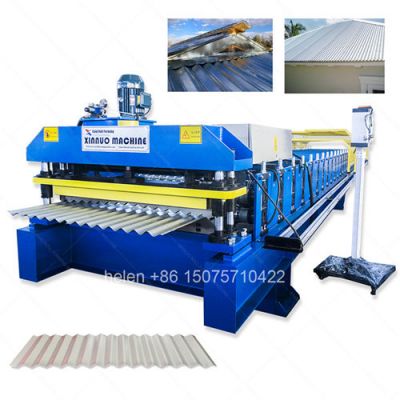
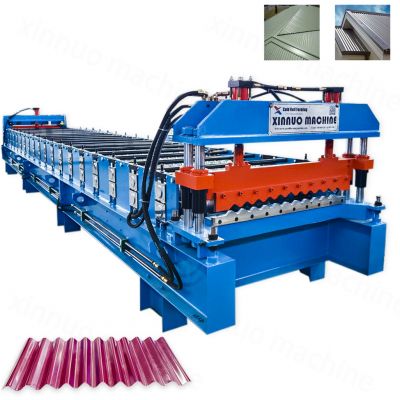
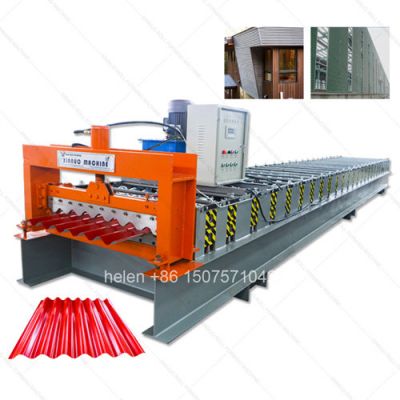
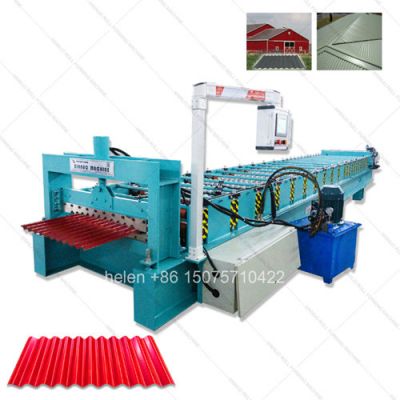
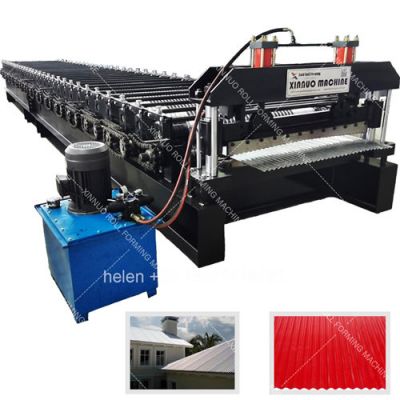
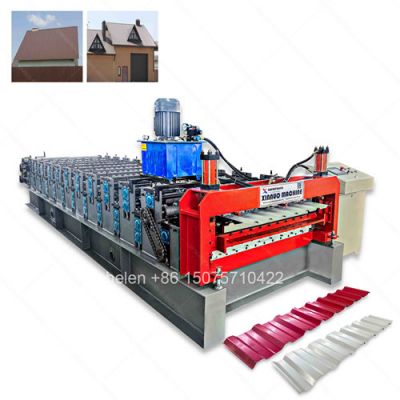
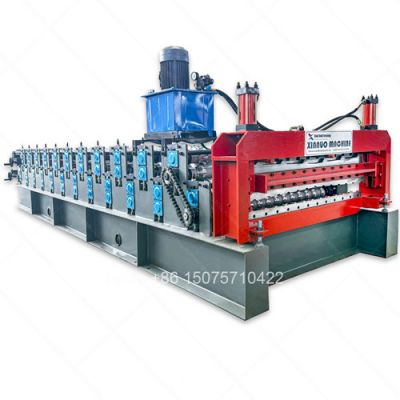
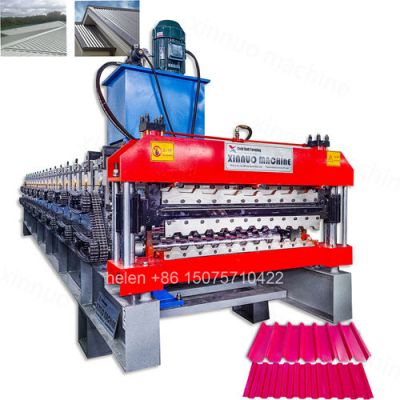
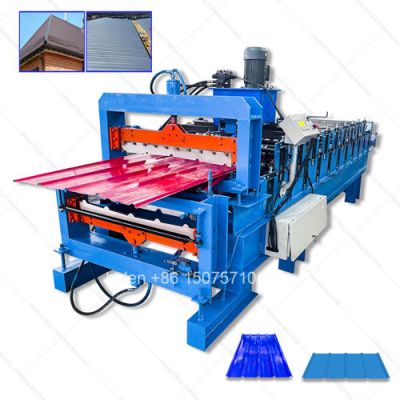
This IBR + IBR double layer roll forming machine equips manufacturers with two different IBR (Inverted Box Rib) trapezoidal profile widths on a single vertically stacked machine platform. Both the upper and lower forming tiers produce IBR-type profiles — the globally dominant metal roofing profile for industrial, commercial, and residential construction — but in different effective widths, rib counts, or rib heights to serve distinct market segments from one compact investment.
This configuration is ideal for roofing sheet suppliers who need to offer both narrow-width IBR sheets for residential or small-building projects and wide-width IBR sheets for large-span industrial warehouses. It is also the preferred choice for manufacturers exporting to multiple countries with different national IBR profile standards, allowing a single machine to serve diverse export markets without additional equipment purchases.
| Combination | Upper Layer | Lower Layer | Market Application |
|---|---|---|---|
| 686 + 762 | IBR-686 (5 ribs, 43 mm height) | IBR-762 (5 ribs, 43 mm height) | Southern Africa residential + East Africa commercial — two dominant regional standards |
| 762 + 840 | IBR-762 (5 ribs, 43 mm height) | IBR-840 (4-5 ribs, 35 mm height) | East Africa industrial warehouses + Southeast Asia commercial buildings |
| 840 + 900 | IBR-840 (4 ribs, 35 mm height) | IBR-900 (4-5 ribs, 37 mm height) | Nigeria/Ghana general construction + specialized wide-span roofing projects |
| 840 + 1050 | IBR-840 (4-5 ribs, 35 mm height) | IBR-1050 (6-7 ribs, 28 mm height) | Standard roofing + wall cladding / Australia-New Zealand market combo |
| 925 + 1050 | IBR-925 (5 ribs, 38 mm height) | IBR-1050 (6-7 ribs, 28 mm height) | Middle East factory roofing + Asia-Pacific wall panel and roofing dual market |
| Parameter | Standard Configuration |
|---|---|
| Main Frame | 350H or 400H welded H-section structural steel with cross-ribbed gusset plates |
| Upper Layer Roller Stations | 14–18 rows, 45# forged steel, CNC machined, hard chrome plated (HRC 58–62) |
| Lower Layer Roller Stations | 14–18 rows, identical material and surface hardening specification |
| Roller Shaft Diameter | Φ75–80 mm solid steel shafts, precision ground, dual-row self-aligning bearings |
| Drive System | Duplex roller chain transmission with hardened sprockets and selector clutch mechanism |
| Main Motor Power | 7.5–11 kW AC motor with variable frequency drive (VFD) for speed adjustment |
| Hydraulic Station | 4.0 kW independent oil pump unit with oil cooling radiator and temperature sensor |
| Forming Speed | 12–18 m/min, VFD adjustable to match material gauge and operator skill level |
| Cutting System | Hydraulic post-cut guillotine shear with Cr12MoV tool steel blades, HRC 60–62 |
| Cutting Accuracy | ±1.5 mm length tolerance at rated forming speed |
| Control System | PLC with 7-inch color touchscreen HMI, multi-language support, 50-recipe storage |
| Material Thickness | 0.3–0.8 mm (PPGI, PPGL, galvanized steel, aluminum-zinc alloy coil) |
| Coil Width Range | Up to 1250 mm (depending on target IBR effective widths and rib count) |
| Profile Switchover Time | 5–15 minutes via manual diverter plate; no roller or die changes required |
| Electrical Standard | 380V/50Hz/3-Phase (customizable to 220V/440V/480V/60Hz for destination countries) |
| Total Line Length | Approximately 18–22 meters including decoiler and run-out table |
| Certifications | CE and ISO 9001 compliant manufacturing and quality assurance |
| Comparison Factor | IBR + Corrugated Double Layer | IBR + IBR Double Layer |
|---|---|---|
| Profile Diversity | Two fundamentally different profile types — trapezoidal and wave | Two different widths of the same trapezoidal profile family |
| Customer Segments | Premium industrial buyers + economy agricultural buyers | Two segments within the premium/commercial IBR market |
| Roller Tooling Cost | Two distinct tooling geometries (trapezoidal ribs + sinusoidal waves) | Two trapezoidal tooling sets — shared geometry principles, easier manufacturing |
| Setup Complexity | Moderate — two different forming principles to calibrate | Lower — both layers share the same forming principle, simpler alignment |
| Best For | Maximum market breadth across different construction sectors | Deep IBR market penetration with multiple width options for different building scales |
| Typical Buyer | General roofing sheet traders and multi-market exporters | IBR-specialized manufacturers serving diverse project sizes within one profile family |
| Step | Stage | Process Description |
|---|---|---|
| 1 | Coil Loading | Raw steel coil mounted on hydraulic decoiler (5T or 8T capacity); expanding mandrel secures and centers the coil |
| 2 | Profile Selection | Operator sets manual diverter guide to route coil strip into IBR Width A (upper) or IBR Width B (lower) forming tier |
| 3 | Edge Trimming | Manual pre-cutter trims coil leading edge before entering first roller station for clean profile start |
| 4 | Roll Forming | Strip passes through 14-18 sequential roller stations, incrementally shaped into target IBR trapezoidal geometry |
| 5 | Length Measurement | Rotary encoder tracks linear material travel; signals PLC to initiate cut at programmed sheet length |
| 6 | Hydraulic Post-Cut | Flying shear executes clean cut synchronized with line speed; blade retracts immediately after each cut |
| 7 | Panel Collection | Finished IBR sheets discharge onto powered run-out conveyor; manual stacking or optional automatic stacking arm |
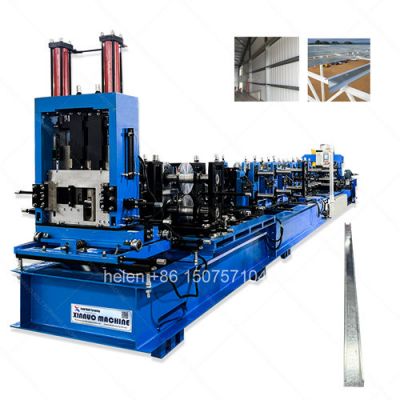
Hebei Xinnuo is a professional cold roll forming machinery manufacturer with 20+ years of experience. We specialize in C/Z purlin machines, roof panel roll formers, floor deck machines, and custom profile solutions — exported to 50+ countries worldwide.