helen@hbxinnuorollforming.com
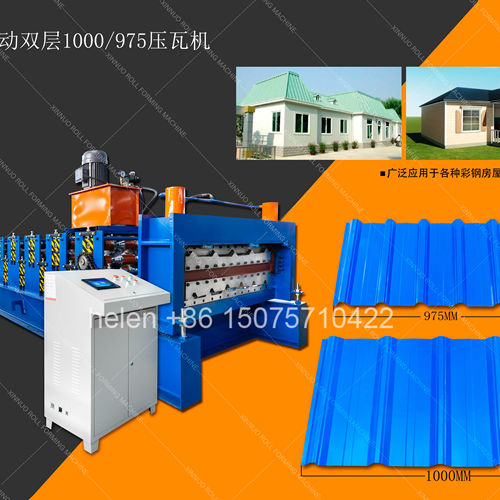
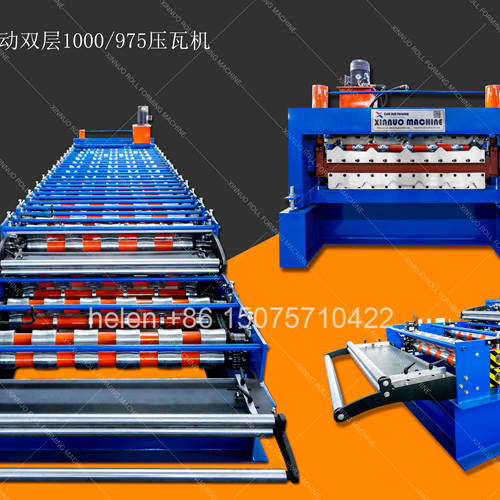
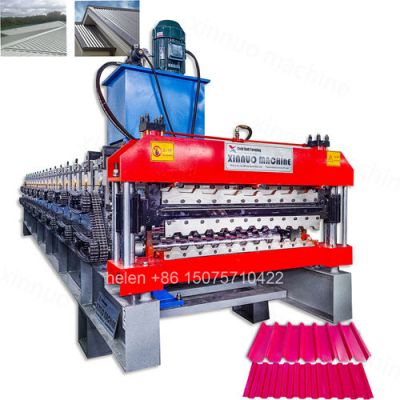
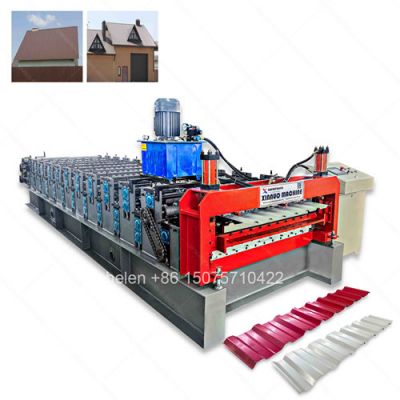
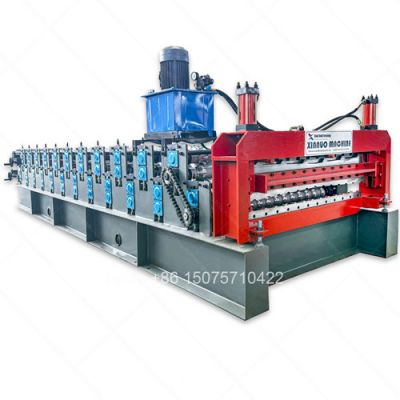
- Dual forming tiers stacked vertically in one rigid steel main frame
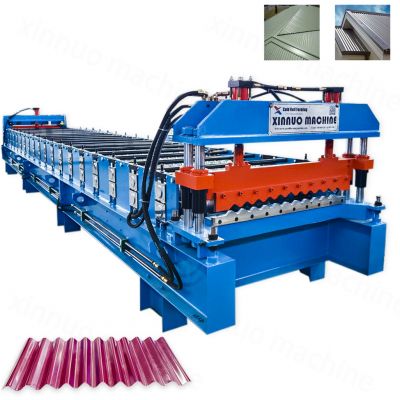
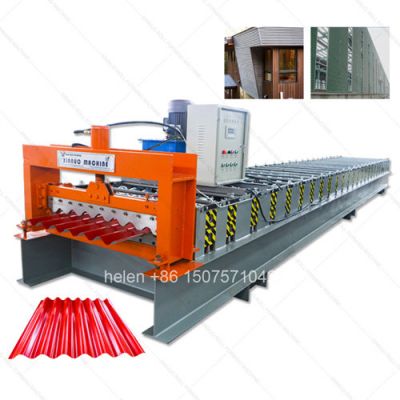
- Produces IBR high-rib trapezoidal sheets for industrial roof structures
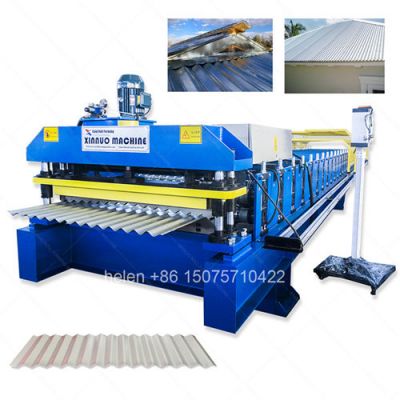
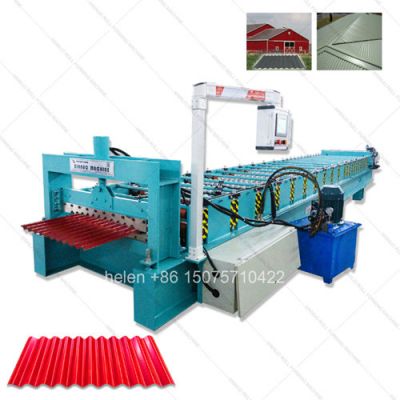
- Produces corrugated sinusoidal wave panels for agricultural and budget housing
- Manual diverter switches material path between layers in 5-15 minutes
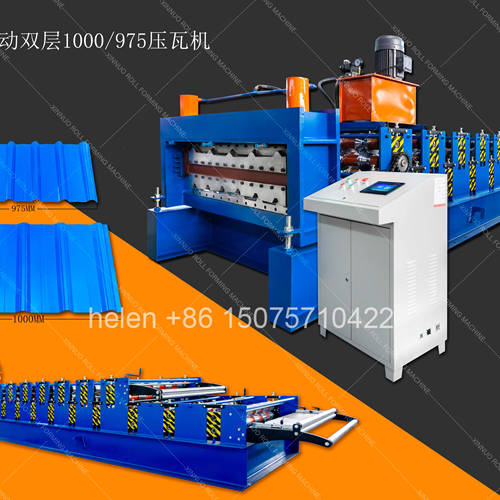
- Single PLC touchscreen controls length, batch count, and auto-stop functions
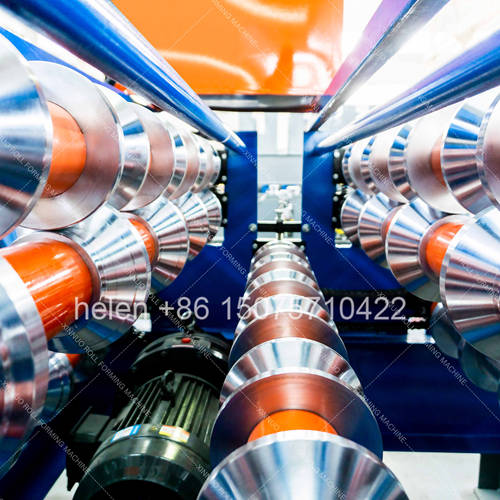
- 45# forged steel rollers with hard chrome plating ensure scratch-free forming
- Hydraulic shear with Cr12MoV blades delivers ±1.5 mm cutting precision
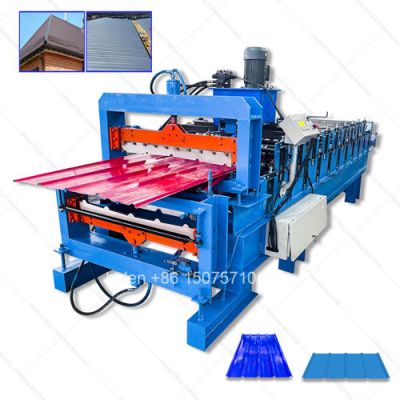
This double layer IBR and corrugated sheet roll forming machine addresses a fundamental challenge faced by roofing manufacturers worldwide: how to serve markets that demand both IBR trapezoidal profiles and corrugated wave panels without purchasing, installing, and maintaining two separate production lines. The answer lies in a vertically integrated dual-tier architecture that houses two complete roller forming systems within a single welded structural frame — selectable via a simple material path diverter that eliminates the need for roller changes, die swaps, or mechanical reconfiguration.
The upper tier is dedicated to IBR (Inverted Box Rib) profile production. IBR sheets feature raised trapezoidal ribs that provide exceptional spanning strength and water channeling, making them the preferred choice for industrial warehouses, factory buildings, commercial shopping complexes, aircraft hangars, school halls, church roofing, and large-scale residential developments. The IBR profile's structural efficiency — achieving wide spans with relatively thin gauge material — has driven its adoption as the dominant metal roofing standard across Southern and Eastern Africa, the Arabian Peninsula, Southeast Asia, and increasingly in South American and Caribbean construction markets.
The lower tier produces classic corrugated sinusoidal wave sheets — the original and still most widely recognized metal roofing profile globally. Characterized by its smooth, continuous wave pattern, corrugated sheeting offers a compelling combination of low manufacturing cost, simple installation, excellent drainage, and broad aesthetic acceptance. It remains the go-to roofing material for agricultural structures (barns, poultry sheds, livestock housing), perimeter fencing, temporary and semi-permanent shelters, low-cost housing initiatives, rural school construction, and budget-sensitive commercial projects across Central America, West Africa, South Asia, and Pacific island nations.
The foundation of the double layer machine is a 350H or 400H welded H-section steel main frame incorporating cross-ribbed internal gusset plates at every load-bearing joint. This frame is specifically engineered to resist the combined static weight of two stacked roller carriages plus the dynamic forming forces and vibration generated during continuous production at speeds up to 18 meters per minute. Unlike lighter-gauge frames that can develop micro-deflections over years of operation, the H-section architecture maintains dimensional stability and roller alignment precision through decades of industrial service.
Every roller in both the IBR and corrugated forming tiers begins as a 45# medium-carbon steel forging. The raw forging undergoes CNC lathe turning to establish the exact profile contour, then precision grinding to achieve the specified surface finish. A thick industrial hard chrome layer is electroplated onto the forming surface and post-treated to HRC 58-62 hardness. This tri-layer treatment — forged substrate, CNC contour, hard chrome surface — delivers three critical performance characteristics: zero surface scratching on pre-painted or galvanized coil stock, wear resistance that maintains profile accuracy across millions of linear meters of production, and corrosion protection suitable for humid tropical and coastal factory environments.
The rollers are mounted on Φ75-80 mm solid steel shafts supported at both ends by dual-row self-aligning spherical roller bearings. This bearing configuration compensates for any minor shaft deflection under forming load, keeping the roller gap consistent from edge to edge of the material strip — a key factor in producing IBR sheets with uniform rib height and corrugated sheets with consistent wave amplitude across the full panel width.
The drive system employs a heavy-duty duplex roller chain with hardened and precision-machined sprockets on every roller shaft. Chain tension is maintained by adjustable idler sprockets positioned at strategic points along the drive train. The entire drive assembly — motor, reduction gearbox, primary drive shaft, chain loops, and sprockets — is enclosed within a protective guard system with transparent inspection windows, ensuring operator safety while allowing visual monitoring of chain condition during production.
A selector clutch mechanism couples the main motor output to either the upper (IBR) or lower (corrugated) tier's drive chain. The clutch position is set manually before production begins and mechanically locked during operation to prevent accidental disengagement. The drive system is sized based on the higher torque demand of the two profiles — typically the IBR tier due to its deeper rib forming geometry and additional roller stations — ensuring adequate power delivery regardless of which tier is active.
The main drive motor is a 7.5 kW to 11 kW three-phase AC induction motor controlled by a variable frequency drive (VFD). The VFD enables stepless speed adjustment from approximately 6 to 18 meters per minute, allowing operators to optimize forming speed based on material gauge, profile complexity, and desired output rate. Thinner material (0.3-0.4 mm) can typically be run at higher speeds, while thicker gauges (0.6-0.8 mm) benefit from reduced speed for optimal profile definition and dimensional accuracy.
The machine is governed by a programmable logic controller (PLC) paired with a 7-inch color touchscreen human-machine interface (HMI). The HMI presents clearly labeled control functions including sheet length presetting, production batch quantity input, real-time production counter, speed adjustment slider, emergency stop status, and fault diagnostic messages. The interface supports multiple language options — typically English, French, Spanish, Arabic, and Russian — enabling operation by local workforces without language barriers. Up to 50 production recipes can be stored, each containing a pre-configured sheet length, batch quantity, and speed setting for rapid job changeover.
Sheet length is measured by a high-resolution rotary encoder mounted on a measuring wheel that maintains positive contact with the material surface. The encoder generates digital pulses proportional to linear material travel, which the PLC counts and compares against the preset target length. When the count reaches the target value, the PLC triggers the hydraulic shear cycle. This closed-loop measurement approach delivers ±1.5 mm length accuracy across the full speed range, meeting the tolerance requirements of commercial roofing installation standards.
The hydraulic post-cut shear station is a guillotine-type flying shear mounted after the final forming pass. As the formed panel continues moving at line speed, the shear carriage tracks with the material during the cut stroke and retracts immediately upon completion — the panel never stops moving. The upper and lower shear blades are fabricated from Cr12MoV cold-work die steel, a high-carbon high-chromium alloy specifically formulated for cutting tool applications. The blades undergo vacuum heat treatment (quenching from 1020-1040°C) followed by triple tempering to achieve HRC 60-62 hardness with excellent toughness and edge retention. The resulting cut edge is clean, square, and burr-free — critical for safe manual handling of finished sheets and proper overlapping during roof installation.
The hydraulic power pack operates on an independent 4.0 kW motor with its own oil reservoir, high-pressure pump, directional control valve, and oil cooling radiator. This independence from the main drive means cutting force and speed are never affected by forming load variations. The hydraulic system includes an oil temperature sensor, pressure relief valve, and filter with contamination indicator for reliable long-term operation.
| IBR Variant | Effective Width | Rib Height | Rib Count | Feed Width | Dominant Countries | End-Use Applications |
|---|---|---|---|---|---|---|
| IBR-686 | 686 mm | 43 mm | 5 | ~910 mm | South Africa, Botswana, Namibia, Zimbabwe | Residential houses, small commercial shops, garage roofing |
| IBR-762 | 762 mm | 43 mm | 5 | ~1000 mm | Kenya, Tanzania, Uganda, Yemen, Ethiopia | Industrial warehouses, factory buildings, school halls |
| IBR-840 | 840 mm | 35 mm | 4-5 | ~1000 mm | Nigeria, Ghana, Ivory Coast, Philippines, Indonesia | Commercial complexes, church buildings, shopping malls |
| IBR-925 | 925 mm | 38 mm | 5 | ~1100 mm | Saudi Arabia, UAE, Qatar, Oman, Kuwait | Large-span factory roofs, aircraft hangars, stadium roofing |
| IBR-1050 | 1050 mm | 28 mm | 6-7 | ~1200 mm | Australia, New Zealand, Pacific Islands | Wall cladding, residential roofing, agricultural sheds |
| Corrugated Variant | Effective Width | Wave Height | Wave Pitch | Wave Count | Key Regions | Primary Construction Types |
|---|---|---|---|---|---|---|
| CR-665 | 665 mm | 17 mm | 76 mm | 11 waves | El Salvador, Guatemala, Honduras | Agricultural barns, farm sheds, perimeter fences |
| CR-715 | 715 mm | 17 mm | 76 mm | 11 waves | Ghana, Burkina Faso, Mali, Senegal | Rural housing, market stalls, community school roofs |
| CR-762 | 762 mm | 17 mm | 76 mm | 12 waves | Chile, Peru, Bolivia, Ecuador | Industrial cladding, mine camp housing, warehouse siding |
| CR-836 | 836 mm | 17 mm | 88 mm | 11 waves | Kenya, Tanzania, Rwanda, Uganda | Low-cost housing projects, refugee shelter roofing, NGO construction |
| CR-990 | 990 mm | 17 mm | 88 mm | 13 waves | Mauritius, Madagascar, Seychelles, Sri Lanka | Resort bungalows, hotel outbuildings, beachfront structures |
| No. | Equipment Unit | Key Specification | Primary Function in the Production Line |
|---|---|---|---|
| 1 | Hydraulic Uncoiler | 5T or 8T, manual/pneumatic expansion | Supports, centers, and feeds the raw steel coil into the forming line; expanding mandrel grips the coil ID securely; emergency brake prevents free unwinding during stops |
| 2 | Entry Guide & Diverter | Manual lever with locking detent | Routes the material strip into either the IBR (upper) or corrugated (lower) forming tier; hardened side-guide rollers center the strip laterally before roller entry |
| 3 | Manual Pre-Cutter | Lever-operated shear blade | Trims coil head and tail ends to remove damaged or irregular edges before forming begins; reduces material waste and prevents roller jamming |
| 4 | IBR Forming Unit (Upper) | 14-18 stations, 45# steel + chrome | Progressively cold-forms flat coil strip into IBR trapezoidal profile through sequential roller bending stages |
| 5 | Corrugated Forming Unit (Lower) | 12-16 stations, 45# steel + chrome | Progressively cold-forms flat coil strip into sinusoidal corrugated wave profile through sequential roller bending stages |
| 6 | Hydraulic Post-Cut Shear | Cr12MoV blades, HRC 60-62, 4.0 kW | Guillotine flying shear cuts formed panels to programmed length without stopping the line; synchronized tracking with material speed |
| 7 | PLC Control Cabinet | 7" touchscreen HMI, multi-language | Central automation controller: length input, batch counting, speed control, auto-stop, fault alarm display, recipe storage and recall |
| 8 | Run-Out Conveyor | 3-4 m powered roller table | Receives and transports finished sheets away from the shear; side rails align panels for organized stacking; optional auto-stacker attachment available |
| Technical Parameter | Value / Range / Description |
|---|---|
| Compatible Raw Material Types | PPGI (pre-painted galvanized iron), PPGL (pre-painted galvalume), HDGI (hot-dip galvanized), aluminum-zinc alloy coated coil, pre-painted aluminum strip |
| Material Thickness Capability | 0.3 mm – 0.8 mm standard; up to 1.0 mm available with upgraded drive motor and reinforced frame upon request |
| Maximum Coil Width (IBR) | 1250 mm (depending on target effective width, rib count, and rib height of selected IBR profile) |
| Maximum Coil Width (Corrugated) | 1250 mm (depending on target effective width, wave pitch, and total wave count of selected corrugated profile) |
| IBR Tier Roller Count | 14 to 18 forming stations depending on rib height and profile complexity; more stations for deeper ribs |
| Corrugated Tier Roller Count | 12 to 16 forming stations depending on wave count and forming severity; fewer stations needed vs IBR due to shallower deformation |
| Roller Core Material | 45# medium-carbon forged steel billet, CNC contour-turned, surface ground before chrome plating |
| Roller Surface Treatment | Industrial hard chrome electroplating, HRC 58-62 post-treatment hardness, 0.03-0.05 mm minimum chrome layer thickness |
| Shaft Material & Diameter | Φ75 mm or Φ80 mm solid steel shaft, precision centerless ground, both ends supported |
| Bearing Type | Dual-row self-aligning spherical roller bearings on every shaft position for automatic misalignment compensation |
| Main Frame Grade | 350H or 400H welded H-section structural steel; 400H recommended for IBR profiles with rib height ≥ 38 mm or combined machine weight exceeding 7 tons |
| Chain Drive Specification | Duplex roller chain (6-fen = 3/4" pitch standard; 1-inch pitch for heavy-duty configurations); hardened steel sprockets with keyed shaft mounting |
| Main Motor Power Rating | 7.5 kW standard; 11 kW available for deep-rib IBR (≥ 43 mm height) or wide-width IBR (≥ 1000 mm effective width) |
| Motor Speed Control | Variable frequency drive (VFD) with keypad and potentiometer; 0-50 Hz output range for stepless 0-18 m/min speed adjustment |
| Hydraulic Pump Motor | 4.0 kW independent motor; separate from main drive circuit to maintain consistent cutting pressure regardless of forming load |
| Hydraulic System Pressure | 16-21 MPa working pressure range; pressure relief valve set at 25 MPa maximum for system protection |
| Cutting Blade Material | Cr12MoV (GB standard) / SKD11 (JIS equivalent) high-carbon high-chromium cold-work die steel; vacuum quenched and triple tempered |
| Cutting Blade Hardness | HRC 60-62 after heat treatment; edge retention sufficient for 500,000+ cuts between re-sharpening cycles under normal operation |
| Sheet Length Accuracy | ±1.5 mm at rated forming speed; verified by rotary encoder closed-loop feedback to PLC controller |
| Profile Switchover Duration | 5-15 minutes depending on operator experience; involves flipping the material diverter plate, verifying centering, and loading the target profile recipe on the HMI |
| PLC Controller Brand Options | Siemens (Germany), Delta (Taiwan), Mitsubishi (Japan) — selected based on customer preference and local technical support availability |
| HMI Display Size | 7-inch color TFT touchscreen; 10-inch optional for three-layer or complex multi-profile configurations |
| Recipe Storage Capacity | Up to 50 user-defined production recipes (each stores: target profile, sheet length, batch quantity, forming speed) |
| Standard Voltage / Frequency | 380V ±10% / 50Hz / 3-Phase (PRC and most international standards); customizable to 220V/440V/480V at 60Hz for Americas and select Asian markets |
| Production Line Total Length | 18-22 meters (uncoiler → entry guide → main forming machine → shear → run-out conveyor); requires approximately 22 m × 3.5 m floor area |
| Machine Net Weight | 6.5-9.0 metric tons (dependent on frame grade, roller station count, motor power, and optional attachments) |
| Quality Certifications | CE Marking (European Conformity), ISO 9001:2015 Quality Management System compliant manufacturing processes |
| World Region | Preferred IBR Widths | Preferred Corrugated Widths | Market Driver |
|---|---|---|---|
| Southern Africa | IBR-686, IBR-762 | CR-762 | Established IBR national building standards; rapid urbanization driving housing demand |
| East Africa | IBR-762, IBR-840 | CR-715, CR-836 | Infrastructure boom; Chinese Belt & Road construction projects; growing middle class |
| West Africa | IBR-840, IBR-900 | CR-715, CR-762 | Population growth; government housing programs; replacement of asbestos roofing |
| Middle East / GCC | IBR-925, IBR-1050 | CR-990 | Mega-construction projects; oil-funded infrastructure; extreme climate requiring durable roofing |
| Southeast Asia | IBR-840, IBR-925 | CR-665, CR-836 | Typhoon-resistant construction standards; rapid industrial park development |
| Central America | IBR-686, IBR-762 | CR-665, CR-715 | Hurricane-resilient building codes; agricultural sector modernization |
| South America | IBR-762, IBR-840 | CR-762, CR-836 | Mining industry infrastructure; warehouse and logistics center construction |
| Oceania / Pacific | IBR-1050 | CR-990 | Cyclone-rated roofing standards; remote island construction logistics favoring wide sheets |
| Cost / Resource Factor | Two Separate Single-Layer Machines (IBR + Corrugated) | One Double Layer Machine (IBR + Corrugated) |
|---|---|---|
| Equipment Purchase Cost | 100% baseline (two machine prices combined) | ~65-75% of baseline — 25-35% capital savings |
| Factory Floor Area | 44-70 m² (two separate footprints with access aisles between machines) | 20-35 m² — approximately 50% space reduction |
| Freight / Shipping Cost | Two separate containers or consolidated shipment | Single shipment, one container — lower logistics expense |
| Installation Labor | Two separate machine installations, two foundation preparations | One installation event, one foundation — approximately 40% less installation time |
| Daily Operators Required | 2 operators minimum (one per machine) for simultaneous production | 1 operator (one profile produced at a time) — 50% labor cost |
| Electricity Consumption | Two motors, two hydraulic stations running simultaneously | Single motor and hydraulic station running at any time |
| Maintenance & Spare Parts | Two sets of chains, bearings, sprockets, seals, hydraulic components | One drive system to maintain; spare parts inventory simplified |
| Best-Suited Production Model | Continuous high-volume simultaneous output of both profiles | Batch production alternating between IBR and corrugated based on order demand |
Hebei Xinnuo is a professional cold roll forming machinery manufacturer with 20+ years of experience. We specialize in C/Z purlin machines, roof panel roll formers, floor deck machines, and custom profile solutions — exported to 50+ countries worldwide.