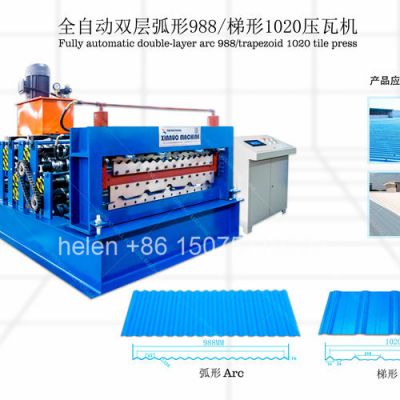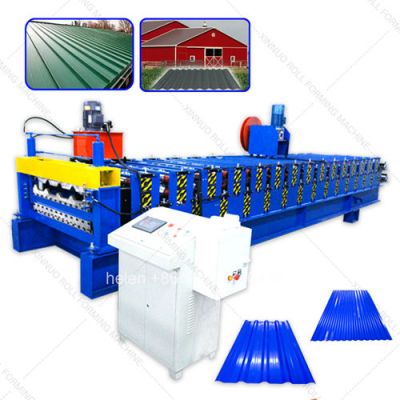
helen@hbxinnuorollforming.com
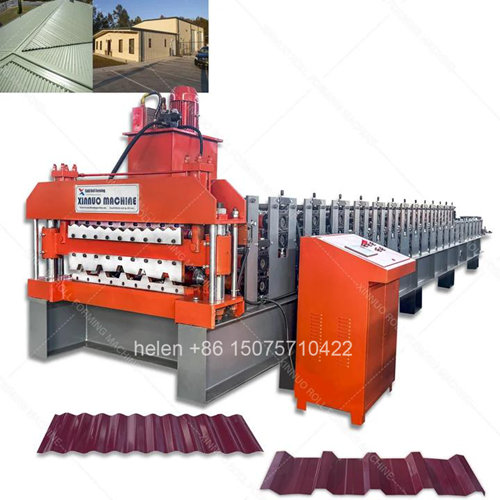
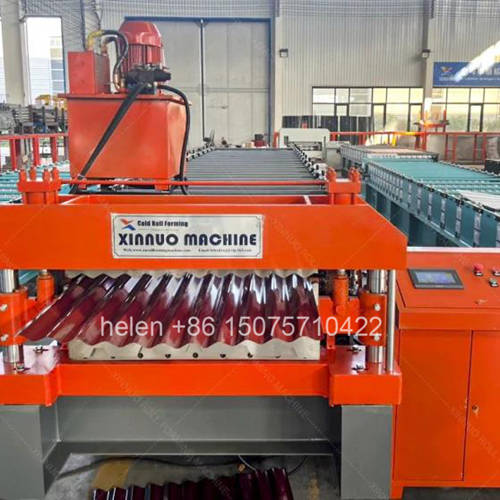
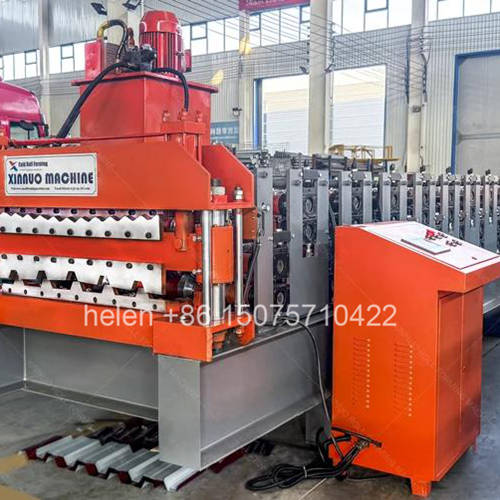
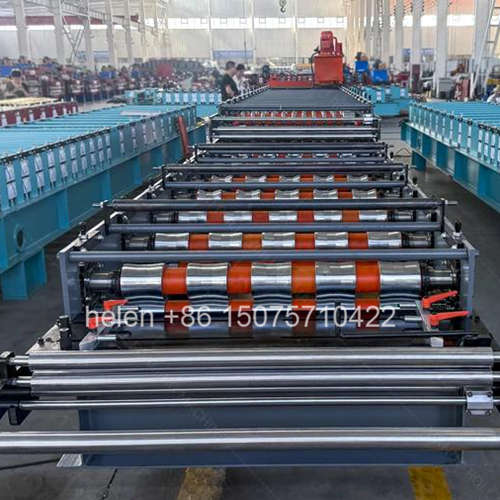
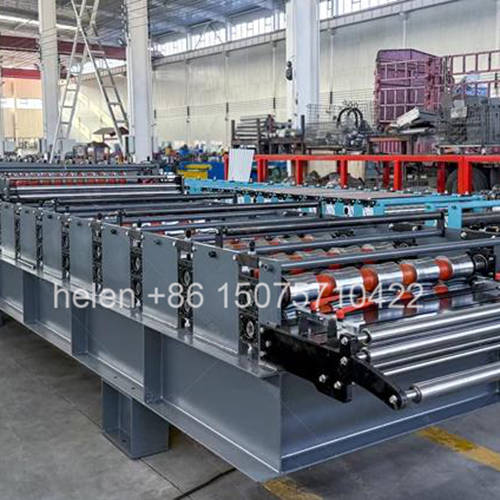
- Two forming decks share one motor, one shear, and one control cabinet
- Combining two profiles into one machine cuts installed power demand
- Electrical energy is a minor cost; coil, labour, and tooling dominate
- Deck changeover takes minutes, avoiding duplication of the whole line
- One consolidated maintenance routine replaces two separate service schedules
- Shared chains, bearings, and sprockets simplify spare parts inventory held
- Cost per square metre improves through lower capital and lower overhead
Buyers evaluating a double layer forming machine tend to focus on purchase price, because purchase price is the one number every supplier will quote. But purchase price is a one-time event, while operating cost accumulates every month for the working life of the equipment. This page works through the operating cost structure of a roofing sheet production line — energy, labour, consumables, tooling replacement, downtime — and shows where the double layer architecture genuinely reduces cost and where it does not. Several of the results are counter-intuitive, and one of them routinely surprises buyers who have assumed that energy is a major expense.
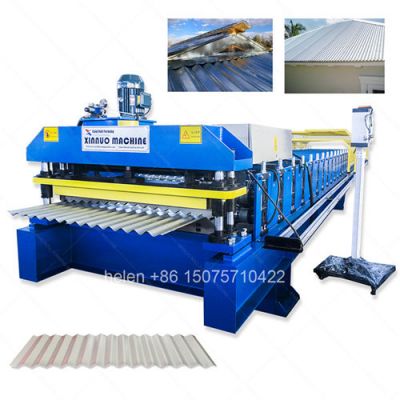
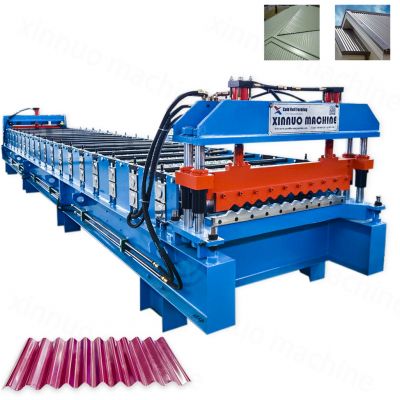
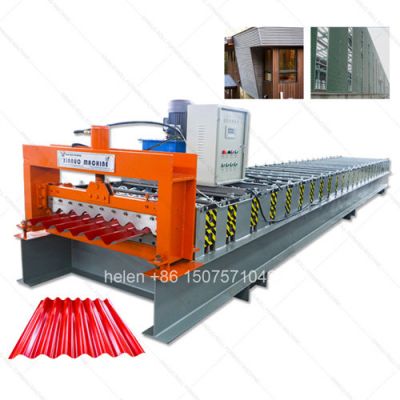
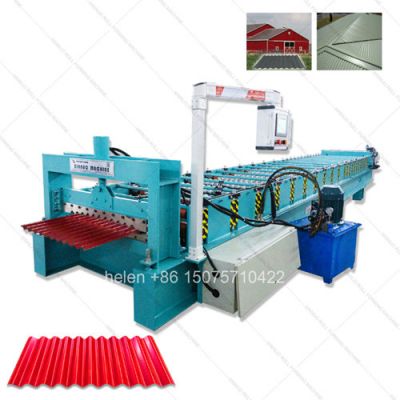
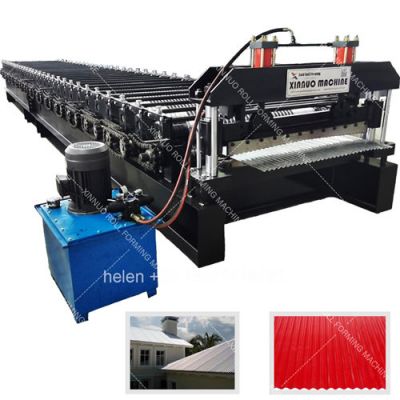
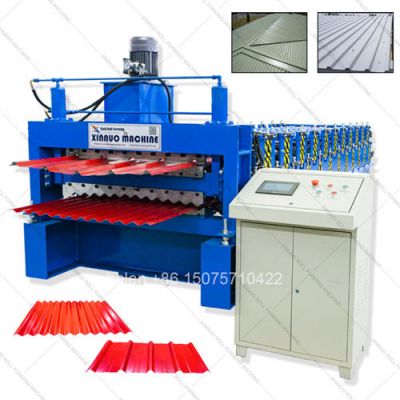
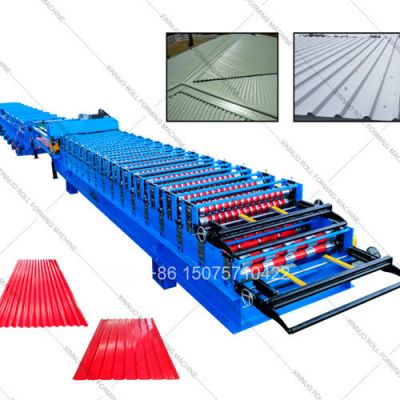
The machine itself consists of two forming decks mounted one above the other within a single welded structural frame, served by one main drive motor through a selector clutch, one hydraulic cutting station, and one control cabinet. Material is routed into the upper or lower deck by adjusting the entry guide. No rollers are removed between production runs, and no additional floor space is required for the second profile.
Before examining individual cost lines, it is worth establishing their relative magnitude. Across a typical roofing sheet operation producing thin-gauge profiled steel, the cost structure falls into the proportions below. The ordering of these lines — not the absolute values — determines which equipment decisions actually matter.
| Cost Line | Share of Total Cost | Affected by Machine Choice? | Comment |
|---|---|---|---|
| Raw coil material | 75% – 88% | Indirectly — through yield | By far the dominant cost. Coil price is set by the market, but material yield is set by the profile geometry and by whether offcut has a resale route. |
| Direct labour | 5% – 12% | Yes | Operators per line, and the proportion of shift time the machine is actually running, both materially affect this line. |
| Tooling and consumables | 2% – 6% | Yes | Roller re-plating, shear blades, chains, bearings, and lubricants. Averaged over equipment life rather than per month. |
| Electrical energy | 1% – 3% | Yes, modestly | Smaller than most buyers expect. Roll forming is a cold deformation process with no melting or heating, so energy intensity per tonne is low. |
| Fixed overhead | 3% – 8% | Yes | Floor space, building services, supervision, and depreciation. Consolidating two machines into one directly reduces this line. |
Energy is the cost line most often overestimated. A double layer forming machine presents an unusual load profile: the main drive motor runs continuously during production at partial load, while the hydraulic station runs intermittently, energising only during each cutting stroke. The table below sets out the load components and how they combine into an average demand.
| Load Component | Rated Power | Typical Duty | Contribution to Average Demand |
|---|---|---|---|
| Main drive motor | 5.5 – 11 kW | Continuous while running | Draws approximately 55% – 75% of rated power under normal forming load. Rolling resistance, not peak forming force, sets the steady-state demand. |
| Hydraulic power pack | 4.0 kW | Intermittent — cutting strokes only | Energised only during each shear cycle. Across a normal production hour the pump motor runs for a small fraction of the time, so its contribution to average demand is a small share of rated power. |
| Control system, HMI, sensors | 0.3 – 0.6 kW | Continuous | Low but constant. Small in absolute terms, and unchanged whether one deck or the other is running. |
| Coil handling, lighting, auxiliaries | Varies | Intermittent | Depends on facility configuration rather than on the forming machine itself. Often excluded from machine energy figures but real in the electricity bill. |
Combining these components, a double layer forming machine of typical specification draws an average demand of roughly 5.5 to 8.5 kW during production, depending on motor rating, profile depth, and material gauge. Converting this into an energy intensity figure makes the scale clear. Working through an illustrative case: a 0.45 mm pre-painted galvanised coil at 1000 mm feed width has a mass of approximately 3.5 kg per linear metre. Running at 15 metres per minute, the line consumes approximately 900 metres of coil per hour, or roughly 3.2 tonnes. At an average electrical demand of 6.5 kW, the energy intensity is approximately 2 kWh per tonne of coil formed — in the range of 2 to 6 kWh per tonne across the practical operating envelope.
| Energy Metric | Indicative Range | Interpretation |
|---|---|---|
| Average demand during production | 5.5 – 8.5 kW | Depends on motor rating, profile depth, and gauge. Deeper ribs load the motor more than shallow corrugated profiles. |
| Energy per tonne of coil | 2 – 6 kWh/t | Falls as throughput rises, because the machine's fixed loads are spread over more material. Running slower increases energy intensity per tonne. |
| Energy per square metre of sheet | Very low | Because roofing sheet is thin and light, energy per square metre is a negligible fraction of the selling price per square metre. |
| Effect of consolidating two profiles | One motor instead of two | Where two separate single-deck machines would each idle motor, hydraulic, and control loads, one double layer machine carries a single set of those loads regardless of which deck is producing. |
The practical conclusion is that energy efficiency is a real but secondary benefit of the double layer architecture. It should not be the primary justification for the purchase. The primary justifications lie in capital, floor space, labour, and overhead — the lines examined next.
Labour cost is driven less by wages than by output per operator. Two effects matter: how many operators a line requires, and what proportion of shift time the line is actually producing saleable sheet.
| Productivity Factor | Two Separate Single-Deck Machines | One Double Layer Forming Machine |
|---|---|---|
| Operators for two profiles | Two, for simultaneous production | One, for sequential production |
| Effect of small orders | Small runs on either machine leave the other machine idle with its operator present | Deck changeover keeps the single operator productive across both product lines |
| Training burden | Operators must be trained on two separate machines and two separate control systems | One control interface and one forming principle serve both decks, reducing training time |
| Supervision load | Two production areas to supervise, two sets of safety procedures | One production area and one safety protocol |
| Output per operator | Higher where both profiles are in continuous simultaneous demand | Higher where demand alternates between profiles or arrives in small mixed batches |
Wear components are consumed in proportion to running hours, so a machine producing two profiles sequentially wears its shared components on whichever deck is active. The items that consume budget are the same on either architecture; what changes is how many of each are held and serviced.
| Consumable | Replacement Basis | Two Single-Deck Machines | One Double Layer Machine |
|---|---|---|---|
| Shear blades | Cut count and edge condition | Two blade sets to purchase and sharpen | One blade set serving both decks |
| Drive chains | Running hours and tension condition | Two chain sets, two tension regimes | One chain set, one tension regime, with selector positions |
| Bearings | Running hours and lubrication condition | Two complete bearing inventories | Common bearing series across both decks wherever specified |
| Sprockets | Tooth wear | Two sprocket sets | One sprocket set, shared with selector clutch |
| Hydraulic oil and filters | Calendar or hour interval | Two reservoirs, two filter schedules | One reservoir, one filter schedule |
| Roller chrome re-plating | Per deck, on wear inspection | Two independent roller sets on separate schedules | Two roller sets, but wear accrues at half the rate per deck on the same output |
| Lubricants and grease | Routine service | Two consumable budgets | One consumable budget, one service routine |
| Lifecycle Event | Timing | Cost Driver and Planning Consequence |
|---|---|---|
| Routine roller inspection | Annual, logged | Cost is downtime, not parts. Logging roller diameter repeatedly converts an unpredictable future event into a scheduled one. |
| Chrome re-plating | When chrome is breached | Stripping, re-grinding, and re-plating. Typically available two to three times before roller diameter falls below the minimum that holds forming geometry. |
| Blade re-sharpening | On cut quality decline | Low cost per event, but unplanned replacement during a customer order is expensive in delay terms. Holding one spare blade set on site removes that exposure. |
| Full roller set replacement | End of re-plating life | The largest single tooling cost. Because wear is spread across two decks in proportion to their use, the replacement horizon extends relative to a dedicated single-profile machine at the same total output. |
| Scenario | Cost Under Two Single Machines | Cost Under One Double Layer Machine |
|---|---|---|
| Routine profile change | None — switch to the other machine | 5 to 15 minutes of non-productive time per changeover |
| Frequent small mixed orders | One machine idle while the other runs, with its operator standing by | Frequent short changeovers, but no idle operator and no idle second line |
| Breakdown on one machine | One product line stops; the other continues | Both product lines stop until the shared component is repaired |
| Planned maintenance | Can be scheduled per machine to keep one line running | Requires full-line stop, so should be scheduled into low-demand periods |
| Spare part availability risk | Two inventories, but one line always available | One inventory, and holding the critical shared spares on site is essential rather than optional |
The honest position on downtime risk is this: consolidating two product lines into one machine concentrates risk as well as cost. That trade-off is the correct one for a business whose demand alternates between profiles, and the incorrect one for a business that must keep both product lines running regardless of circumstances. Holding spare chains, blades, and critical bearings on site from day one converts most of the concentrated risk into a short scheduled interruption.
| Cost Dimension | Two Single-Deck Machines | One Double Layer Machine | One Triple Deck Machine |
|---|---|---|---|
| Profiles available | 2 | 2 | 3 |
| Capital cost | Baseline | 65% – 75% of baseline | 55% – 65% of a three-machine baseline |
| Installed electrical capacity | Two motors plus two hydraulic packs | One motor plus one hydraulic pack | One motor plus one hydraulic pack |
| Energy intensity per tonne | Similar per tonne where both lines run | Similar per tonne; lower fixed load when one deck runs | Similar per tonne; lowest fixed load per profile offered |
| Operators | Two for simultaneous output | One | One |
| Floor space and fixed overhead | Baseline | 40% – 60% of baseline | 35% – 50% of a three-machine baseline |
| Consumables and spares | Two inventories | One consolidated inventory | One consolidated inventory |
| Changeover time | Not applicable | 5 – 15 minutes per change | 5 – 15 minutes per change |
| Risk concentration | Low — failure affects one line | Moderate — failure affects both lines | Highest — failure affects all three lines |
| Best fit | Continuous simultaneous demand for both profiles | Demand alternating between two profiles, capital and space constrained | Multi-market or showroom operation across three profiles |
| Parameter | Standard Range |
|---|---|
| Machine configuration | Two forming decks stacked vertically in one frame with shared motor, shear, and control system |
| Available deck pairings | Trapezoidal plus trapezoidal, trapezoidal plus glazed tile, arc plus trapezoidal, arc plus glazed tile, arc plus arc, and triple deck |
| Main frame grade | 300H, 350H, 400H, or 450H welded H-section steel |
| Roller stations per deck | 11 – 18 rows depending on profile family and rib depth |
| Roller material | 45# forged carbon steel, CNC turned, ground, hard chrome plated to HRC 58 – 62 |
| Shaft | Φ75 mm or Φ80 mm solid steel, centerless ground |
| Bearing | Dual-row self-aligning spherical roller bearing in split pillow block housing |
| Transmission | Duplex roller chain, hardened sprockets, selector clutch for deck engagement |
| Main motor | 5.5 kW, 7.5 kW, or 11 kW with variable frequency drive |
| Hydraulic station | 4.0 kW independent power pack with air-cooled oil radiator |
| Average electrical demand | Approximately 5.5 – 8.5 kW during production, depending on rating and profile |
| Forming speed | 8 – 20 m/min depending on profile and gauge |
| Material capability | PPGI, PPGL, galvanized, aluminium-zinc coated, pre-painted aluminium; 0.30 – 0.80 mm standard |
| Cutting system | Hydraulic post-cut shear, Cr12MoV blades at HRC 60 – 62 |
| Cut length tolerance | ±1.5 mm |
| Control system | PLC with 7 in colour touchscreen HMI and independent recipe banks per deck |
| Occupied floor area | Approximately 20 – 40 m² including decoiler, forming machine, shear, and run-out table |
| Electrical supply | 380 V / 50 Hz / 3-phase standard; alternative voltages and frequencies by destination |
| Certification | CE marking and ISO 9001:2015 compliant manufacturing |
Production follows the established sequence — coil loading, deck selection at the entry guide, progressive roller forming, encoder length measurement, hydraulic cutting, and discharge to the run-out table — with deck changeover completed in minutes and no disturbance to either roller set.
Hebei Xinnuo is a professional cold roll forming machinery manufacturer with 20+ years of experience. We specialize in C/Z purlin machines, roof panel roll formers, floor deck machines, and custom profile solutions — exported to 50+ countries worldwide.