helen@hbxinnuorollforming.com
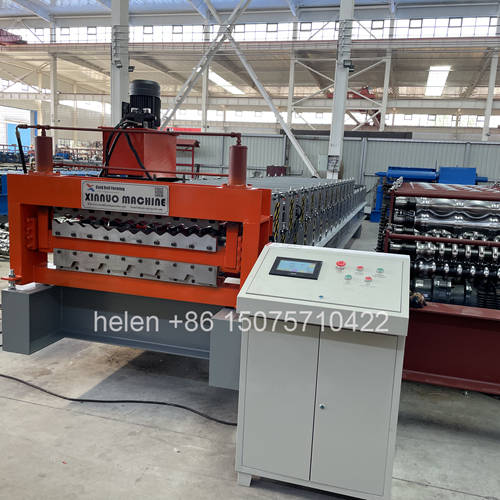
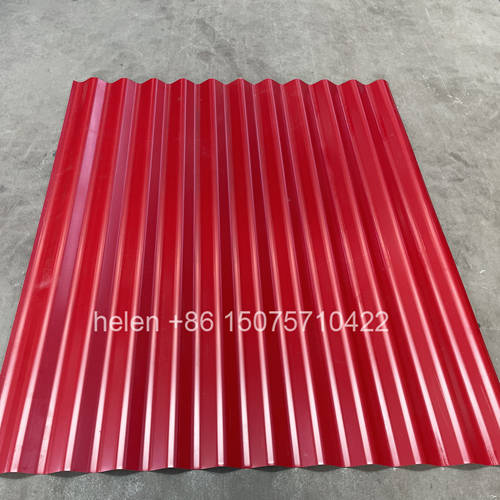
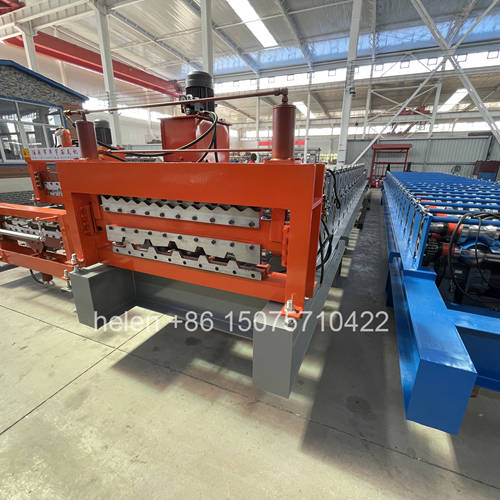
Curves both IBR and corrugated roofing sheets into arched profiles
Three-row hydraulic roller pressing system bends panels incrementally
Adjustable curving radius from three meters to over thirty meters
Heavy welded frame with thick steel middle plate supports pressing force
Gear-driven internal transmission with hydraulic motor for smooth operation
Changeable curving roller sets adapt to different sheet profile geometries
Suitable for warehouses stadiums agricultural tunnels and arched structures
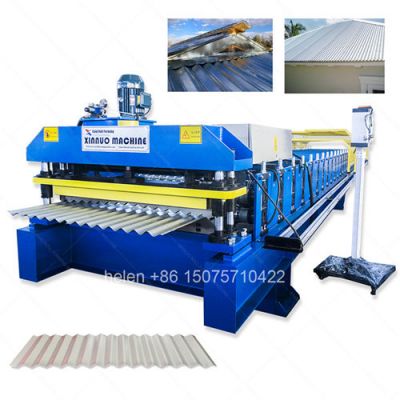
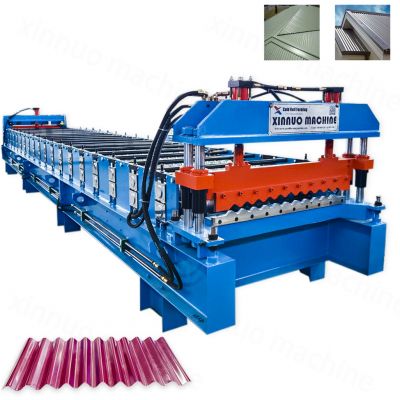
This hydraulic sheet curving machine is purpose-built to bend already-formed IBR trapezoidal roofing panels and corrugated metal sheets into smooth arched profiles used in curved roof construction. Unlike roll forming machines that create the sheet profile from flat coil, this curving machine takes finished flat panels from an existing roll former and passes them through a three-row hydraulic roller pressing system that applies controlled, incremental bending force to generate a uniform curvature along the entire panel length. Designed for roofing manufacturers who already own a roll forming line and wish to add curved roof panel production capability, this machine accepts both IBR and corrugated sheet profiles by changing the curving roller set — a swap that takes approximately 30–45 minutes.
| Curving Stage | What Happens to the Roofing Panel | Engineering Principle |
|---|---|---|
| Panel Feeding | The finished flat IBR or corrugated sheet is manually fed into the entry side of the curving machine; the leading edge contacts the first pressing roller set | Sheet is guided by profile-matched entry rollers that prevent lateral movement and maintain correct orientation throughout the bending pass |
| First Press Pass | The first set of three rollers (top + two bottom) applies initial downward pressure at the panel centerline, creating a gentle primary bend | Hydraulic cylinder delivers controlled force through the top roller; two support rollers below provide reaction points — the deeper the top roller descends, the tighter the curvature produced |
| Second Press Pass (Optional) | For tighter radius requirements, the panel passes through a second pressing station that deepens the curvature incrementally | Multi-pass bending distributes the total deformation across successive stations, preventing profile distortion, rib collapse, or surface coating cracking |
| Radius Verification | Operator measures the achieved curvature against a template or specification drawing; fine adjustments are made by raising or lowering the top roller position | Curvature radius is controlled by the vertical position of the top pressing roller — deeper penetration equals smaller radius (tighter curve) |
| Continuous Curving | Once the correct roller setting is confirmed, the panel feeds continuously through the machine; hydraulic motor-driven rollers pull the sheet through at a steady rate, producing uniform curvature from end to end | Consistent feed speed and constant hydraulic pressure ensure the same bend radius is applied along the entire panel length, producing a true circular arc suitable for structural roof installation |
| Machine Component | Construction Specification | Engineering Function |
|---|---|---|
| Main Frame | Welded heavy H-beam and channel steel structure (300H–350H grade); post-weld thermal stress-relieved | Provides rigid support for the three-row roller pressing assembly; absorbs reaction forces from hydraulic cylinder pressing cycles without frame flex |
| Middle Plate | 14–20mm thick steel plate, CNC machined for roller shaft bearing housing mounting | Carries the curving roller shafts and bearings; thickness grade determines maximum pressing force capacity — thicker plate for heavier gauge sheets and tighter radius requirements |
| Curving Roller Assembly | 3–4 rows of rollers per station: one top pressing roller + two or three bottom support rollers; rollers machined from 45# forged steel, case hardened to HRC 50–55 | Top roller applies downward bending force; bottom rollers provide reaction support at calculated spacing that determines the effective bending lever arm and resulting curvature |
| Hydraulic Pressing Unit | Hydraulic cylinder (bore Φ80–100mm) with manual or servo-controlled position adjustment; powered by a dedicated hydraulic pump station with 63-type or larger hydraulic motor output | Provides the controllable downward force that curves the panel; roller depth setting directly determines arc radius — deeper penetration produces tighter curves |
| Drive Transmission | Internal gear-driven system with hydraulic motor power source; enclosed gear housing with oil-bath lubrication | Rotates the curving rollers to pull the sheet through the pressing zone at consistent speed; gear drive provides higher torque capacity than chain drive for heavy-gauge panel processing |
| Profile Change System | Replaceable curving roller sets with profile-matched contour; each roller set is dedicated to one sheet profile type (IBR or corrugated) | Allows the same machine frame to curve different roofing profiles by swapping the roller tooling; changeover time approximately 30–45 minutes for skilled operators |
| Curving Parameter | IBR Panel Curving | Corrugated Panel Curving |
|---|---|---|
| Compatible Sheet Widths | 762mm to 1100mm effective cover | 660mm to 1000mm effective cover |
| Sheet Thickness Range | 0.30mm to 0.60mm (thinner gauges preferred for tighter radii) | 0.25mm to 0.60mm |
| Minimum Curving Radius | Approx. 3.0m (dependent on rib height and sheet gauge) | Approx. 2.5m (dependent on wave depth and sheet gauge) |
| Maximum Curving Radius | 50m+ (shallow arch for large-span warehouse roofs) | 50m+ (shallow arch for large-span warehouse roofs) |
| Typical Application Radius | 6m–15m for agricultural tunnels, warehouses, sports halls | 4m–12m for small farm sheds, storage bunkers, arched canopies |
| Profile Compatibility | 4-rib, 5-rib, and 6-rib IBR with rib heights 28–43mm | 5–11 wave corrugated with wave amplitudes 12–18mm |
| Technical Parameter | Specification Data |
|---|---|
| Machine Type | Hydraulic three-row roller pressing arch curving machine (post-forming bending equipment) |
| Curving Method | Continuous hydraulic roller pressing; panel feeds through pressing station while top roller applies controlled downward bending force |
| Roller Pressing Stations | 1 or 2 pressing stations (single-pass or dual-pass configuration per order specification) |
| Rollers Per Station | 3–4 rollers: one adjustable top pressing roller + two or three fixed bottom support rollers |
| Roller Material | 45# forged medium carbon steel, case hardened HRC 50–55, surface polished to prevent sheet coating damage |
| Frame Construction | Welded 300H–350H structural steel with 14–20mm middle plate; post-weld thermal stress relief treatment |
| Hydraulic Drive Type | 63-type hydraulic motor or larger capacity motor for heavy-gauge panel processing; gear-driven internal transmission |
| Hydraulic Pressing Cylinder | Bore Φ80–100mm, stroke adjustable; manual hand-wheel position control or optional servo-powered precision adjustment |
| Hydraulic Power Unit | 4.0–5.5kW motor-driven pump station; working pressure 14–18 MPa; oil reservoir with filtration and cooling system |
| Curving Speed | 8–15 meters per minute depending on sheet gauge, profile type, and target radius |
| Radius Adjustment Method | Manual screw-down mechanism with graduated scale indicator (standard); digital readout with servo position control (optional upgrade) |
| Profile Changeover | Replaceable curving roller sets; IBR-to-corrugated changeover approximately 30–45 minutes for trained operator |
| Electrical Requirement | 380V 50Hz 3-phase standard; custom voltage (220V/415V/440V/480V) and frequency (50/60Hz) per destination country |
| Machine Dimensions (L×W×H) | Approx. 2.5–3.5m × 1.2–1.5m × 1.3–1.6m depending on station count and frame specification |
| Machine Net Weight | Approx. 2.0–4.0 metric tons depending on frame grade and middle plate thickness |
| No. | Equipment Item | Purpose in the Curving Process |
|---|---|---|
| 1 | Panel Feed-In Roller Table | Free-roller conveyor positioned before the curving machine entry; supports the flat IBR or corrugated sheet as the operator manually feeds it into the first pressing station |
| 2 | IBR Curving Roller Set | Profile-matched top and bottom roller set for IBR trapezoidal panels; roller contour follows the rib and valley geometry to apply uniform pressure across the full panel width without crushing the ribs |
| 3 | Corrugated Curving Roller Set | Profile-matched top and bottom roller set for corrugated wave panels; roller contour follows the sinusoidal wave pattern to bend the sheet evenly without flattening the wave profile |
| 4 | Hydraulic Power Pack Station | Self-contained unit with electric motor, gear pump, oil reservoir, pressure gauge, relief valve, and directional control valve; supplies pressurized hydraulic fluid to the pressing cylinder and drive motor |
| 5 | Electrical Control Panel | Control box with motor start/stop buttons, emergency stop, hydraulic pressure gauge, and drive speed adjustment; manages machine operation and safety interlock functions |
| 6 | Panel Discharge Roller Table | Free-roller conveyor positioned after the curving machine exit; receives the curved panel and supports it for manual collection, stacking, and bundling |
| Step | Operation | Action Detail |
|---|---|---|
| 1 | Roller Set Installation | Install the appropriate curving roller set — IBR contour rollers for trapezoidal panels or corrugated contour rollers for wave panels. Verify that all rollers are correctly seated in their bearing housings and rotate freely by hand |
| 2 | Radius Setting | Adjust the top pressing roller depth using the manual screw-down hand-wheel or servo position controller (if equipped). Deeper roller position produces a smaller curving radius. Use the graduated scale or digital readout for repeatable settings |
| 3 | Panel Loading | Place the flat finished IBR or corrugated sheet onto the entry roller table. Align the panel leading edge with the curving machine entry guide and manually push forward until the first pressing rollers grip the sheet |
| 4 | First Pass Curving | Start the hydraulic drive motor; the powered rollers pull the sheet through the pressing station. The top roller applies downward bending force while the bottom support rollers provide the reaction points, progressively curving the panel as it advances through the station |
| 5 | Radius Measurement | After the first pass, measure the achieved curvature against a template or specification drawing. If the radius needs adjustment, increase or decrease the top roller depth and make a second test pass with a sample panel |
| 6 | Production Curving | Once the correct roller setting is confirmed, feed panels continuously through the machine. The hydraulic system maintains consistent pressing pressure for uniform curvature from the first panel to the last in each production batch |
| 7 | Panel Stacking | Curved panels exiting the machine are collected from the discharge roller table and stacked in matched-radius bundles. Curved panels should be stored on radius-matched support cradles to prevent springback deformation during storage |
| Comparison Factor | Standalone Curving Machine | Integrated Roll Former with Curving |
|---|---|---|
| Best For | Manufacturers who already own roll forming machines and want to add curved panel capability | New factories starting from scratch who need both forming and curving in one line |
| Equipment Investment | Lower — curving machine only; uses existing roll former for flat panel production | Higher — combined machine costs more than a standard roll former alone |
| Profile Flexibility | High — can curve sheets from any existing roll former by changing the curving roller set | Fixed — curving rollers are built into one specific roll former profile configuration |
| Production Mode | Batch processing — form all sheets flat first, then curve them in a separate operation | Continuous inline — flat coil enters, curved panel exits in one pass |
| Radius Range | Wider range — typically 2.5m to 50m+ by adjusting top roller depth | Typically narrower — inline curving is optimized for a specific radius band |
| Workshop Layout | Curving machine positioned separately from roll former; requires material handling between stations | Single integrated line; no intermediate material handling between forming and curving |
Before export packaging, every curving machine is fully assembled and tested. The inspection protocol begins with mechanical verification: roller alignment is checked across all pressing stations to confirm that the top roller is perfectly parallel with the bottom support rollers; hydraulic cylinder travel is measured for full stroke range and smooth operation; the gear transmission is run at low speed to verify even tooth engagement and absence of abnormal noise. The hydraulic system is then pressurized to operating level and held for 30 minutes to confirm zero leakage at all fittings, seals, and hose connections. Finally, a live curving trial is conducted: flat IBR test panels and corrugated test panels are fed through the machine at the specified gauge thickness to confirm that the equipment produces uniform curvature matching the target radius specification. Curvature is verified using a radius template gauge at the panel midpoint and both ends. Machines must complete the full test protocol with satisfactory results before crating.
The curving machine main body is protected with multi-layer packaging: VCI anti-rust film wrap, high-density foam padding at all corners and machined surfaces, and heavy-gauge polyethylene outer shrink wrap for moisture protection. The wrapped unit is bolted to a fumigated ISPM-15 compliant plywood pallet. The hydraulic power pack, spare curving roller sets, electrical control panel, and entry/discharge roller tables are packed in separate marked fumigated wooden crates with internal bracing. An accessories crate holds the operator tool kit, spare hydraulic seals, and printed documentation including mechanical assembly drawings, hydraulic circuit schematic, operation manual, and spare parts catalog. Production lead time is 25–35 working days from confirmed deposit and customer-signed curving specification. Standard warranty is 12 months from the shipment date covering manufacturing defects.
| Optional Item | Description and Benefit |
|---|---|
| Servo-Controlled Roller Positioning | Replace manual hand-wheel adjustment with servo motor-driven top roller positioning; digital radius setting with preset memory for rapid changeover between different curvature specifications |
| Second Pressing Station | Add a second three-roller pressing station inline for two-pass curving in a single feed operation; enables tighter radii on thicker gauge panels without multiple manual re-feeding cycles |
| Digital Radius Measurement System | Laser or mechanical curvature gauge mounted at the machine exit that continuously monitors the achieved arc radius and displays real-time feedback to the operator |
| Extended Feed and Discharge Conveyors | Longer powered roller conveyors at both entry and exit sides to support full-length panels (up to 14m) without manual handling during the curving process |
| Additional Profile Roller Sets | Extra curving roller sets for different IBR widths or corrugated wave specifications; enables one curving machine to serve multiple roll forming lines producing different panel profiles |
| Heavy-Duty Frame Upgrade | Upgraded 400H frame with 20mm middle plate and larger hydraulic motor for continuous production curving of thicker gauge roofing sheets (0.60–0.80mm) at tighter radii |
Hebei Xinnuo is a professional cold roll forming machinery manufacturer with 20+ years of experience. We specialize in C/Z purlin machines, roof panel roll formers, floor deck machines, and custom profile solutions — exported to 50+ countries worldwide.