helen@hbxinnuorollforming.com
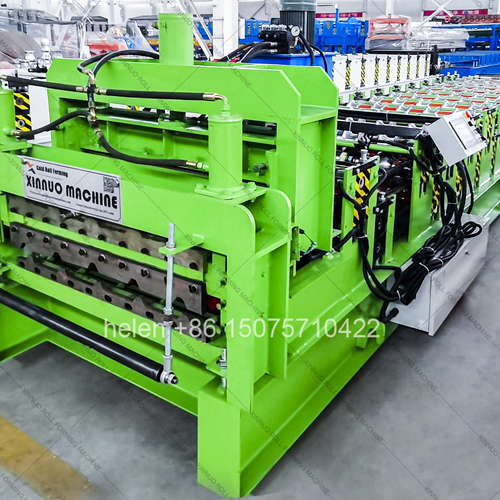
- Quoted machine price covers only part of the total investment
- Delivered cost adds freight, insurance, duty, and inland transport
- Installation, foundation, and power connection are separate budget lines
- Start-up coil inventory and working capital fund the ramp-up period
- Landed cost per square metre of output measures true investment efficiency
- Payback depends on glazed tile margin exceeding plain sheet margin
- Negotiate inclusions and tooling scope before negotiating the headline figure
The figure at the bottom of a machine quotation is not the amount a buyer will spend. It is the amount attributable to one line item in a larger investment. Between the quoted price and the first saleable sheet of glazed tile or roofing product lies a delivered-cost stack — export packing, inland haulage, ocean freight, insurance, import duty, port charges, inland transport at destination, foundation works, electrical connection, unloading equipment, trial material, spare parts reserve, and working capital absorbed during the ramp-up period. None of these are optional. All of them are predictable, and all of them should be in the budget before the order is placed rather than discovered afterwards.
This page builds the double layer glazed tile and roofing sheets machine price upward from the quoted figure to the fully operational investment, then examines what return that investment generates, how payback is calculated, and which negotiation levers exist beyond simply pushing the headline number down. Figures are presented as proportions and multiplier ranges against the quoted machine price, so the framework remains usable regardless of the absolute amounts involved.
The table below works through the cost stack in sequence. Each line is expressed as a percentage range of the quoted machine price. The cumulative multiplier at the bottom is what the buyer should actually budget.
| # | Cost Stage | Range Against Machine Price | What Determines Where It Falls in the Range |
|---|---|---|---|
| 1 | Machine price as quoted | 100 (baseline) | Configuration: forming rows per deck, frame grade, stamping drive type, motor rating, decoiler capacity, options |
| 2 | Export packing | 1% – 3% | Whether fumigated crating and moisture barrier wrapping are inside the quoted figure or added separately |
| 3 | Inland haulage to port of loading | 1% – 3% | Distance from the works to the loading port, and whether the machine ships as one load or several |
| 4 | Ocean freight | 2% – 8% | Port pair, container size, whether the machine loads into one container or requires more, season and fuel surcharge at time of booking |
| 5 | Marine insurance | 0.3% – 0.8% | Insured value and route risk. Usually calculated on the CIF value rather than the machine price alone |
| 6 | Destination port charges | 1% – 3% | Terminal handling, documentation, and any storage incurred while customs clearance proceeds |
| 7 | Import duty, VAT or GST | 0% – 25% | Destination country tariff for the applicable machinery classification, and whether a preferential rate applies under a trade agreement with a supporting certificate of origin |
| 8 | Inland transport to factory | 1% – 4% | Distance from the port of entry to the site, road conditions, and whether a lowbed or flatbed trailer is required |
| 9 | Unloading and positioning | 1% – 2% | Crane or forklift capacity required, hire duration, and accessibility of the installation bay |
| 10 | Foundation and civil works | 3% – 8% | Reinforced concrete pad volume, ground conditions, whether the building requires modification for the line length |
| 11 | Electrical connection | 1% – 4% | Incoming supply capacity, cable run length, isolator and protection equipment, any transformer upgrade |
| 12 | Trial material for commissioning | 2% – 6% | Coil required to align both decks, prove profile geometry, and calibrate the glazed tile pitch before commercial production |
| 13 | Spare parts reserve | 1% – 3% | Whether one spare blade set, chain, and critical bearings are held on site. A prudent minimum rather than an optional extra |
| 14 | Working capital during ramp-up | Variable, often significant | Coil inventory, labour and utilities carried while operator efficiency and output rise toward planned levels |
Excluding duty and working capital, which vary too widely to generalise, the operational investment typically lands between roughly 115% and 150% of the quoted machine price. A buyer comparing two quotations should compare them on this basis, not on the quoted figure alone, because a supplier who appears cheaper on the quotation may simply have excluded items that another supplier included.
| Trade Term | Seller's Responsibility Ends | Buyer Pays From There | Practical Comment for Machine Purchases |
|---|---|---|---|
| EXW | At the works, before loading | Everything — loading, inland, export formalities, freight, insurance, duty, delivery | Lowest quoted figure and the least useful for budgeting. Rarely suits an overseas buyer without a freight forwarder already engaged. |
| FOB | Once loaded on board the vessel at the port of loading | Ocean freight, insurance, destination charges, duty, inland delivery | Common baseline for machinery. Gives the buyer control of freight booking, which is often cheaper through their own forwarder. |
| CFR | On arrival at the named destination port | Insurance, destination charges, duty, inland delivery | Combines machine and freight into one figure. Confirm whether the freight is prepaid and whether port charges at destination are included. |
| CIF | On arrival at the named destination port, insured | Destination charges, duty, inland delivery | Most complete sea term. Check the insured value and the scope of cover rather than assuming full protection. |
| DAP or DDP | At the buyer's premises, duty paid in the DDP case | Unloading, positioning, foundation, connection, commissioning | Highest delivered figure but the most complete. Useful where the buyer has no import experience. Confirm exactly what duty and clearance are covered. |
| Freight Factor | Influence on Cost | What the Buyer Can Influence |
|---|---|---|
| Machine weight and volume | Heavier and larger configurations require more container capacity, and the glazed tile deck adds weight relative to a two-trapezoidal pairing | Frame grade and row count are the drivers — reducing either reduces freight, but also reduces capability |
| Container count | Whether the line fits one container or requires a second is the largest single swing in freight cost | Ask the supplier for the packing scheme and container count before confirming the order, not after |
| Degree of disassembly | Partial disassembly allows tighter packing but adds reassembly time at destination | Trade packing efficiency against on-site assembly effort; confirm which party reassembles |
| Port pair and routing | Frequency of sailings, congestion, and routing all move the freight figure substantially over time | Obtain freight quotations close to the shipping date; a freight figure quoted months earlier is indicative only |
| Season and surcharges | Peak season, fuel surcharges, and port congestion fees are imposed on top of base rates | Plan shipment outside peak periods where the project schedule allows |
| Packing standard | Fumigated crating, moisture barriers, and removable anti-corrosion coating add cost but prevent far larger transit losses | Treat packing as protection rather than overhead — the cost of a corroded machine far exceeds the saving |
| Item | Why It Is Required | Cost Behaviour |
|---|---|---|
| Reinforced concrete foundation | Carries the combined weight of both decks and damps forming vibration | Scales with pad volume and ground conditions, not with machine price |
| Anchor bolts and grouting | Fixes the frame so the reference geometry established at the works is preserved on site | Low material cost, high consequence if omitted or executed poorly |
| Crane or forklift hire | Required to unload and position a multi-tonne frame assembly | Typically charged by the day or half-day; confirm capacity is genuinely sufficient |
| Electrical supply works | Provides the capacity and isolation required by the main motor and hydraulic pack | Highly site-dependent; the largest variable after foundation |
| Compressed air, if specified | Needed where pneumatic expansion or automatic stacking is fitted | Minor where a compressor already exists; significant if none is installed |
| Trial coil material | Both decks require material to be aligned and proven, and the glazed tile pitch must be calibrated | Consumed rather than lost; the finished trial sheets are normally saleable |
| On-site technician support | Reduces commissioning time and protects the buyer against a poorly aligned glazed tile deck | Travel, accommodation, and a daily rate where the buyer opts for on-site assistance |
| Operator training time | Output quality depends on correct deck selection and parameter setting | Measured in reduced output during the learning period rather than as a direct cash cost |
| Working Capital Item | Basis of Requirement | How to Size It Before Ordering |
|---|---|---|
| Coil inventory | Material must be on hand in the widths and gauges required by both decks, and in the colours customers are ordering | Estimate weekly consumption per profile, then hold the number of weeks that reflects realistic supplier lead time |
| Finished goods before payment | Sheets are commonly produced before the customer settles the invoice | Multiply expected weekly output by the typical settlement period in the target market |
| Labour during ramp-up | Operators are paid in full while output and efficiency are still rising toward planned levels | Budget for reduced output over the first weeks rather than full capacity from day one |
| Utilities and consumables | Electricity, lubricants, and blades are consumed from the first production day | Small in absolute terms relative to coil, but continuous |
| Contingency | Covers unforeseen site conditions, a delayed spare part, or an unexpected commissioning issue | A modest contingency is standard practice in capital equipment projects and prevents avoidable cash pressure |
Payback is not determined by the machine price alone. It is determined by the contribution margin per square metre and the volume produced. The framework below sets out the calculation in the sequence in which it should be performed.
| Step | Calculation | What to Use and Why It Matters |
|---|---|---|
| 1 | Total investment | Quoted machine price uplifted by the landed-cost stack, foundation, connection, trial material, spare parts reserve, and working capital. This is the figure the business must actually fund. |
| 2 | Selling price per square metre | Differs by product. Glazed tile sheets normally sell at a premium over plain trapezoidal, and pre-painted sheets at a premium over unpainted. Market pricing, not production cost, sets this figure. |
| 3 | Coil cost per square metre | Coil price per tonne divided by the material yield of the profile being produced. Yield therefore affects contribution margin directly, not only material consumption. |
| 4 | Variable cost per square metre | Labour, energy, consumables, and tooling amortised per square metre produced. |
| 5 | Contribution margin per square metre | Selling price less coil cost less variable cost. This is the figure that pays back the investment and funds everything else. |
| 6 | Monthly output | Actual saleable output, allowing for changeovers between the two decks and typical operating efficiency rather than theoretical line speed. |
| 7 | Payback period | Total investment divided by monthly contribution. Because the machine carries two product lines, the contribution from both decks is included, weighted by expected sales mix. |
| Product Line | Relative Selling Price | Relative Contribution Margin | Effect on Payback |
|---|---|---|---|
| Plain galvanized roofing sheet | Baseline | Baseline | Volume-driven. Payback depends on throughput and on competitive pressure holding price down. |
| Pre-painted roofing sheet | Typically 15% – 30% above plain | Above baseline | Improves payback where the market accepts colour and where paint surface quality is maintained during forming. |
| Glazed tile sheet | Typically 20% – 40% above standard sheet | Meaningfully above baseline | The strongest margin line on the machine. A production mix weighted toward glazed tile materially shortens payback. |
| Colour-matched accessories | Premium | High relative margin | Produced from matching coil already on hand; contributes without additional machine investment |
| Long-length custom sheets | Premium | Above baseline | Length is programmed at no additional machine cost, so the premium falls almost entirely to contribution |
There is no technical explanation for a machine price beyond the cost blocks it contains, so a supplier who concedes a large discount on the headline figure has almost always removed something. The levers below allow value to be negotiated without weakening the machine.
| Lever | How to Use It and What It Is Worth |
|---|---|
| Inclusion list verification | Match every quotation item for item before discussing price. Apparent savings frequently disappear once the decoiler, run-out conveyor, or spare blade set is added. |
| Additional glazed tile die set | Negotiate a second pattern die into the order rather than purchasing it later, when it becomes a stand-alone tooling order with its own setup cost. |
| Spare parts package | A blades, chain, and bearings package bundled at order stage costs less than the same parts bought separately after a breakdown. |
| Commissioning support scope | Clarify what remote support covers and at what point on-site attendance becomes chargeable, before the machine ships. |
| Trade term allocation | Comparing an FOB figure against a CIF figure is not a price comparison. Fix the trade term and destination port first, then compare. |
| Payment structure | Milestone payments tied to factory acceptance testing give the buyer leverage at the point where the machine is proven, and reduce the risk carried before shipment. |
| Warranty scope | Confirm what is excluded from warranty before asking for an extension. Extension on a warranty that excludes the wear items is worth little. |
| Delivery schedule | Where the project allows flexibility, a slot in a less congested production period can be more valuable than a discount. |
| Training provision | Additional training sessions cost the supplier little and protect the buyer's output quality during operator turnover. |
| Parameter | Standard Range |
|---|---|
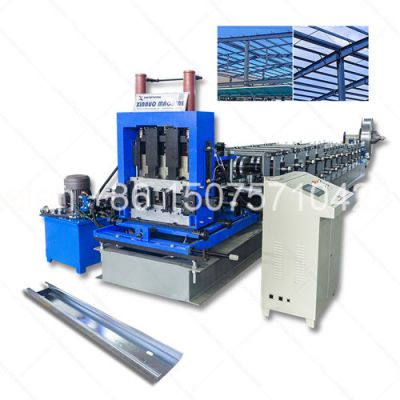
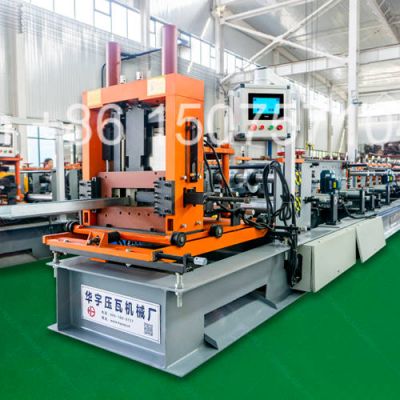
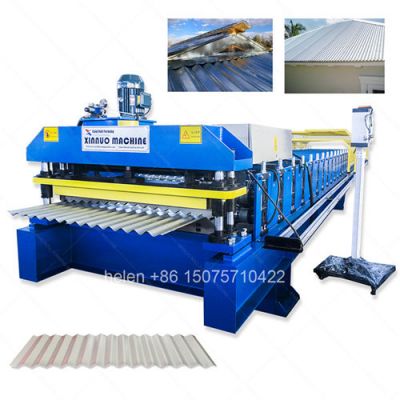
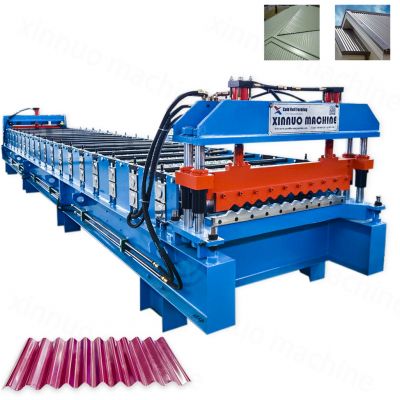
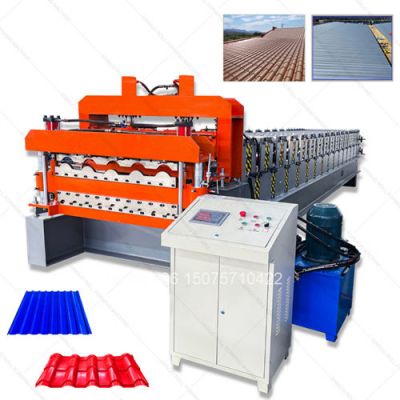
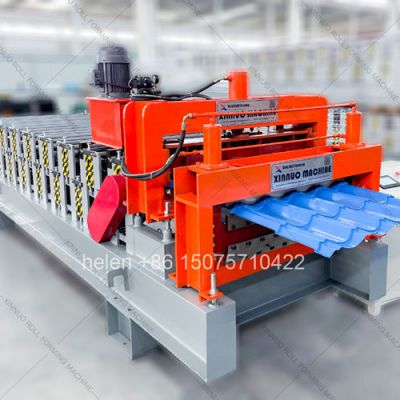
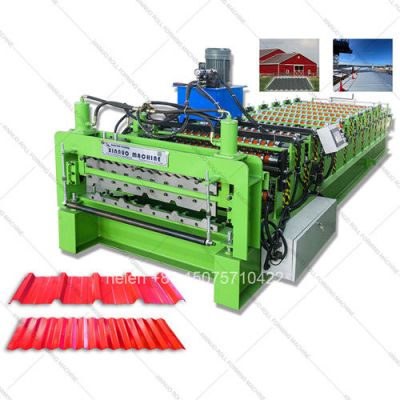
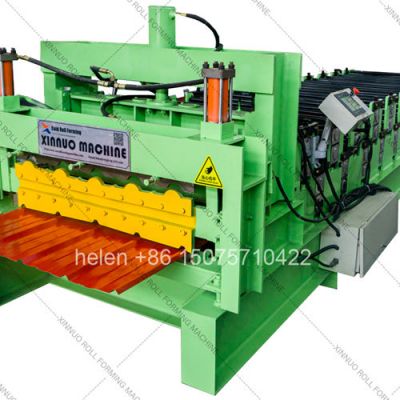
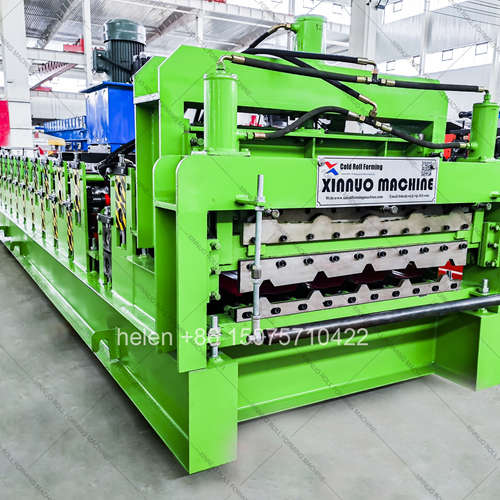
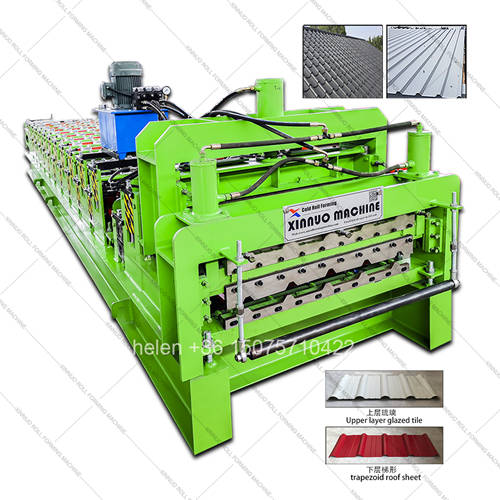
| Machine configuration | Two forming decks stacked vertically in one frame; glazed tile deck with pitch stamping plus roofing sheet deck |
| Roofing sheet deck profiles | Trapezoidal, corrugated wave, or arc wave, selected against the target market standard |
| Glazed tile deck | Pitch-stamping deck, cam-driven or servo-driven, with pattern-specific stamping die |
| Main frame grade | 300H, 350H, 400H, or 450H welded H-section steel selected against combined deck weight |
| Forming rows per deck | 11 – 18 rows depending on profile family and rib depth |
| Roller material | 45# forged carbon steel, CNC turned, ground, hard chrome plated to HRC 58 – 62 |
| Roller profile tolerance | ±0.03 mm to ±0.05 mm |
| Shaft | Φ75 mm or Φ80 mm solid steel, centerless ground, dual-row self-aligning bearings |
| Transmission | Duplex roller chain with hardened sprockets and selector clutch for deck engagement |
| Main motor | 5.5 kW, 7.5 kW, or 11 kW with variable frequency drive |
| Hydraulic station | 4.0 kW independent power pack with air-cooled oil radiator |
| Average electrical demand | Approximately 5.5 – 8.5 kW during production |
| Forming speed | 8 – 20 m/min; the pitch-stamping deck sets the effective ceiling |
| Material capability | PPGI, PPGL, galvanized, aluminium-zinc coated, pre-painted aluminium; 0.30 – 0.80 mm standard |
| Cutting system | Hydraulic post-cut shear, Cr12MoV blades at HRC 60 – 62 |
| Cut length tolerance | ±1.5 mm |
| Control system | PLC with colour touchscreen HMI and independent recipe banks per deck |
| Electrical supply | 380 V / 50 Hz / 3-phase standard; alternative voltages and frequencies by destination |
| Certification | CE marking and ISO 9001:2015 compliant manufacturing |
Production runs in the established sequence — coil loading, deck selection at the entry guide, roll forming on the selected deck, glazed tile pitch stamping where that deck is active, length measurement, hydraulic cutting, and discharge to the run-out table — with deck changeover completed in minutes and no disturbance to either roller set.
Hebei Xinnuo is a professional cold roll forming machinery manufacturer with 20+ years of experience. We specialize in C/Z purlin machines, roof panel roll formers, floor deck machines, and custom profile solutions — exported to 50+ countries worldwide.