helen@hbxinnuorollforming.com
- Verify that machine building happens in house, not assembled from bought parts
- Roller tooling must be turned, ground, and chrome plated at the factory
- Frame fabrication, welding, and boring determine long-term profile stability
- Glazed tile stamping dies are pattern specific and need dedicated tooling capacity
- Ask for forming row counts, frame grade, and roller tolerance as figures
- Export packing, documentation, and spare part numbering signal real experience
- Factory access or live video verification should always be offered openly
The market for double layer glazed tile and roofing sheet making machine manufacturers contains at least four distinct types of supplier, and they are difficult to tell apart from a catalogue, a website, or even a factory visit conducted on the supplier's terms. There are manufacturers who design and build the machine themselves; manufacturers who build the frame but buy in roller tooling; assemblers who purchase major sub-assemblies and integrate them; and trading companies who hold no production facility at all but present themselves as factories. All four can quote a machine. Only some can support it through fifteen years of service, supply matched replacement tooling, and diagnose a forming fault from a photograph.
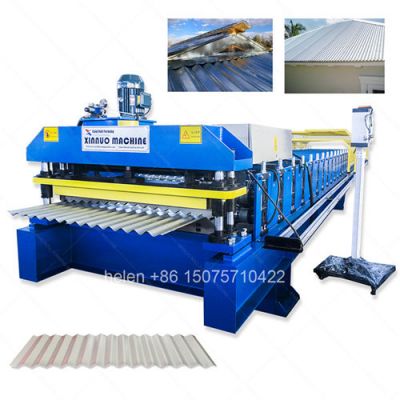
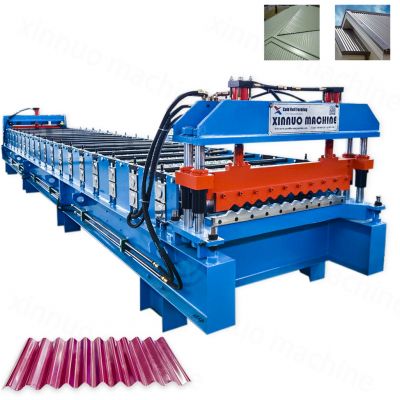
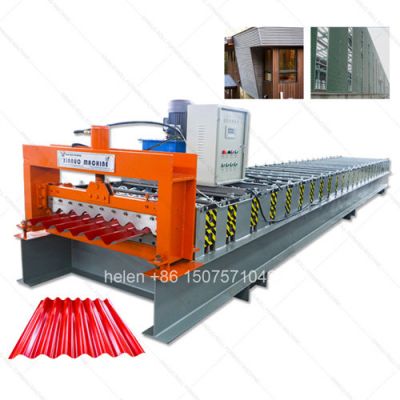
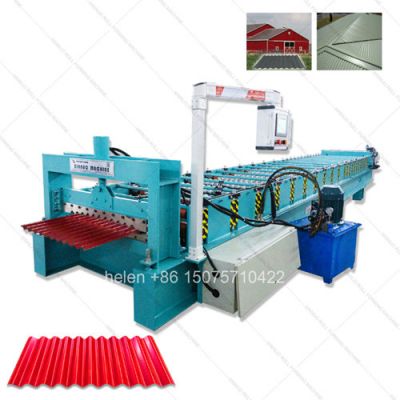
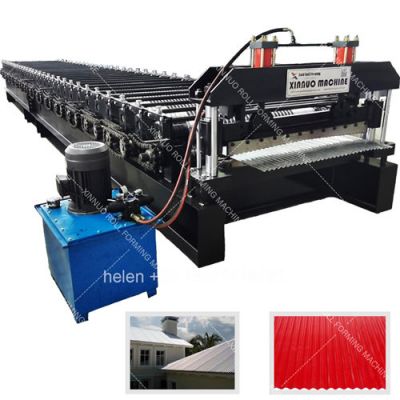
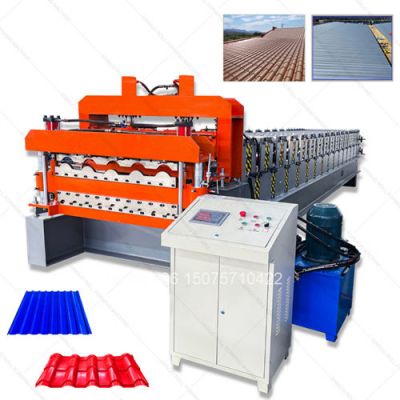
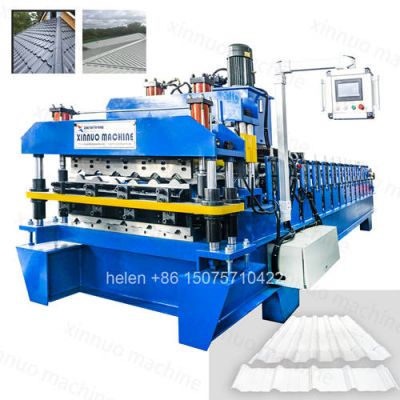
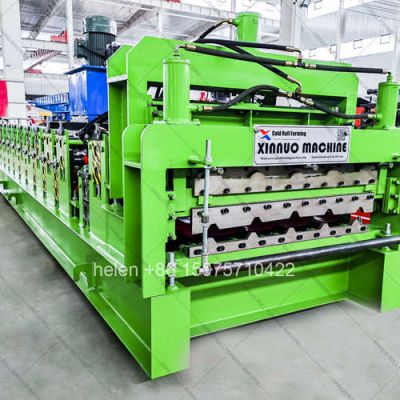
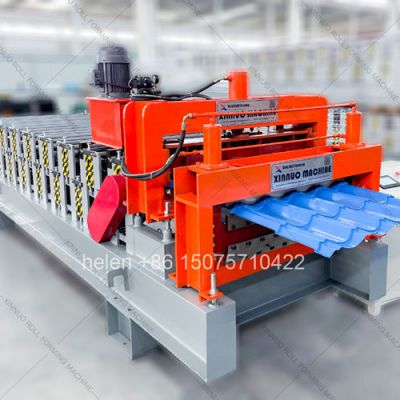
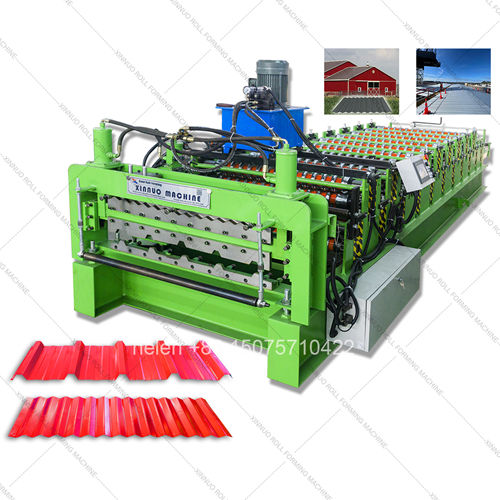
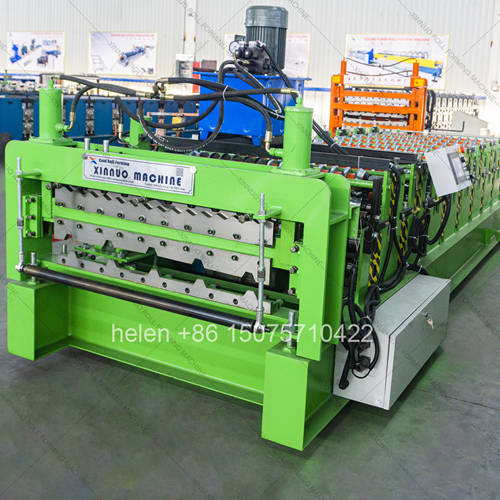
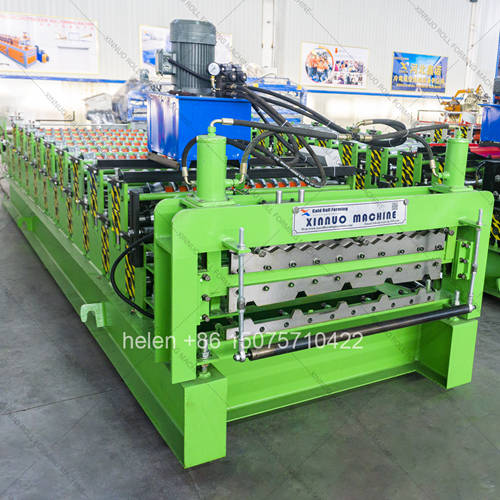
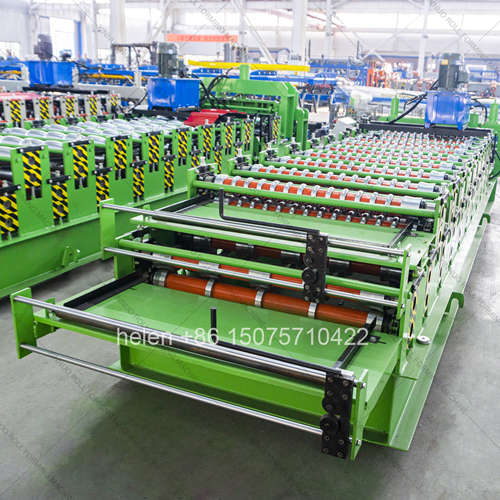
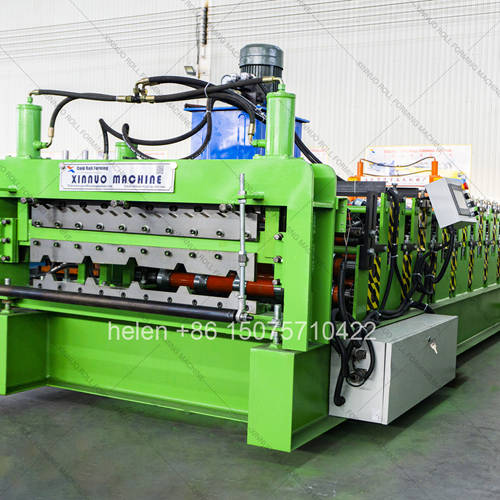
This page sets out what a genuine double layer machine manufacturer must possess, how each capability can be verified, and where the practical risks lie for a buyer. It is written so that the criteria can be applied to any supplier in any country, not only to producers in one market. The machine itself — two forming decks stacked in one frame, one of them a glazed tile deck with pitch stamping and the other a roofing sheet deck for trapezoidal, corrugated, or arc profiles — is well understood engineering. What varies enormously between suppliers is the depth of the capability behind it.
| Indicator | Genuine Manufacturer | Assembler | Trading Company |
|---|---|---|---|
| Roller tooling origin | Machined in house from raw forged billets on owned CNC lathes and grinders | Generally bought in from a specialist tooling workshop | Bought in, with no visibility of the tooling source |
| Frame fabrication | Steel cut, welded, stress relieved, and bored on owned equipment | Frames bought as completed weldments | Frames bought as part of a finished machine or sub-assembly |
| Chrome plating | In-house plating line or a long-standing dedicated plating partner with defined process control | Plating outsourced ad hoc | Unknown plating source |
| Assembly bay | Permanent assembly area where machines are built, aligned, and tested | Assembly area present but shared with other work | No assembly area; machines ship directly from a third party |
| Stamping die capability | Glazed tile pitch stamping dies designed and produced in house or by a controlled die shop | Dies bought in to a specification | Dies sourced with the machine, origin unclear |
| Answering technical questions | Can explain why a specific row count, frame grade, or gap ratio was selected | Can quote specifications but not justify them | Repeats specification language without first-hand knowledge |
| Response to a forming fault | Diagnoses from photographs and measurements, proposes a tooling or setting remedy | Refers the question back to the tooling supplier | Offers no technical diagnosis; may offer a replacement part |
| Spare part identification | Parts listed with part numbers derived from the machine's own drawings | Parts identified by description only | Parts re-sourced on request with changing specifications |
| Factory access | Open to inspection, or to live video walkthrough of the actual production floor | Accepts visits but limits access to certain areas | Discourages visits; may offer an office visit instead of a factory visit |
Each of the operations below contributes to a specific property of the finished machine. Where an operation is missing from a supplier's own capability, that property is dependent on an outside party — which affects both initial quality and long-term support.
| In-House Operation | Property It Determines in the Finished Machine | What Happens If It Is Outsourced |
|---|---|---|
| CNC turning of roller profiles | Station-to-station geometry consistency across the whole forming line | Roller sets may arrive from different batches with slight contour variation, producing a profile that drifts progressively along the deck |
| Cylindrical grinding of rollers and shafts | Surface finish and concentricity that determine whether pre-painted coil is marked during forming | Ground finish cannot be verified, and chrome adhesion is less reliable on an unground substrate |
| Hard chrome plating with process control | Chrome thickness uniformity and bond strength — the property that protects both the coating and the roller | Uneven or thin chrome wears through in patches, then begins marking sheets well before the expected service interval |
| Frame welding and stress relief | Dimensional stability of the frame under the combined weight of two decks over years of service | Residual welding stress releases gradually in service, closing or opening the roller gap and altering the finished profile |
| Bearing seat boring and alignment | Straightness of the forming line and uniformity of roller gap across the sheet width | Bearing seats bored to loose tolerance cause the roller gap to vary side to side, producing a sheet that curls or measures unevenly |
| Stamping die design and manufacture | Glazed tile pattern accuracy and repeatability of the tile step along the sheet | Die geometry is fixed by a third party, and pattern changes become slow and expensive to obtain |
| Electrical assembly and programming | Whether the controller genuinely stores independent recipes per deck and reports faults meaningfully | Control logic may be bought in as a fixed package, limiting later modification or diagnosis |
| Machine-level testing with material | Whether both decks are proven to hold drawing tolerance before the machine leaves the works | Testing is reduced to a dry run, and profile faults surface only after arrival — on the buyer's floor, at the buyer's cost |
| # | What to Request | How to Interpret the Answer |
|---|---|---|
| 1 | Live video walkthrough during production hours | A real factory can show machines under construction and the tooling area in use. A scheduled walkthrough that avoids the tooling shop, or that shows only a showroom, is a warning sign. |
| 2 | Roller drawings with station numbering | A manufacturer owns these drawings and can share them, at least in outline. A trader cannot produce them because the tooling was not designed in house. |
| 3 | Row count stated as a figure per deck | Ask for the roof sheet deck count and the glazed tile deck count separately, plus the basis for selecting them. |
| 4 | Frame grade with justification | The grade should follow from the combined deck weight and the profile being formed. A grade quoted without a reason is a copied specification. |
| 5 | Roller tolerance and chrome thickness as numbers | Numerical answers indicate a controlled process. Descriptive answers such as high quality or wear resistant indicate the supplier does not hold the figure. |
| 6 | Explanation of the glazed tile stamping drive | A manufacturer can explain whether the stamping mechanism is cam-driven or servo-driven, and can describe the advantages and limits of each. |
| 7 | Testing protocol with speeds and sample counts | Ask which speeds are tested, how many sheets are produced per deck, and how the results are recorded. |
| 8 | Photographs of a machine currently in production | Request dated photographs of the specific machine being built against the order, including the tooling before assembly. |
| 9 | Names of existing customers in comparable markets | A manufacturer with genuine export experience can describe its regional service pattern without disclosing commercial details. |
| 10 | Spare parts list with part numbers | Numbered parts derived from machine drawings support years of maintenance. A list of descriptions alone does not. |
| Control Activity | Measurement or Method | What Its Presence Demonstrates |
|---|---|---|
| Incoming steel verification | Material grade confirmation before machining begins | The supplier controls what goes into the machine rather than accepting whatever arrives |
| Roller contour measurement | Profile compared against drawing using a profile projector or coordinate measuring equipment | Roller geometry is verified numerically rather than judged visually |
| Chrome thickness and hardness check | Coating gauge and hardness test on the plated surface | The wear performance claimed in the specification is actually being produced |
| Frame geometry inspection | Level, squareness, and bearing seat alignment recorded before assembly | The reference geometry on which both decks depend is established and documented |
| Assembly-stage alignment checks | Shaft alignment and roller gap verified during build, not only at the end | Faults are caught before they become embedded in the finished machine |
| Deck-by-deck load testing | Both decks run with real coil at multiple speeds, sheets measured against drawing | Each deck is proven independently rather than assuming one represents the other |
| Coating integrity inspection of formed sheets | Formed pre-painted sheets examined under raking light for marking and cracking | The supplier understands that the paint surface is the product, not an incidental finish |
| Pre-packing visual and completeness check | Paint, welds, labelling, toolkit, and documentation verified against packing list | What leaves the factory matches what the buyer agreed to purchase |
Building a machine that works in a factory near the works is a different proposition from supporting one on another continent. Export capability is demonstrated through logistics, documentation, and service reach — and each of these can be verified rather than assumed.
| Capability | Demonstrated By | Risk Where It Is Absent |
|---|---|---|
| Export packing | Fumigated crating to international standards, moisture barrier wrapping, removable anti-corrosion coating on machined surfaces, steel banding for container securing | Corrosion and transit damage discovered at destination, with responsibility disputed |
| Documentation package | Installation and operation manuals, wiring schematic, hydraulic circuit diagram, foundation drawing, spare parts catalogue, commissioning video | Installation depends on trial and error, and maintenance relies on guesswork |
| Remote technical support | Diagnosis from photographs, measurements, and video calls; ability to identify the likely cause rather than replace parts at random | Faults persist, and repeated part replacement fails to address the underlying forming or setting problem |
| Spare parts continuity | Part numbers carried in a catalogue, with availability confirmed for the operating life of the machine | A wear part becomes unavailable, and a functioning machine sits idle waiting on an unobtainable component |
| On-site technician capability | A defined process for dispatching a technician, with stated rates and typical response time | Commissioning of the glazed tile deck, which has the most demanding alignment requirements, is attempted by the buyer alone |
| Regional service experience | Familiarity with local voltage, frequency, coil chemistry, profile standards, and climate conditions in the destination market | The machine arrives configured for a different standard and requires field modification before it can run |
| Operator training provision | Structured training material covering startup, deck selection, glazed tile pattern handling, and daily maintenance | Output quality depends on one experienced operator, with no way to bring new staff up to standard |
| Document | Why It Matters in Practice |
|---|---|
| Installation manual | Determines how quickly the machine is positioned, levelled, and connected after arrival |
| Operation manual | Covers startup, deck selection, parameter entry, and shutdown sequence on both decks |
| Electrical wiring schematic | Allows any qualified electrician to trace a fault without contacting the factory |
| Hydraulic circuit diagram | Enables diagnosis of cutting faults, pressure loss, and cylinder seal leaks locally |
| Foundation bolt layout drawing | Ensures the concrete pad and anchor positions are correct before the machine arrives |
| Spare parts catalogue with part numbers | Makes reordering precise and repeatable over the operating life of the machine |
| Commissioning video | Shows the physical procedures that written instructions describe poorly, especially deck alignment |
| Controller parameter backup | Allows settings to be restored after a controller fault without reconstructing them by hand |
| Test records from factory acceptance | Documents the measured performance of the specific machine supplied, establishing a baseline for future comparison |
The following scorecard converts the criteria above into a weighting that can be applied to any supplier being considered. The weighting reflects the practical effect each capability has on machine performance and service life rather than on presentation.
| Evaluation Area | Suggested Weight | Evidence to Request |
|---|---|---|
| Roller tooling capability | 25% | Drawings, tolerance figures, chrome specification, tooling area in live video |
| Frame fabrication and machining | 18% | Grade justification, welding and stress relief practice, bearing seat tolerance |
| Glazed tile stamping competence | 15% | Stamping drive type, die origin, pattern change process, die material |
| Testing and quality control | 14% | Testing protocol, speeds, sample counts, recorded results, coating inspection |
| Documentation standard | 10% | Sample manual pages, schematic, spare parts list with part numbers |
| Export and service capability | 10% | Packing standard, support process, technician dispatch terms, training material |
| Commercial transparency | 8% | Written inclusion and exclusion list, stated trade term, stated lead time |
| Parameter | Standard Range |
|---|---|
| Machine configuration | Two forming decks stacked vertically in one frame; glazed tile deck with pitch stamping plus roofing sheet deck |
| Roofing sheet deck profiles | Trapezoidal, corrugated wave, or arc wave, selected against the target market standard |
| Glazed tile deck | Pitch-stamping deck, cam-driven or servo-driven, with pattern-specific stamping die |
| Main frame grade | 300H, 350H, 400H, or 450H welded H-section steel selected against combined deck weight |
| Forming rows per deck | 11 – 18 rows depending on profile family and rib depth |
| Roller material | 45# forged carbon steel, CNC turned, ground, hard chrome plated to HRC 58 – 62 |
| Roller profile tolerance | ±0.03 mm to ±0.05 mm |
| Shaft | Φ75 mm or Φ80 mm solid steel, centerless ground, dual-row self-aligning bearings |
| Transmission | Duplex roller chain with hardened sprockets and selector clutch for deck engagement |
| Main motor | 5.5 kW, 7.5 kW, or 11 kW with variable frequency drive |
| Hydraulic station | 4.0 kW independent power pack with air-cooled oil radiator |
| Forming speed | 8 – 20 m/min; the pitch-stamping deck sets the effective ceiling |
| Material capability | PPGI, PPGL, galvanized, aluminium-zinc coated, pre-painted aluminium; 0.30 – 0.80 mm standard |
| Cutting system | Hydraulic post-cut shear, Cr12MoV blades at HRC 60 – 62 |
| Cut length tolerance | ±1.5 mm |
| Control system | PLC with colour touchscreen HMI and independent recipe banks per deck |
| Electrical supply | 380 V / 50 Hz / 3-phase standard; alternative voltages and frequencies by destination |
| Certification | CE marking and ISO 9001:2015 compliant manufacturing |
Production runs in the established sequence — coil loading, deck selection at the entry guide, roll forming on the selected deck, glazed tile pitch stamping where that deck is active, length measurement, hydraulic cutting, and discharge to the run-out table — with deck changeover completed in minutes and no disturbance to either roller set.
Hebei Xinnuo is a professional cold roll forming machinery manufacturer with 20+ years of experience. We specialize in C/Z purlin machines, roof panel roll formers, floor deck machines, and custom profile solutions — exported to 50+ countries worldwide.