helen@hbxinnuorollforming.com
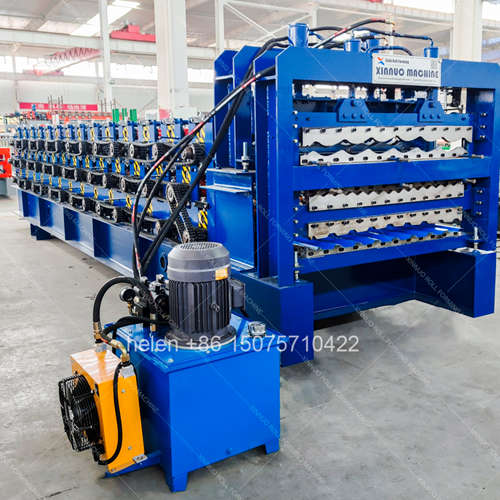
- One machine serves decorative glazed tile and structural IBR roofing
- Both profiles form from pre-painted coil on a shared drive system
- Glazed tile requires pitch stamping; IBR requires deep rib forming
- Operators must master two different forming principles on one panel
- Competency in deck selection and parameter entry protects output quality
- Written handover records prevent defects repeating across shifts
- Cross-training avoids dependence on a single experienced operator
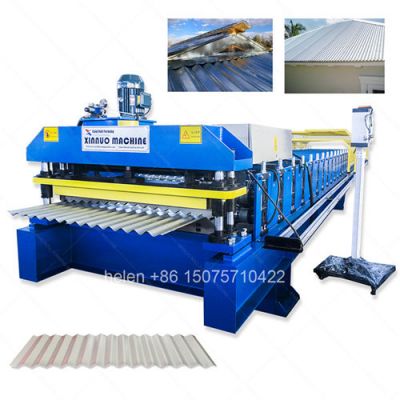
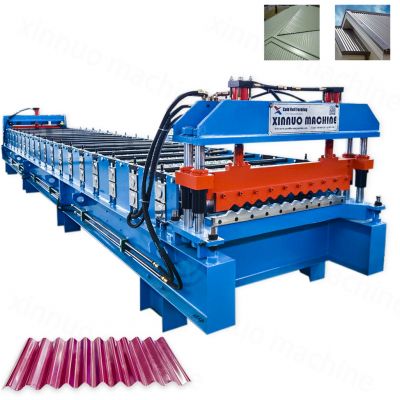
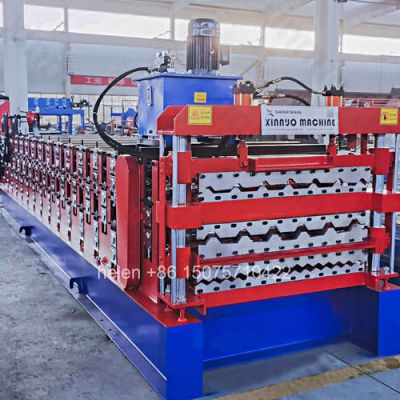
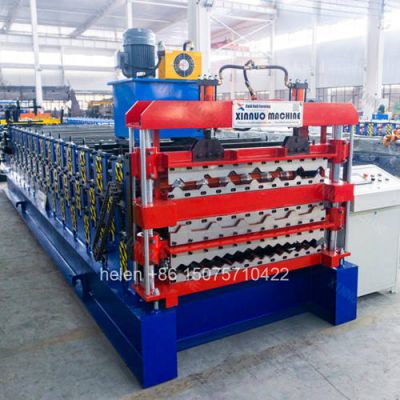
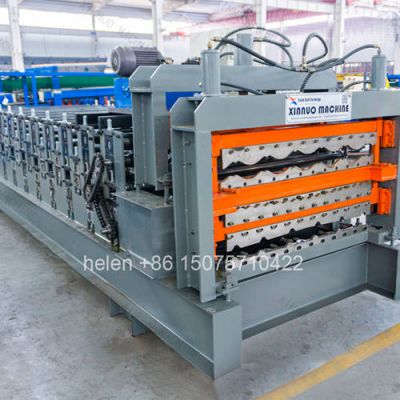
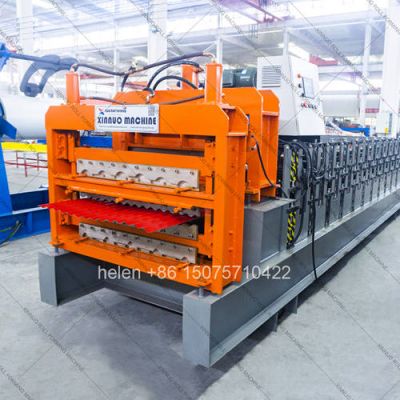
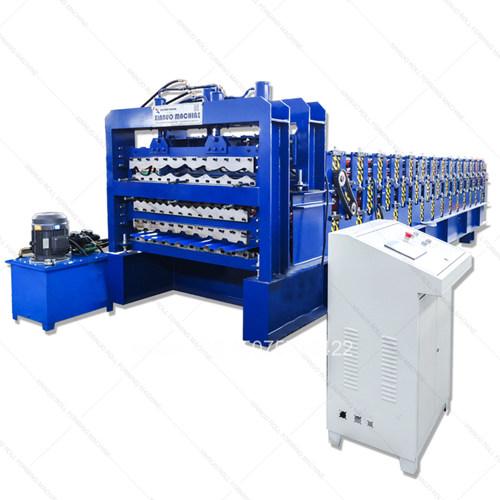
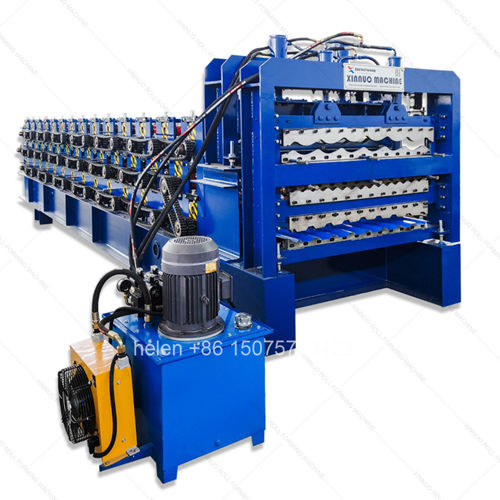
A glazed tile and IBR roof roll forming machine asks more of its operator than a single-profile machine does. The two decks form fundamentally different products by different methods: the IBR deck bends pre-painted strip through deep trapezoidal ribs, while the glazed tile deck forms a base profile and then stamps discrete decorative steps into it at controlled intervals. The same person must select the correct deck, set parameters appropriate to each product, recognise defects that differ between the two, and carry out routine maintenance on a machine with two roller carriages rather than one.
This page sets out the competencies an operator of a dual deck machine actually needs, how training should be structured across the first weeks of ownership, how to assess whether an operator is genuinely competent rather than merely confident, and how to retain that knowledge in the business so that output quality does not depend on a single individual remaining in post.
| Competency Area | Required Level | Consequence of an Inadequate Level |
|---|---|---|
| Deck selection and material routing | Confident, without reference to notes | Material routed into the wrong roller set causes jamming, damages the strip, and may mark the rollers |
| Coil loading and change | Safe and repeatable | Poor handling damages coil edges and coating, producing defects that pass through the machine unchanged |
| Parameter entry and recipe recall | Confident on both decks | Incorrect length, quantity, or speed settings produce out-of-specification sheets or wasted material |
| Glazed tile pitch settings | Understands the principle | Pitch errors are frequently misdiagnosed as die faults, leading to unnecessary tooling replacement |
| Understanding of roller gap | Knows not to adjust without authority | Unauthorised gap adjustment is the single most common cause of permanent profile drift on a correctly built machine |
| Surface defect recognition | Can identify at a glance | A coating defect not caught at the first sheet becomes a full batch of unsaleable product |
| Dimensional checking | Can measure and interpret | Output drifts out of tolerance gradually and is only discovered by the customer |
| Basic fault diagnosis | Can follow a defined sequence | Faults are addressed by adjusting whatever is most accessible rather than by identifying the cause |
| Daily maintenance routine | Performed consistently | Skipped lubrication and cleaning accelerate roller, chain, and bearing wear in proportion to how often they are missed |
| Safety and isolation procedure | Understood absolutely | Access to the forming decks or shear without isolation is the highest-risk behaviour on the line |
| Shift handover reporting | Written and consistent | Defects and settings are lost between shifts, and the same problem is rediscovered repeatedly |
| Phase | Focus | What the Trainee Should Be Doing | What the Business Should Document |
|---|---|---|---|
| Before delivery | Familiarisation with the machine concept | Reading operating and safety documentation; understanding what glazed tile and IBR sheets are and who buys them | Which staff are designated as operators, and which are designated as backups |
| During commissioning | Hands-on participation, not observation | Loading coil, selecting decks, entering parameters, measuring finished sheets, and performing the daily maintenance routine under guidance | Equipment settings established during commissioning, recorded as the reference baseline |
| First week of production | Operating both decks repeatedly | Running complete batches on each deck, switching between them deliberately rather than only when required | Any defect observed, the conditions under which it appeared, and how it was resolved |
| Weeks two to four | Defect recognition and diagnosis | Examining formed sheets under raking light, measuring dimensions independently, following the fault diagnosis sequence | Photo record of typical defects, so that future operators can recognise them |
| Month two onwards | Independence and refinement | Operating without supervision, managing changeovers, and carrying out routine maintenance unassisted | Completed competency assessment for each operator |
| Ongoing | Refresher and new pattern training | Training on additional tile patterns or profiles as the product range expands | Updated competency records and any changes to reference settings |
Confidence and competence are not the same thing. The practical checks below distinguish an operator who can actually run the machine from one who has watched it being run.
| # | Practical Check | Passing Standard |
|---|---|---|
| 1 | Select the correct deck unaided | Routes material correctly on demand, and can explain why the routing path differs between the two products |
| 2 | Load a coil safely | Completes the operation without coating or edge damage, and checks centring before starting the line |
| 3 | Enter and recall a recipe | Sets length and quantity correctly, stores the setting, and recalls it accurately afterwards on both decks |
| 4 | Measure a finished sheet | Measures length and profile dimensions correctly and states whether the result is within tolerance |
| 5 | Identify a coating defect | Recognises scratch, rub, or step-edge damage under raking light and distinguishes it from a forming defect |
| 6 | Follow the diagnosis sequence | Given a described defect, identifies the correct order of checks rather than adjusting the most accessible component |
| 7 | Perform daily maintenance | Completes cleaning, lubrication, and inspection without prompting and records it |
| 8 | Stop and isolate correctly | Demonstrates the shutdown and isolation sequence and states when access to the decks is permitted |
| 9 | Complete a handover record | Produces a written handover containing deck, profile, parameters, coil batch, and any defect observed |
| 10 | Explain the limits of authority | States clearly which adjustments the operator may make and which require supervisory or engineering authorisation |
| Gap | What the Operator Does Instead | What Actually Needed to Happen |
|---|---|---|
| Treating tile pitch error as a die fault | Requests a replacement die or increased stamping force | Check stamping timing and encoder condition first; the die is rarely the cause |
| Treating rib cracking as a roller gap fault | Tightens or loosens roller gaps across the IBR deck | Check row count against specification and material ductility; gap adjustment will not resolve an over-deformation defect |
| Treating wavy edges as a machine fault | Adjusts the deck before checking the material | Compare the new coil against the previous one; material variation explains most sudden onset defects |
| Not recognising the effect of gauge change | Runs a lighter coil on unchanged settings and accepts the resulting dimensional drift | Recognise that roller gap and stamping force are set against thickness and that a gauge change alters the forming condition |
| Assuming length settings need resequencing | Reorders production to group similar sheet lengths | Recognise that length is entered at the panel and costs nothing to change, so batching should be by colour and deck instead |
| Skipping lubrication when production is busy | Defers the routine until the workload eases | Treat the routine as fixed; bearing and chain wear accrues with running hours regardless of commercial pressure |
| Handover Item | Why It Must Be Recorded |
|---|---|
| Deck currently in use | Prevents the incoming operator from assuming the wrong deck and misrouting material |
| Profile or tile pattern in production | Confirms the tooling in use and the specification being produced |
| Parameters in use | Width, length, quantity, and pitch settings, so that a setting altered during the shift is not carried forward unnoticed |
| Coil batch and colour loaded | Ensures batch consistency with the previous shift's output where a customer order spans both |
| Defects observed and action taken | Prevents the same defect from being rediscovered and re-diagnosed after every shift change |
| Maintenance performed or due | Prevents lubrication and inspection being either duplicated or skipped at handover |
| Orders completed and outstanding | Keeps the production plan accurate across shifts and avoids partial batches being left unfinished |
| Any abnormal behaviour noted | A developing fault reported across two consecutive shifts is far easier to diagnose than one that appears once |
| Practice | Purpose |
|---|---|
| Recorded reference settings | Establishes the baseline established during commissioning, so that any later deviation can be identified rather than debated |
| Recipe library on the controller | Stores production settings by product, reducing reliance on individual memory |
| Photo record of defects and their causes | Lets a new operator recognise a defect that took the original team months to understand |
| Written maintenance log | Turns lubrication and inspection from an individual habit into a documented routine that survives staff changes |
| Commissioning records | Preserve the conditions under which the machine was proven to perform, which is the reference for any later performance question |
| Cross-training of at least two operators per deck | Ensures the line can continue if the primary operator is absent, and prevents knowledge from residing in one person |
| Annual refresher | Counteracts the gradual drift in practice that occurs in any production environment over time |
| Parameter | Standard Range |
|---|---|
| Machine configuration | Two forming decks stacked vertically in one frame; glazed tile deck with pitch stamping plus IBR deck |
| IBR deck profiles | Trapezoidal, rib heights from approximately 28 mm to 43 mm depending on effective width |
| Glazed tile deck | Pitch-stamping deck, cam-driven or servo-driven, with pattern-specific stamping die |
| Main frame grade | 300H, 350H, 400H, or 450H welded H-section steel selected against combined deck weight |
| Forming rows per deck | 11 – 18 rows depending on profile family and rib depth |
| Roller material | 45# forged carbon steel, CNC turned, ground, hard chrome plated to HRC 58 – 62 |
| Shaft | Φ75 mm or Φ80 mm solid steel, centerless ground, dual-row self-aligning bearings |
| Transmission | Duplex roller chain with hardened sprockets and selector clutch for deck engagement |
| Main motor | 5.5 kW, 7.5 kW, or 11 kW with variable frequency drive |
| Hydraulic station | 4.0 kW independent power pack with air-cooled oil radiator |
| Forming speed | 8 – 20 m/min; the pitch-stamping deck sets the effective ceiling |
| Material capability | PPGI, PPGL, galvanized, aluminium-zinc coated, and pre-painted aluminium coil; 0.30 – 0.80 mm |
| Cutting system | Hydraulic post-cut shear, Cr12MoV blades at HRC 60 – 62 |
| Cut length tolerance | ±1.5 mm |
| Control system | PLC with colour touchscreen HMI and independent recipe banks per deck |
| Deck changeover time | Approximately 5 – 15 minutes |
| Commissioning period | Approximately two days for the IBR deck; three to four days additional for the glazed tile deck |
| Electrical supply | 380 V / 50 Hz / 3-phase standard; alternative voltages and frequencies by destination |
| Certification | CE marking and ISO 9001:2015 compliant manufacturing |
Coil loading, deck selection at the entry guide, roll forming on the selected deck, glazed tile pitch stamping where that deck is active, length measurement, hydraulic cutting, and discharge to the run-out table follow the established sequence, with deck changeover completed in minutes and no disturbance to either roller set.
Hebei Xinnuo is a professional cold roll forming machinery manufacturer with 20+ years of experience. We specialize in C/Z purlin machines, roof panel roll formers, floor deck machines, and custom profile solutions — exported to 50+ countries worldwide.