helen@hbxinnuorollforming.com
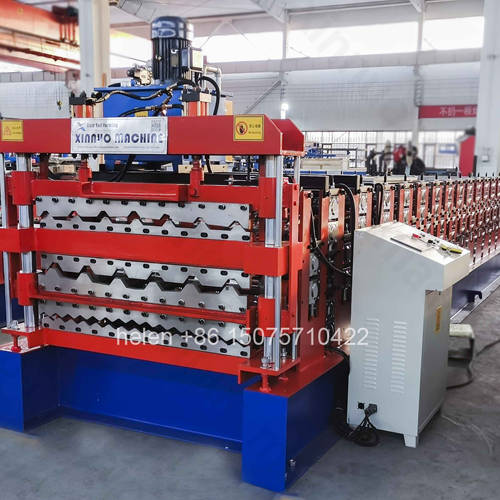
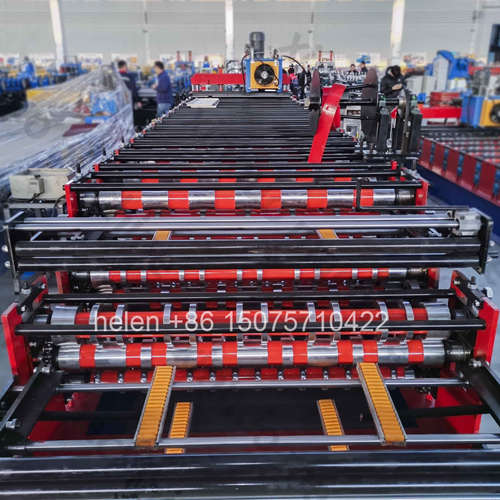
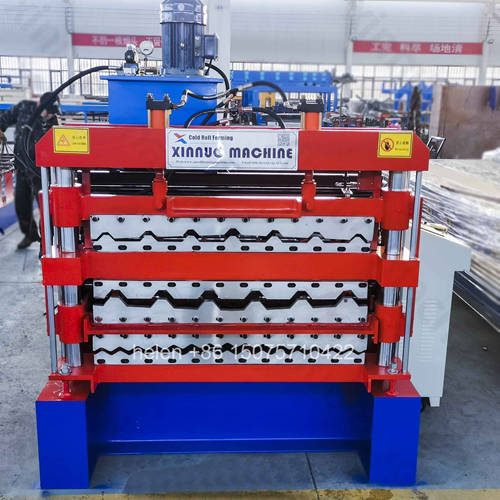
- Multi deck machines concentrate several rotating and shearing hazards in one frame
- Fixed guarding with interlocked access covers the roller and drive areas
- Emergency stops are positioned so the line can be halted from any operating point
- A lockable isolator allows positive isolation before any maintenance work
- Residual hydraulic pressure must be released before opening the circuit
- CE conformity requires risk assessment, technical file, and declaration
- Safety depends on procedure and training as much as on machine design
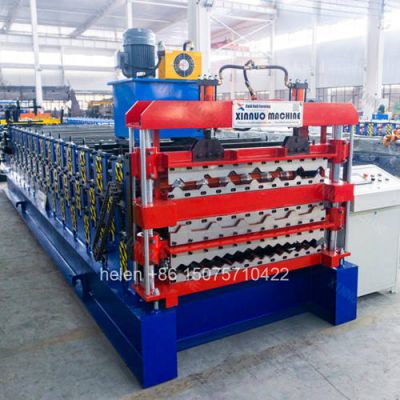
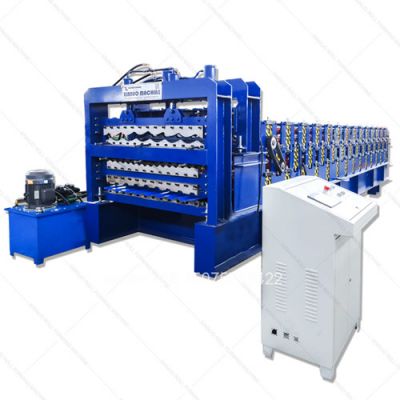
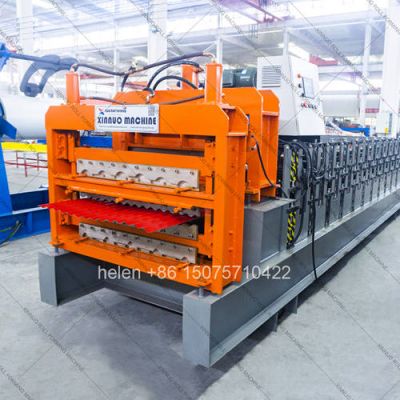
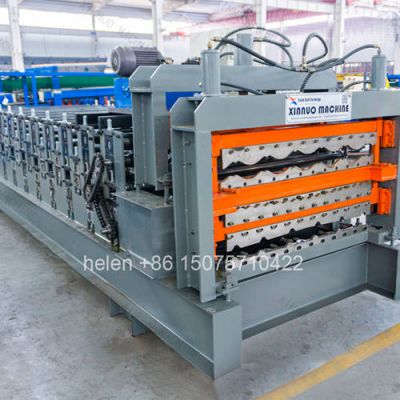
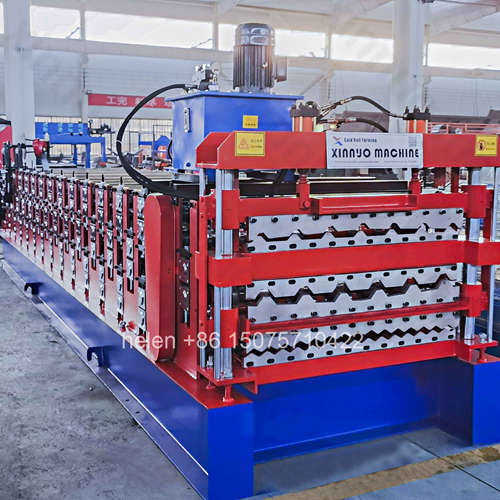
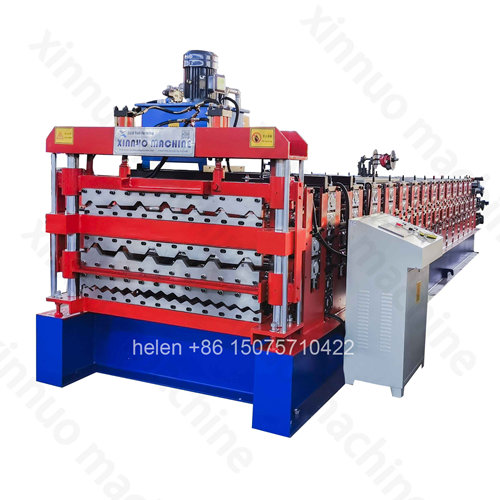
A machine that produces glazed tile, IBR, and corrugated iron sheet concentrates several categories of hazard into a single frame: rotating shafts, chain and sprocket drives, drawing-in nips between forming rollers, a guillotine shear operating on a cycle, a pressurised hydraulic circuit, and heavy material moving continuously along the line. Stacking two or three decks vertically adds height and places some of these hazards beyond easy reach and easy view, which changes how guarding, access, and maintenance safety must be handled.
This page sets out the safety systems that should be present on a multi-deck sheet forming machine, how guarding and access control should be designed, what isolation means in practice, what CE conformity actually requires from a manufacturer, and how safety practice on the shop floor supports the engineering. It is written for buyers and production managers who need to assess a machine on safety as seriously as on output, and for operators who need to understand what the systems are for.
| Hazard Type | Where It Occurs | Engineering Control |
|---|---|---|
| Drawing-in at roller nips | At every forming station on every deck, where the strip passes between upper and lower rollers | Fixed guards enclosing the forming area, with interlocked access covers for maintenance and inspection |
| Entanglement at rotating parts | Drive shafts, sprockets, and chain runs on all decks | Fully enclosed chain and sprocket guards with inspection provision, since guarding must not prevent routine monitoring |
| Shearing and crushing | At the guillotine or post-cut shear, which operates on a cycle | Enclosed shear housing, physical separation from the operating position, and a control arrangement that prevents access during the cutting cycle |
| Impact from moving material | At the run-out table and sheet discharge point | Physical separation of the collection area from the line, and a defined collection procedure that does not require reaching into the machine |
| Crushing from coil handling | At the decoiler during coil loading and unloading | Mandrel design that retains the coil positively, defined loading procedure, and a restricted area during loading |
| Hydraulic pressure | At the power pack, cylinders, hoses, and all fittings | Pressure relief valve, guarded hoses, and a documented depressurisation procedure before any work on the circuit |
| Electrical | At the control cabinet, motor terminals, and field wiring | Enclosed cabinet to an appropriate ingress protection rating, earth bonding, and a lockable isolator |
| Elevated access | At the upper and middle decks, which may be above normal working height | Designed-in access provision such as a platform or fixed steps, rather than improvised access using the machine frame |
| Noise | Along the forming line at production speed | Noise measurement at the operating position and hearing protection where levels require it |
| Slip and trip | Around the coil staging area and sheet collection area | Clear walkways, defined material positions, and housekeeping discipline |
| Guard Type | Application and Requirement |
|---|---|
| Fixed guards | Enclose areas not requiring routine access during production, such as drive assemblies and parts of the forming line. Require a tool to remove, which prevents casual access. |
| Interlocked movable guards | Used where access is required during production or for frequent inspection. Opening the guard stops the hazardous motion before access is physically possible. |
| Guard material | Substantial enough to contain a broken chain or a released component, not merely to prevent finger contact. Sheet metal of adequate gauge rather than mesh, where containment is necessary. |
| Transparent inspection panels | Permit monitoring of chain tension, material tracking, and roller condition without removing guards. Guards that prevent observation are frequently removed in practice, defeating their purpose. |
| Deck-specific guarding | Each deck requires its own guarding. Guards for one deck must not be removable in a way that exposes another deck. |
| Nip point protection | At the entry and exit of each forming carriage, where the strip enters and leaves the rollers. |
| Shear guarding | Completely enclosing the blade path, with the control arrangement preventing a cutting cycle while access is open. |
| Interlock integrity | Interlocks must stop the hazardous motion, not merely signal it. A guard that opens while the line continues to run provides no protection. |
| Function | Requirement |
|---|---|
| Emergency stop devices | Positioned at the entry end, the control position, and the discharge end, so the line can be halted from wherever the operator happens to be standing |
| Emergency stop function | Must stop all hazardous motion, not only the forming drive. Hydraulic and any auxiliary motion must also cease. |
| Restart prevention | Releasing an emergency stop must not cause the machine to restart. A deliberate reset action followed by a separate start command is required. |
| Isolation | A lockable isolator for the main supply, and separate provisions for the hydraulic power pack, allowing positive isolation before maintenance |
| Residual energy | Means to release stored pressure in the hydraulic circuit and stored energy in any accumulator before work begins |
| Motor protection | Overload and thermal protection on the main motor and hydraulic pump motor |
| Low voltage control | Control circuits operating at reduced voltage, with earth leakage protection |
| Deck selection indication | Clear indication of which deck is selected, since an incorrect selection on a multi-deck machine routes material incorrectly and can cause a jam |
| Fault indication | Plain-language fault messages rather than codes the operator must interpret from a manual |
| Step | Action | Reason |
|---|---|---|
| 1 | Stop production normally | Bring the line to a controlled stop and allow the material to be removed before isolation |
| 2 | Isolate the main supply | Operate the isolator and apply a personal lock where the procedure requires it |
| 3 | Isolate the hydraulic power pack | The hydraulic circuit is a separate energy source and must be isolated independently of the main drive |
| 4 | Release residual pressure | Stored hydraulic pressure can move a cylinder even with the pump stopped |
| 5 | Allow thermal effects to settle | Components that have been running hot remain a hazard and may also distort on cooling |
| 6 | Verify isolation | Attempt to start the machine before beginning work, as a positive check that isolation is effective |
| 7 | Access via the designed provision | Use the access platform or steps provided rather than climbing on the frame or on the material |
| 8 | Remove tools and refit guards before restart | Guards left off after maintenance are among the most common causes of serious injury |
| Element | Requirement and What the Buyer Should Request |
|---|---|
| Risk assessment | A documented assessment of the hazards the machine presents and the measures taken against each. This is the foundation of conformity, not a formality — ask to see it. |
| Essential health and safety requirements | Demonstration that the machine meets the applicable essential requirements of the relevant machinery safety legislation, addressing guarding, controls, stability, and information for use. |
| Technical file | Drawings, calculations, component information, and test results held by the manufacturer as the evidence base for conformity. |
| Harmonised standards | Where applicable standards have been applied, they are listed. Applying harmonised standards provides a presumption of conformity against the requirements they cover. |
| Declaration of Conformity | A formal document signed by the manufacturer identifying the machine, the applicable legislation, and the standards applied. Supplied with the machine, not on request only. |
| CE marking | Applied to the machine legibly and permanently, with the manufacturer identified. |
| Information for use | Operating and maintenance instructions in the language of the destination market, covering residual risks, correct use, and the safety procedures required. |
| Component conformity | Electrical components, safety-related parts, and pressure equipment carrying their own conformity where required. |
Buyers importing machinery into regions with their own conformity regimes should establish the specific requirements of the destination market before the order is placed, since electrical standards, documentation language, and marking requirements differ between jurisdictions. A machine that satisfies one market's requirements is not automatically compliant in another without review.
| Measure | Requirement |
|---|---|
| Hand protection | Cut-resistant gloves for sheet handling, bearing in mind that gloves introduce their own entanglement risk near rotating parts and should not be worn when working close to unguarded motion |
| Eye protection | Required where cutting, trimming, or any operation produces particles, and during maintenance involving impact tools |
| Foot protection | Safety footwear for handling coil and sheet, both of which are heavy and have sharp edges |
| Hearing protection | Where measured noise levels at the operating position require it; assess rather than assume |
| Clothing discipline | No loose clothing, jewellery, or unrestrained long hair where rotating parts are accessible |
| Restricted zones | Defined areas that must be clear during coil loading and during shear operation |
| Signage | Clear marking of emergency stops, isolation points, confined access areas, and residual hazards |
| Safety training record | Documented that each operator has been trained on the machine's specific hazards and procedures, not only on general workshop safety |
| No lone working | Access to the decks or shear should never be undertaken alone, since an isolated machine with a trapped person may not be discovered promptly |
| Reporting discipline | A route for reporting a defective guard or interlock that results in it being repaired rather than worked around |
| Parameter | Standard Range |
|---|---|
| Machine configuration | Two or three forming decks stacked vertically in one frame with a multi position selector arrangement |
| Deck combinations offered | Glazed tile with pitch stamping, IBR trapezoidal, and corrugated iron sheet, or other market-specific pairings |
| Main frame grade | 300H to 450H welded H-section steel selected against the number of decks and combined carriage weight |
| Forming rows per deck | 11 – 18 rows depending on profile family and rib depth |
| Roller material | 45# forged carbon steel, CNC turned, ground, hard chrome plated to HRC 58 – 62 |
| Shaft | Φ75 mm or Φ80 mm solid steel, centerless ground, dual-row self-aligning bearings |
| Transmission | Duplex roller chain with hardened sprockets and multi position selector, fully guarded |
| Main motor | 5.5 kW to 11 kW or above with variable frequency drive and overload protection |
| Hydraulic station | Independent power pack with pressure relief valve, air-cooled oil radiator, and separate isolation |
| Guarding | Fixed guards on drives and enclosed forming areas, with interlocked access covers where routine access is required |
| Emergency stops | Provided at the entry end, control position, and discharge end, with restart prevention |
| Isolation | Lockable isolator for the main supply and separate isolation for the hydraulic power pack |
| Forming speed | 8 – 20 m/min depending on profile and gauge; the pitch-stamping deck sets the effective ceiling |
| Material capability | PPGI, PPGL, galvanized, aluminium-zinc coated, and pre-painted aluminium coil; 0.30 – 0.80 mm |
| Cutting system | Hydraulic post-cut shear, Cr12MoV blades at HRC 60 – 62, fully enclosed |
| Cut length tolerance | ±1.5 mm |
| Control system | PLC with colour touchscreen HMI, independent recipe banks per deck, and plain-language fault display |
| Electrical supply | 380 V / 50 Hz / 3-phase standard; alternative voltages and frequencies by destination |
| Certification | CE marking with risk assessment, technical file, and Declaration of Conformity; ISO 9001:2015 compliant manufacturing |
Coil loading, deck selection at the entry guide, roll forming on the selected deck, glazed tile pitch stamping where that deck is active, length measurement, hydraulic cutting, and discharge to the run-out table follow the established sequence, with deck changeover completed in minutes and no disturbance to the roller sets on the inactive decks.
Hebei Xinnuo is a professional cold roll forming machinery manufacturer with 20+ years of experience. We specialize in C/Z purlin machines, roof panel roll formers, floor deck machines, and custom profile solutions — exported to 50+ countries worldwide.