helen@hbxinnuorollforming.com
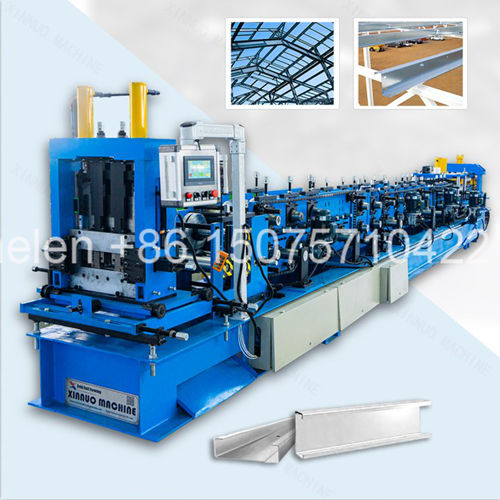
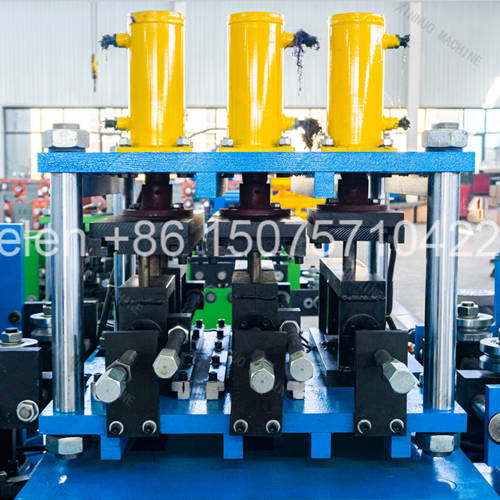
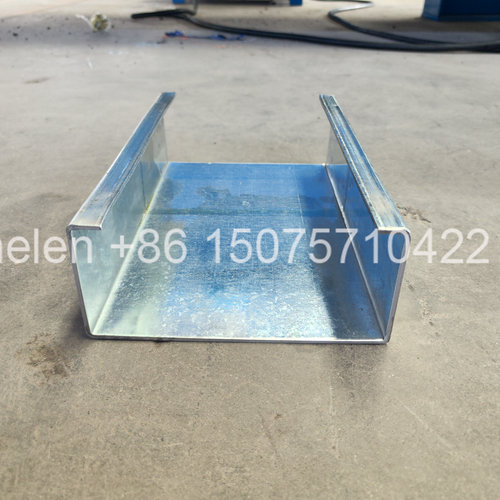
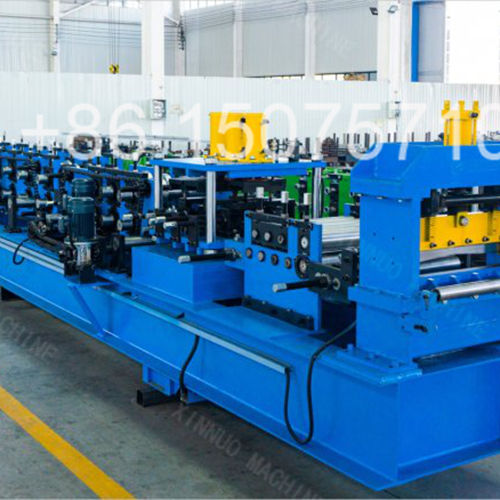
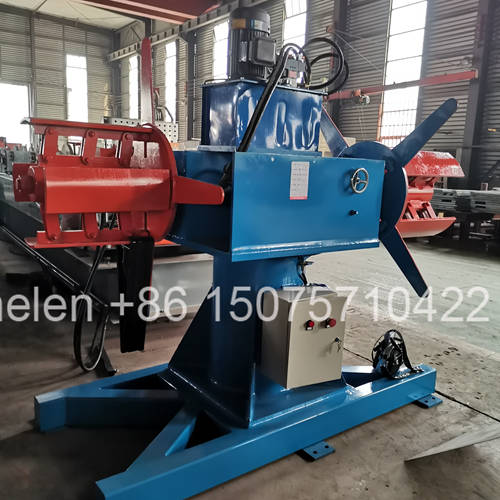
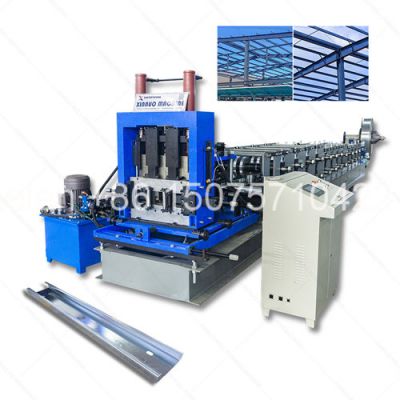
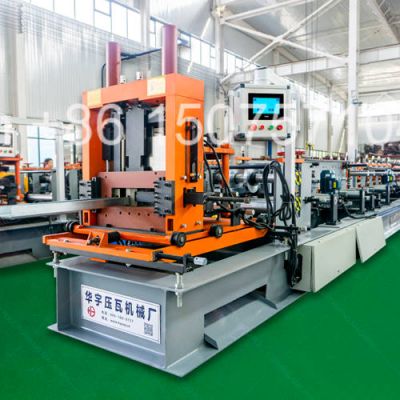
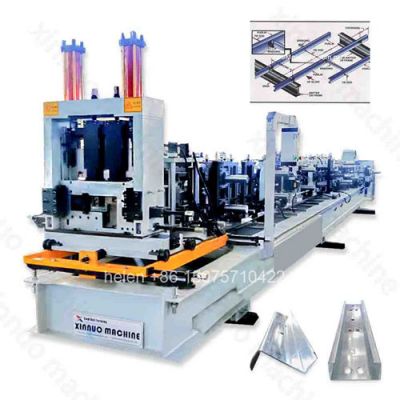
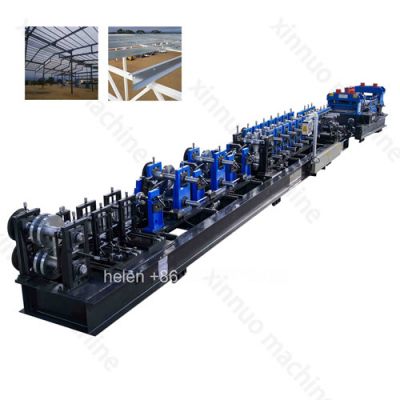
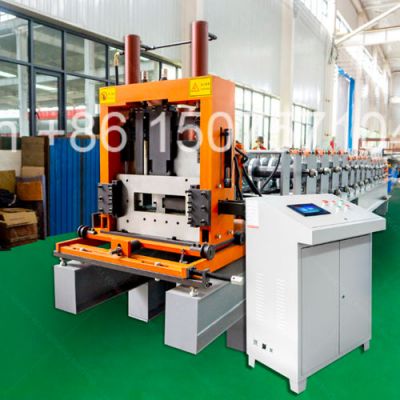
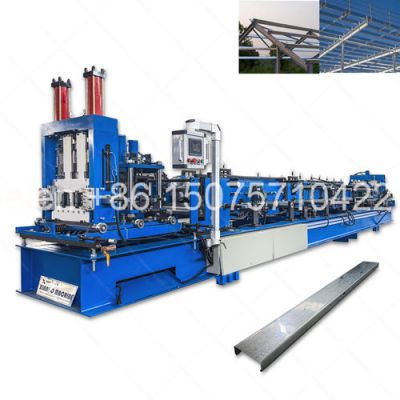
- Turnkey purlin forming line from coil loading to finished stacking
- Cold roll forming technology preserves zinc coating without damage
- Modular station design allows future profile expansion and upgrade
- Automatic coil edge guiding system with pneumatic side alignment
- Digital batch counter with preset quantity auto-stop functionality
- Heavy-duty cast iron gearboxes with oil-bath lubrication on every station
- Compatible with high-tensile structural steel grades up to S550GD
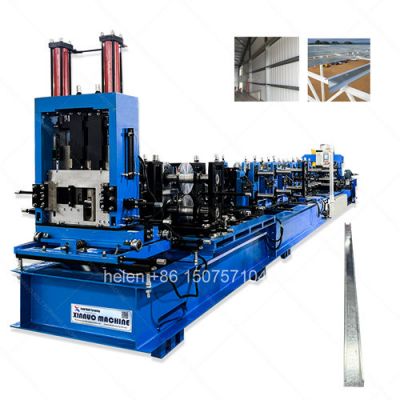
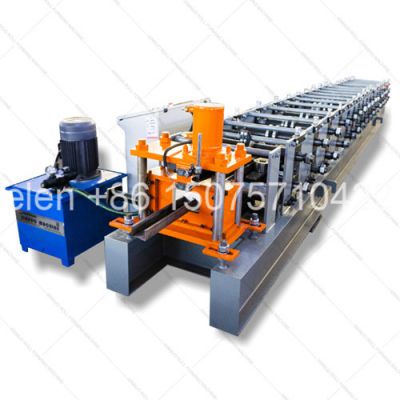
This purlin forming machine is a complete turnkey cold roll forming system that transforms steel coil into finished structural purlins through a fully integrated production line. Unlike press-brake bending or hot-rolling processes, cold roll forming progressively shapes the steel at ambient temperature through a series of matched roller pairs, preserving the original zinc coating integrity, work-hardening the bend zones for added strength, and maintaining consistent profile geometry across thousands of linear meters. The machine serves as the primary production asset for steel structure companies, purlin supply factories, and pre-engineered building manufacturers seeking to bring purlin production in-house for cost control, quality assurance, and delivery schedule independence.
| Factor | Cold Roll Forming | Press Brake Bending | Hot Rolling |
|---|---|---|---|
| Production Speed | 6-18 m/min continuous | 1-3 pieces per minute | 30-100 m/sec (mill scale) |
| Length Capability | Unlimited (cut to any length) | Limited by press bed length | Standard mill lengths |
| Coating Integrity | Preserved — no heat damage | Minor scratching possible | Coating destroyed, must re-coat |
| Profile Complexity | Unlimited stages possible | Limited to simple bends | Limited to open sections |
| Dimensional Consistency | ±0.5mm once set up | ±1-2mm, operator dependent | ±1-3mm, thermal variation |
| Material Utilization | 95-98% (coil to product) | 90-95% (sheet nesting) | 85-92% (crop ends, scale) |
| Labor Requirement | 1-2 operators per line | 1 operator per press | 5-10 operators per mill |
| Capital Investment | Moderate, quick payback | Low per unit, high per volume | Very high, only for mills |
| # | Equipment | Key Specification | Function Detail |
|---|---|---|---|
| 1 | Hydraulic Coil Car | 5-ton capacity, rail-guided | Loads raw coil onto decoiler mandrel; eliminates overhead crane dependency |
| 2 | Hydraulic Decoiler | Cantilever or tripod, Φ508/610mm ID | Holds and feeds coil; pneumatic brake prevents over-spin; manual or hydraulic expansion |
| 3 | Coil End Welder | Manual shear + argon weld station | Joins tail of previous coil to head of next for continuous non-stop production |
| 4 | Loop Accumulator | Vertical pit or horizontal type | Stores strip buffer so welding does not stop the forming line downstream |
| 5 | Strip Leveling Unit | 7-roller, upper bank adjustable | Flattens incoming strip; removes coil-set; ensures flat feed into forming section |
| 6 | Servo Feed Roller | Encoder-measured, pinch-roller | Measures fed length; triggers punch and shear at exact programmed positions |
| 7 | Hydraulic Punch Press | 40-63 ton, multi-die station | Creates bolt holes, slots, and notches; quick-change die cartridges for pattern switching |
| 8 | Forming Mill | 14-20 stations, progressive roller | Core section — gradually shapes flat strip into final purlin cross-section profile |
| 9 | Straightening Unit | 4-roller Turk's head type | Corrects residual twist, camber, and bow; adjustable in X and Y axes independently |
| 10 | Flying Cut-Off Press | Hydraulic or servo, encoder triggered | Cuts profile to length without stopping the line; blade returns under spring or hydraulic power |
| 11 | Run-Out Roller Table | Free rollers, 6-12m total length | Supports finished purlin as it exits; side guides prevent tipping of tall profiles |
| 12 | Automatic Stacker | Pneumatic clamp, belt conveyor | Optional — counts, aligns, and stacks finished purlins into bundles for forklift handling |
| 13 | PLC Main Control Cabinet | Siemens / Delta, 10-inch HMI | Central control brain; stores recipes, displays production data, manages all subsystems |
| Profile | Cross-Section Shape | Primary Application | Typical Span | Common Dimensions |
|---|---|---|---|---|
| C Purlin | Open C-channel with lips | Wall girts, roof purlins, mezzanine beams | 4-9 meters | 100-300×40-80×10-20mm |
| Z Purlin | Z-shaped with equal flanges | Roof purlins with lapped joints | 6-12 meters | 120-350×50-100×15-25mm |
| Sigma Purlin | Deep C with stiffening ribs | Long-span roofing, high wind zones | 8-15 meters | 150-350×60-100×15-25mm |
| Hat Purlin | Omega / hat cross-section | Cladding support, cable tray, solar rails | 2-5 meters | 50-150×30-60×10-15mm |
| Design Element | Engineering Principle | Manufacturing Impact |
|---|---|---|
| Flower Pattern Layout | Progressive bend angle distribution across stations; each station bends 8-15 degrees | Prevents material overstress; maintains coating adhesion in bend zones |
| Split Roller Design | Top and bottom rollers separate at parting line; individual segments replaceable | Lowers spare parts cost; enables profile modification without full tooling replacement |
| Side Roller Configuration | Vertical-axis rollers at critical stations to control web and flange position | Prevents strip walk; maintains consistent lip length across production run |
| Clearance Gap Control | Roller gap set to material thickness minus 0.05-0.15mm for compression | Eliminates surface marking; ensures positive material drive without slippage |
| Entry Guides | Tapered roller entry profile with 15-degree lead-in angle | Smooth strip capture; prevents edge damage and misfeed at line start |
| Bore and Keyway Fit | H7 bore tolerance with P9 keyway on shaft; anti-rotation set screws | Zero rotational play; maintains timing between top and bottom roller pairs |
| Economic Factor | In-House Production | Purchased Purlins |
|---|---|---|
| Material Cost per Ton | Coil market price + 2-5% scrap | Coil price + manufacturer margin + freight |
| Conversion Cost per Ton | Labor + electricity + consumables | Built into supplier selling price |
| Lead Time | Produce on demand, same-day delivery | 3-14 days from order to delivery |
| Inventory Requirement | Coil stock only (flexible for all profiles) | Stock each size, length, and thickness |
| Custom Length Capability | Any length, no price premium | Often limited to standard lengths |
| Quality Control | Direct oversight, real-time adjustment | Reliant on supplier QC processes |
| Typical Payback Period | 12-24 months at 1,000+ tons/year | N/A — ongoing operational expense |
| If You Need... | Choose... | Because... |
|---|---|---|
| Single C profile, one fixed size | Fixed-Size C Machine | Simplest design, lowest cost, most rigid for dedicated production |
| Multiple C sizes, occasional changes | Manual Adjustment C Machine | Handwheel adjustments, no electronics to maintain, lowest capital outlay |
| Frequent size changes, mixed orders | Computer-Controlled C Machine | HMI-driven motorized adjustment, recipe storage, under 60-second changeover |
| C and Z production on one line | CZ Integrated Machine | Automatic C-to-Z profile switching, wider market capability, export-ready |
| Maximum product range, high volume | CZU Integrated Flagship | C+Z+U all profiles, servo precision, industrial throughput, one machine does everything |
| Defect | Appearance | Root Cause | Prevention / Correction |
|---|---|---|---|
| Twist (螺旋) | Purlin rotates along its length | Unequal roller pressure left vs right; misaligned side rollers | Adjust straightening unit; verify roller gap symmetry across web |
| Camber (弓弯) | Horizontal curve in the web plane | Unequal edge elongation during forming; uneven strip tension | Check leveling unit flatness; verify strip centered on entry guides |
| Flare (喇叭口) | Flanges spread outward at cut end | Shear blade dull or misaligned; excessive cutting clearance | Sharpen or replace shear blades; set correct blade gap for thickness |
| Edge Wave (波浪边) | Wavy edge on flange or lip | Excessive compression in edge zone; roller over-forming at that station | Open roller gap slightly at affected station; check roller profile match |
| Surface Marking | Scratches or lines along purlin | Contaminated or galled roller surface; material pick-up on tooling | Clean rollers daily; polish minor galling; replace if pitted or scored |
| Length Variation | Inconsistent cut lengths | Encoder wheel slipping; brake wear on decoiler; feed roller pressure low | Clean encoder wheel; increase pinch pressure; verify brake adjustment |
| Safety Feature | Implementation | Protection Scope |
|---|---|---|
| Fixed Perimeter Guarding | Welded mesh panels, 2-meter height, bolted to floor | Prevents access to forming zone and drive train during operation |
| Interlocked Access Gates | Safety switch cuts power when gate opens; key-locked bypass for maintenance | Ensures machine stops before personnel enter guarded area |
| Emergency Stop Circuit | Red mushroom-head buttons at operator station, line end, and decoiler | Immediate machine halt; hardwired safety relay, not software-dependent |
| Light Curtain (Optional) | Infrared transmitter-receiver pair across shear zone entry | Stops shear cycle if operator reaches into cutting area |
| Overload Protection | Shear pins on main drive; thermal overload relays on all motors | Prevents mechanical and electrical damage from jams or overloads |
| Warning Indicators | Flashing beacon during auto cycle; audible alarm before line start | Visual and audible alert that machine is in powered operational state |
Hebei Xinnuo is a professional cold roll forming machinery manufacturer with 20+ years of experience. We specialize in C/Z purlin machines, roof panel roll formers, floor deck machines, and custom profile solutions — exported to 50+ countries worldwide.