helen@hbxinnuorollforming.com
- Rollers, bearings, chains, and shear blades carry the machine's real service cost
- Wear is predictable, so parts consumption can be planned rather than reacted to
- A new machine should be ordered with a defined first year parts kit
- Criticality classification decides what sits on the shelf and what does not
- Site-level storage prevents days of downtime waiting on air freight
- Substitute and counterfeit parts trade a small saving for a large risk
- Parts planning is a purchasing discipline, not a maintenance afterthought
Every sheet forming line consumes parts. Rollers lose their surface, bearings reach the end of their life, chains stretch, blades dull, seals harden, and hydraulic oil degrades. None of this is unpredictable, and none of it is expensive per item. What turns ordinary wear into a serious commercial problem is the gap between the part failing and the replacement arriving — a gap that can run from a few hours to several weeks depending on where the machine is located and what was kept in stock.
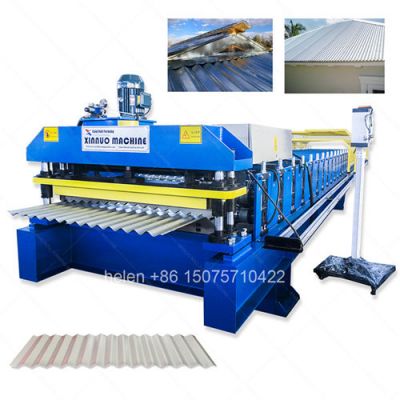
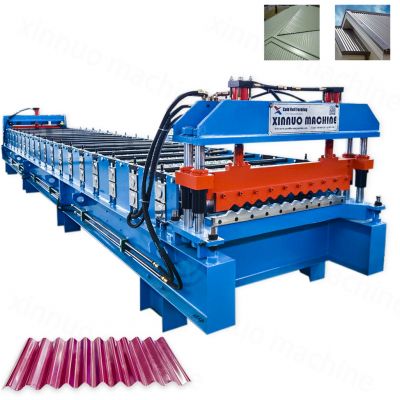
This page covers spare parts planning for a double layer glazed tile and IBR metal roof forming machine: which components actually wear and what the warning signs are, how parts should be classified by criticality so that stocking decisions follow consequence rather than convenience, what a sensible first-year parts kit contains, what belongs in the consumables budget rather than the spares budget, how reorder discipline should work, what shipping method is appropriate for which class of part, and why counterfeit components are a specific and underrated hazard for imported machinery.
| Component | Wear Mode | Warning Sign Before Failure | Consequence of Running to Failure |
|---|---|---|---|
| Forming rollers | Surface abrasion and chrome loss from continuous strip contact | Progressive change in profile dimensions, visible surface marks on the finished sheet, or a duller finish in the strip path | Produced material drifts out of tolerance across the whole run, and the affected rollers require re-plating or replacement rather than adjustment |
| Shaft bearings | Fatigue and grease depletion under continuous load | Increasing noise at one station, warmth at the bearing housing, or measurable play when the shaft is checked by hand during isolation | Bearing seizure scores the shaft journal, converting a low-cost bearing replacement into a shaft replacement and a major strip-down |
| Drive chain | Elongation from pin and bush wear | Chain tension adjustment no longer holding, or a visible sag on the return run that was not present previously | An elongated chain runs unevenly across the sprockets, accelerates sprocket wear, and eventually breaks under load |
| Sprockets | Tooth wear accelerated by a stretched chain | Hooked or visibly reduced tooth profile when inspected with the guard removed | A worn sprocket destroys a new chain quickly, so replacing the chain alone wastes the replacement |
| Shear blades | Edge dulling and chipping from the cutting cycle | Burred or ragged cut edges, or an audible change in the cutting sound | Burred edges are rejected by customers, and continuing to cut with a dull blade damages the blade beyond regrinding |
| Hydraulic seals and hoses | Hardening, cracking, and pressure cycling fatigue | Weeping at a cylinder, oil mist near a fitting, or a slow change in cutting speed | A burst hose under pressure presents an injury risk as well as a stoppage, and oil loss contaminates the material |
| Hydraulic oil and filter | Contamination, oxidation, and moisture ingress | Darkening oil, rising operating temperature, or particles visible on the filter element | Contaminated oil wears the pump and valves simultaneously, turning a routine oil change into a hydraulic overhaul |
| Electrical contactors and relays | Contact pitting from switching cycles | Intermittent operation, chattering, or visible pitting when the cabinet is opened during isolation | Contactors fail unpredictably under load, producing faults that are difficult to diagnose without a known-good replacement on hand |
| Encoder and length sensor | Mechanical wear and optical contamination | Gradually increasing variation in cut length, or occasional mis-cuts | Length tolerance is the machine's headline specification; drifting cuts produce rejected material before the cause is suspected |
| Entry guide and side rollers | Abrasion at the strip contact faces | Increased tracking adjustment required, or visible scoring on the coil edge | Poor tracking runs the strip off-centre, causing jams and off-specification profile across the full run |
The decision about what to hold in stock should follow the consequence of the part failing, not the price of the part. A low-cost bearing that stops the line for a week justifies a shelf position far more than an expensive component that fails once a decade.
| Class | Definition | Typical Items | Stocking Rule |
|---|---|---|---|
| Class A — Line stoppers | Failure stops production immediately and cannot be worked around | Bearings, chain, sprockets, shear blades, encoder, critical contactors, hydraulic seals | Hold on site at all times. At least one replacement per position on the machine, with a second for the fastest-wearing items. Non-negotiable regardless of cost. |
| Class B — Degraders | Failure allows production to continue but at reduced quality or output | Entry guide rollers, forming rollers, hydraulic filters, hydraulic oil, cooling fan motors | Hold a planned quantity on site, sized to the replacement interval. Order when the stock reaches the reorder point rather than when the part is needed. |
| Class C — Contingency | Failure is possible but unlikely, and the part is usually obtainable locally or by express shipment | Motors, pumps, PLC modules, VFD units, mandrel components | Do not hold the part, but hold the specification. Maintain a documented part list with model numbers and supply sources so ordering is immediate when needed. |
| Class D — Long lead | Any part whose procurement time exceeds the acceptable downtime for the operation | Custom forming rollers, stamped profile dies, machined shafts, frame-specific components | Treat purely by lead time. A part with a six-week lead belongs in Class A stock regardless of how rarely it fails, because the alternative is six weeks of stoppage. |
A new machine should be ordered with a defined kit rather than bought bare and stocked reactively afterwards. The following represents a reasonable opening position for a double layer line working a normal single-shift pattern, and it is far cheaper to include in the original order than to air freight separately in the first year.
| Item | Suggested Quantity | Reason for Including It From the Start |
|---|---|---|
| Roller shaft bearings | One per bearing position | The highest-frequency mechanical failure on any forming line, and the one whose failure most often damages something else. |
| Drive chains | One full set per deck | Chain elongation is inevitable; a spare set allows replacement at the planned interval rather than at the point of breakage. |
| Sprocket set | One set | Meaningless to replace a chain without also being able to replace worn sprockets, since the two wear together. |
| Shear blades | One spare set | Allows the worn set to be removed for regrinding while production continues on the spare. |
| Hydraulic seals and O-ring kit | One full set | Seals degrade with age as much as with use, so a machine that has stood before commissioning still needs them available. |
| Hydraulic hoses | One of each type used | Hoses are consumable, cannot be improvised locally in a matching pressure rating, and are needed quickly when they fail. |
| Hydraulic filters | Two or three elements | Consumable, low cost, and directly protective of the pump and valves. |
| Hydraulic oil | One change volume plus top-up | Oil specification must match the original fill exactly, and local availability of the correct grade cannot be assumed. |
| Encoder | One unit | Length accuracy depends on it, replacement is a plug-in operation, and a faulty unit produces rejected material rather than a clear fault. |
| Contactors and relays | One of each rating | The most common electrical failure and the hardest to diagnose without a known-good replacement to swap in. |
| Proximity and limit switches | One of each type | Mechanically vulnerable to impact and strip damage, inexpensive, and immediately disabling when failed. |
| PLC battery and memory backup | One set | Battery failure can lose stored recipes for both decks, requiring parameters to be re-entered manually. |
| Circuit protection | Assorted ratings | Fuses and breakers blow for reasons that are often external to the machine and must be restorable on the spot. |
| Recommended hand tools | One set | Machine-specific fittings mean standard workshop tools may not fit, and improvisation on a forming line risks damage. |
| Category | Items | Budget Treatment |
|---|---|---|
| Consumables | Hydraulic oil, lubricating grease, filters, cleaning materials, blade regrinding | Recurring operating cost. Should be budgeted per operating hour rather than treated as an occasional purchase, because consumption is continuous and predictable. |
| Scheduled replacement parts | Chains, bearings, seals, blades, guide rollers | Replaced on a usage interval rather than on failure wherever the interval is known. Strongly preferable to failure-based replacement, which takes other components with it. |
| Breakdown spares | Contactors, switches, encoders, sensors, fuses | Held against unplanned electrical and control failures, which cannot be scheduled the way mechanical wear can. |
| Capital spares | Motors, pumps, PLC modules, VFD units, complete roller sets | Not normally stocked. Held as documented specifications with confirmed supply routes instead, since the holding cost does not justify the low probability. |
| Practice | Requirement |
|---|---|
| Named parts owner | One person accountable for stock levels, reorder points, and the condition of stored parts. Unassigned responsibility means nobody notices the last bearing has been used. |
| Consumption recording | A simple log of what was used, when, and at what operating hours. Without it, reorder quantities are guesswork and consumption trends stay invisible. |
| Reorder point set by lead time | The trigger level should be calculated from the procurement lead time and the expected consumption rate, not set as an arbitrary "keep a few on the shelf". |
| Parts list held with the machine | A documented list with model numbers, quantities per machine, and supply source. This is the difference between ordering a part in an hour and spending two days identifying what it was. |
| Grouped ordering | Consolidating routine part orders protects against freight cost and customs effort consuming the value of a single low-cost item. |
| Consumption reviewed against plan | Where consumption diverges from expectation, it usually indicates a machine problem rather than a parts problem — an accelerated wear rate is diagnostic information. |
| Stock condition checks | Stored seals harden, oils absorb moisture, and electronics degrade in heat. Parts held for years without inspection may not be usable when finally needed. |
| Method | Realistic Timeframe | Appropriate For |
|---|---|---|
| Local purchase | Same day to a few days | Standard bearings, fasteners, hydraulic oil, general electrical items where an equivalent specification is genuinely available. Verify equivalence rather than accepting an approximate match. |
| Express air freight | Three to ten days depending on destination and customs | Class A items where the line is already stopped. Justified on stoppage cost rather than on the value of the part, which is often trivial by comparison. |
| Consolidated air freight | One to three weeks | Planned restocking of Class A and Class B items. The sensible default for routine parts replenishment to an overseas site. |
| Sea freight | Four to ten weeks door to door, plus customs | Bulk consumables, oil, and the initial parts kit ordered alongside the machine. Not appropriate for anything likely to be needed before it lands. |
Destination matters more than most buyers expect. A site with a domestic roll forming industry behind it can source bearings, chain, and electrical items locally. A site in a region without that industrial base has no local fallback, which raises the correct stocking level for Classes A and B considerably. This is a function of location, not of the machine, and it should be part of the original order conversation rather than a discovery made after the first breakdown.
| Risk | Why It Matters on a Forming Line Specifically |
|---|---|
| Bearings of unknown origin | Bearings are among the most widely counterfeited industrial components. A bearing with an unconvincing service life inside a forming station damages the shaft as it fails, so the saving is far smaller than the consequence. |
| Blades from unverified hardness | Shear blades are specified to a hardness range for a reason. A blade that is too soft dulls within days, and one that is too hard chips and can damage the shear mechanism. |
| Hydraulic oil of incorrect grade | Substituting an available oil for the specified grade affects seal compatibility and operating temperature, with the failure appearing weeks or months later and being attributed to the machine. |
| Unrated hydraulic hoses | Hoses that do not match the working pressure present a genuine injury risk, and this is a safety issue rather than a cost issue. |
| Non-equivalent electrical components | Contactors and relays with different ratings or duty cycles fail early in a way that is intermittent and therefore expensive to diagnose. |
| Copied control boards and modules | Unverified modules can corrupt recipes and may fail in ways that damage the components around them. |
| Unapproved forming rollers | Forming rollers are made to the profile drawing. A roller produced without the drawing, or to an approximation of it, will not yield the specified profile regardless of how it looks. |
| Parameter | Standard Range |
|---|---|
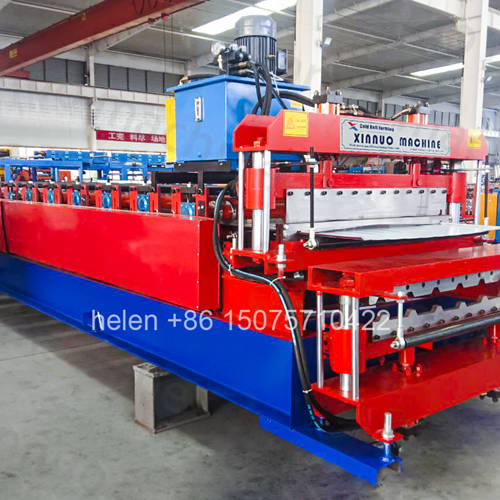
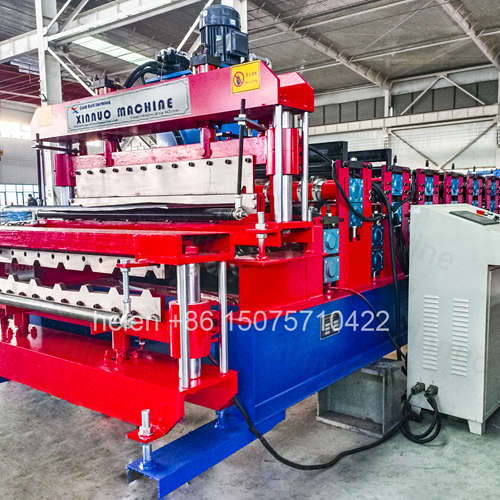
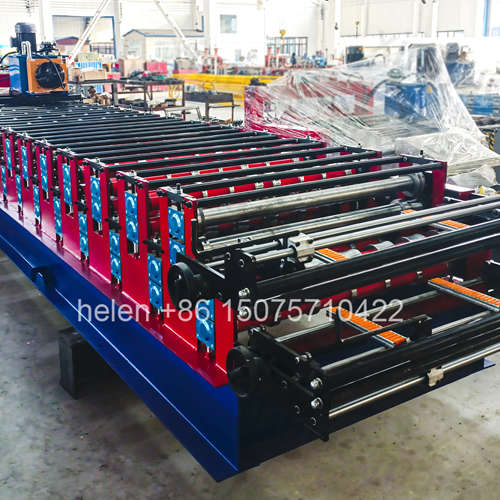
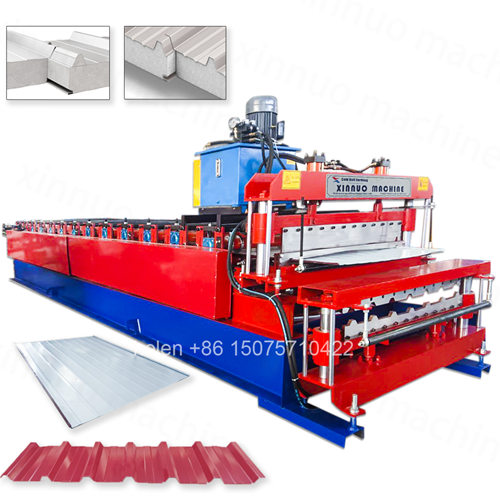
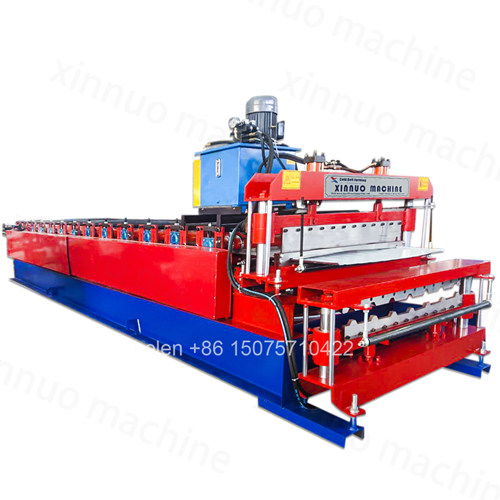
| Machine configuration | Two forming decks stacked vertically in one welded frame, sharing one drive and one shear assembly |
| Deck combination | Glazed tile with pitch stamping on one deck and IBR trapezoidal metal roofing on the other |
| Main frame grade | 300H to 400H welded H-section steel sized against the combined carriage weight of both decks |
| Forming rows per deck | 11 – 18 rows depending on profile family and rib depth |
| Roller material | 45# forged carbon steel, CNC turned, ground, hard chrome plated to HRC 58 – 62, supplied with profile drawing reference |
| Shaft | Φ75 mm or Φ80 mm solid steel, centerless ground, dual-row self-aligning bearings |
| Bearing specification | Named-brand bearings with model reference recorded in the machine parts list for unambiguous reordering |
| Transmission | Duplex roller chain with hardened sprockets and a two position selector |
| Chain and sprocket set | Supplied as a matched set, since replacing one without the other accelerates wear on both |
| Main motor | 7.5 kW to 11 kW with variable frequency drive |
| Hydraulic station | Independent power pack with air-cooled oil radiator, specified oil grade recorded, filter element reference listed |
| Forming speed | 8 – 20 m/min depending on profile and gauge; the glazed tile stamping deck sets the effective ceiling |
| Material capability | PPGI, PPGL, galvanized, aluminium-zinc coated, and pre-painted aluminium coil; 0.30 – 0.80 mm |
| Cutting system | Hydraulic post-cut shear, Cr12MoV blades at HRC 60 – 62, supplied with a spare blade set for rotation during regrinding |
| Cut length tolerance | ±1.5 mm |
| Control system | PLC with colour touchscreen HMI, separate recipe banks per deck, and battery backup with a replacement battery specified |
| Documentation supplied | Machine manual, electrical schematic, hydraulic schematic, and a parts list with model references and quantities per machine |
| Electrical supply | 380 V / 50 Hz / 3-phase standard; alternative voltages and frequencies by destination |
| Certification | CE marking and ISO 9001:2015 compliant manufacturing |
Coil loading, entry guide alignment, deck selection at the guide, roll forming on the selected deck, glazed tile pitch stamping on that deck, length measurement, hydraulic cutting, and discharge to the run-out table follow the established sequence, with both decks resident in one frame and no interruption to the roller sets on the inactive deck during production or maintenance.
Hebei Xinnuo is a professional cold roll forming machinery manufacturer with 20+ years of experience. We specialize in C/Z purlin machines, roof panel roll formers, floor deck machines, and custom profile solutions — exported to 50+ countries worldwide.