How to Start a Purlin Manufacturing Business: A Practical Guide
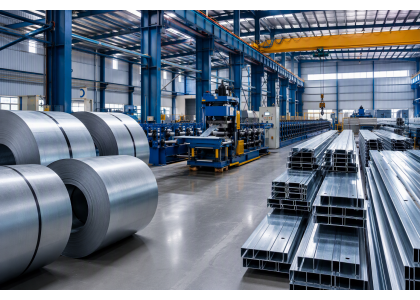
Steel-framed buildings are being constructed at an unprecedented rate — warehouses, factories, shopping centers, agricultural sheds, and logistics hubs. Every one of them needs purlins. For entrepreneurs and existing steel fabrication businesses, starting a purlin manufacturing operation is one of the most straightforward paths into the profitable structural steel supply chain. This guide walks through everything you need to know — from market analysis to machine selection, factory setup, and profitability planning.
1. The Market Opportunity: Why Purlins?
Purlins are the horizontal structural members that support roof and wall sheeting in steel-framed buildings. They are a repeat-purchase commodity product — every steel building project needs them, demand is steady, and the product specification is standardized across regions. Key market drivers include:
- Pre-engineered building (PEB) growth: The global PEB market is growing at 8.3% CAGR, driven by e-commerce logistics, industrial expansion, and cold-chain warehousing.
- Low barrier to entry: A single C/Z purlin machine can produce a complete product line. Unlike hot-rolled sections, you do not need a steel mill — just a roll forming line, coil inventory, and a factory floor.
- Regional demand gaps: In many developing markets, local purlin supply falls short of demand. Contractors often import or wait weeks for delivery — a local manufacturer with reliable capacity can capture the market quickly.
- High material-to-value ratio: Purlins sell for 20–40% above raw coil cost. With efficient production, gross margins of 25–35% are achievable.
2. Choose Your Business Model
Not all purlin businesses look the same. Decide which model fits your market and resources:
| Model |
Production Scale |
Best For |
Typical Investment |
| A. Dedicated Producer |
5–10 tons/day |
Single-profile C purlin supply for local contractors |
Lowest entry — one C machine + basic setup |
| B. Full-Service Supplier |
10–20 tons/day |
C + Z purlins, multiple sizes, serving diverse projects |
Mid-range — CZ integrated machine + automation |
| C. Steel Service Center |
20+ tons/day |
Purlins + roof panels + floor decks + fabrication services |
Higher — multiple machines + larger facility |
| D. In-House Captive Production |
As needed |
Existing steel building company producing for own projects |
Cost savings vs. purchasing — payback in 1–2 years |
3. Choose the Right Machine
Your machine decision defines your product capability, production capacity, and competitive position. Here is what to consider:
C Purlin Machine vs. CZ Integrated Machine
| Factor |
C Purlin Machine |
CZ Integrated Machine |
| Product Range |
C profiles only |
C + Z profiles, multiple sizes |
| Upfront Cost |
Lower |
Higher (but better value per product) |
| Market Coverage |
~60% of purlin demand |
~95% of purlin demand |
| Recommendation |
If budget-constrained and C-purlin-only market |
Best value for most new businesses |
Automation Level
- Manual / Semi-Automatic: Lower upfront cost but 30–60 minute size changeover. Suitable for long runs of a single size.
- Servo-Driven Quick Change: Size change in under 1 minute. Essential if you serve customers who order mixed sizes and short lead times. The productivity gain pays for the price difference within 12–18 months.
Key Machine Specifications to Verify
- Material thickness range (e.g., 1.5–3.0 mm — wider is better)
- Steel grade capability (at minimum G350, ideally G550)
- Production speed (target 20–30 m/min)
- Frame construction (welded steel plate, not bolted assembly)
- Roller material (GCr15 bearing steel, heat-treated and chrome-plated)
- Motor and gearbox brands (Siemens, SEW, or equivalent)
4. Investment Breakdown: What It Costs
Here is a realistic cost estimate for starting a mid-range purlin manufacturing operation (Model B: CZ integrated, servo-driven):
| Item |
Estimated Cost (USD) |
Notes |
| CZ Integrated Purlin Machine (servo-driven) |
35,000 – 55,000 |
FOB China, including roller tooling for standard sizes |
| 5-Ton Hydraulic Decoiler |
3,000 – 5,000 |
|
| Shipping & Import Duties |
5,000 – 12,000 |
Varies by destination country |
| Installation & Commissioning |
2,000 – 5,000 |
If manufacturer provides on-site service |
| Forklift (3–5 ton) |
8,000 – 15,000 |
Can lease initially to conserve capital |
| Initial Coil Inventory (40–60 tonnes) |
25,000 – 40,000 |
1–2 months of G350/G550 galvanized coil |
| Factory Setup (electrical, foundation) |
5,000 – 10,000 |
Power supply, machine foundation pads, lighting |
| Working Capital (first 3 months) |
15,000 – 25,000 |
Wages, rent, utilities, materials |
| Total Estimated Investment |
98,000 – 167,000 |
Range depends on machine spec and local costs |
A lean-startup approach (Model A: C-only, manual, used forklift, minimal inventory) can bring the total down to USD 55,000–75,000.
5. Factory Setup Requirements
Space
- Production area: 12 m × 25 m minimum for a CZ line with coil staging and finished product stacking. Ideally 15 m × 35 m for comfortable workflow.
- Total factory: 400–600 m² for a single-machine operation including coil storage, finished goods, and a small office.
- Ceiling height: Minimum 5 meters for forklift operation and coil handling.
- Floor: Leveled concrete slab, minimum 150 mm thickness. Machine anchor points should be reinforced.
Power
- Main motor: typically 15–22 kW for a CZ machine
- Total connected load: 30–50 kW including hydraulics, decoiler, and auxiliary equipment
- 3-phase power supply (380–440V, 50/60 Hz depending on country)
Staffing
- Production: 2–3 operators per shift for a CZ line (one at the control panel, one at coil loading, one at stacking)
- Forklift operator: 1 person for material handling
- Quality control / Supervisor: 1 person
- Sales / Admin: 1–2 people (can be the owner initially)
6. Raw Material Sourcing
Your raw material cost is 60–70% of your total cost. Getting sourcing right is the single most important factor in profitability.
What to Buy
- Preferred: Hot-dip galvanized steel coil, grade G350 or G550, zinc coating Z275 (275 g/m²) or higher
- Width: Matched to your machine's coil width capacity (typically 200–500 mm for purlins)
- Thickness: 1.5 mm, 2.0 mm, 2.5 mm, and 3.0 mm are the most common purlin thicknesses — stock accordingly
Where to Source
- Domestic steel mills: Best for large, regular orders. Negotiate annual supply contracts for price stability.
- Steel traders / service centers: Good for smaller quantities and mixed specifications. Slightly higher price but more flexible.
- Import: Competitive for large volumes in regions with limited domestic coil production. Factor in 4–8 weeks shipping lead time.
Tips
- Build relationships with 2–3 suppliers — never depend on a single source.
- Monitor steel price indices (CRU, Platts) and buy when prices dip.
- Keep 4–6 weeks of coil inventory to buffer against supply disruptions.
7. Pricing and Profitability
Pricing Formula
A common pricing model for purlin manufacturers:
Selling Price (per tonne) = Coil Cost + Processing Fee (USD 80–150/tonne) + Delivery
The processing fee covers your operating costs and profit margin. It varies by market but typically falls between USD 80 and 150 per tonne depending on competition, order size, and value-added services (pre-punching, cut-to-length, packaging).
Profitability Example
For a CZ line producing 10 tonnes/day, 22 working days/month:
| Item |
Per Tonne |
Per Month |
| Sales Revenue (220 tonnes) |
$780 |
$171,600 |
| Coil Cost |
$650 |
$143,000 |
| Gross Margin |
$130 |
$28,600 |
| Labor (5 staff) |
$25 |
$5,500 |
| Rent & Utilities |
$15 |
$3,300 |
| Maintenance & Consumables |
$5 |
$1,100 |
| Net Profit (before tax) |
$85 |
$18,700 |
At a net profit of ~$18,700/month, a mid-range investment of $130,000 pays back in approximately 7 months — after which the business generates positive cash flow. This is why purlin manufacturing attracts entrepreneurs: fast payback on a straightforward business model.
8. Marketing and Sales Strategy
Who to Sell To
- Steel building contractors and erectors — your core customers. They buy purlins for every project.
- PEB manufacturers — larger, more regular orders. May require pre-qualification.
- Steel traders and distributors — they take inventory and resell. Lower margin but higher volume.
- Roofing and cladding companies — often need purlins alongside their sheeting supply.
How to Reach Them
- Direct sales visits: Visit construction sites, steel fabricators, and hardware suppliers. Bring product samples and a price list.
- Online presence: A basic website with your product range, sizes, and contact information. Google Business Profile listing for local search visibility.
- Trade associations: Join local steel construction and building industry associations. Attend trade shows.
- Competitive advantage: Emphasize fast delivery, cut-to-exact-length service, and local availability — these matter more to contractors than a small price difference.
9. Common Pitfalls to Avoid
- Buying an undersized machine: A machine rated for 2.0 mm that struggles at 2.5 mm limits your market. Buy 20% above your expected maximum thickness.
- Ignoring G550 capability: The market is shifting toward high-strength steel. If your machine cannot handle G550, you will lose orders to competitors who can.
- Underestimating coil inventory cost: Your raw material tie-up is significant. Secure adequate working capital before starting production.
- No backup power: A power outage stops your line. In regions with unreliable electricity, budget for a generator.
- Skipping operator training: A well-trained operator produces consistent quality and avoids machine damage. Insist on comprehensive training from your machine supplier.
- Competing on price alone: There is always someone cheaper. Compete on reliability, delivery speed, and service — that is where loyalty is built.
10. Step-by-Step Startup Checklist
- Research your local market — who buys purlins, at what volumes, at what price?
- Define your business model and target customer segment.
- Select and order your machine — allow 30–60 days for manufacturing plus shipping.
- Secure a factory: 400+ m², 3-phase power, forklift access.
- Prepare the factory floor: electrical connections, machine foundation, coil storage racks.
- Hire and train operators during machine commissioning.
- Source initial coil inventory — 40–60 tonnes spread across common thicknesses.
- Set up business registration, tax ID, and any required manufacturing licenses.
- Produce sample products and build a price list.
- Start selling: visit contractors, distribute samples, and get your first orders.
Conclusion
Starting a purlin manufacturing business is not complex — but it requires careful planning. The market opportunity is real, the machine technology is mature and accessible, and the payback period is among the shortest in industrial manufacturing. Success comes down to four things: choosing a machine that matches your target market, securing reliable coil supply, pricing competitively while protecting margin, and delivering on time — every time. Do those four things well, and you have the foundation of a durable, profitable business.